
Beautiful Plants For Your Interior
Beautiful Plants For Your Interior
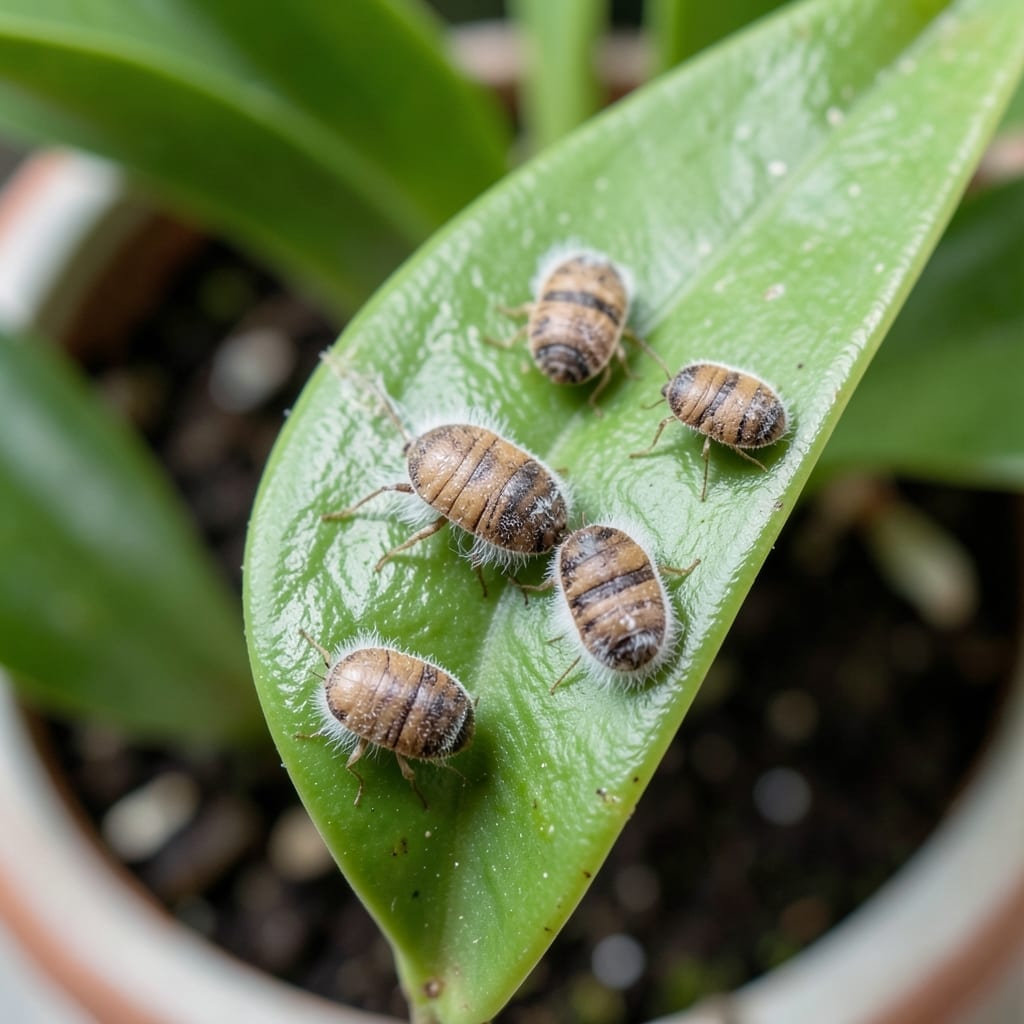
Tiny bumps on your orchid leaves aren’t just unsightly—they’re stealing your plant’s life. Scale insects latch on and drain the sap, leaving your orchids weak and yellowed.
I spotted my first infestation on a Phalaenopsis and nearly lost it. These pests blend in as brown, white, or black spots, often hiding under leaves or along stems. Catching them early is the key.
A cotton swab dipped in rubbing alcohol removes them on contact. For stubborn cases, I’ve had success with a 1:10 dish soap and water spray. Consistency wins the battle.
Regular inspections and good airflow prevent future outbreaks. Healthy orchids fight back better—so don’t skip the basics.
Scale insects don’t appear out of nowhere—they thrive when conditions align in their favor. Understanding the root causes helps you disrupt their lifecycle and protect your orchids. Here’s why these pests take hold:
Orchids under stress—whether from poor lighting, inconsistent watering, or nutrient deficiencies—produce weaker cell walls and fewer natural defenses. Scale insects target these vulnerable plants, as their piercing mouthparts penetrate tissues more easily. Over-fertilization (especially with high nitrogen) can also soften growth, making it a buffet for pests.
Stagnant air traps humidity and creates microclimates where scale insects reproduce rapidly. Orchids in crowded spaces, closed terrariums, or areas without fans are prime targets. These pests spread via crawling nymphs or wind-dispersed males, so limited airflow accelerates their colonization.
In nature, parasitic wasps, ladybugs, and lacewings keep scale populations in check. Indoor orchids often lack these allies, allowing infestations to spiral. Even outdoor plants can fall victim if pesticides (like neem oil applied too broadly) kill beneficial insects alongside pests.
Scale insects hitchhike on new plants, potting media, or tools. Buying orchids from unreliable sellers or reusing unsterilized pots introduces pests directly. Even seemingly healthy plants may carry immature scale (crawlers), which are nearly invisible until they mature and form protective shells.
Scale insects can be stubborn, but targeted action will save your orchids. Below are proven fixes for each stage of infestation, plus prevention tips to keep them from returning.
If you spot just a few scale insects, act fast. Use a soft toothbrush or cotton swab dipped in 70% isopropyl alcohol to gently scrub them off leaves, stems, and pseudobulbs. Pro tip 💡: Test the alcohol on a small leaf area first to avoid damage. Repeat every 3–5 days until gone.
Mix 1 tsp mild liquid soap and 1 tbsp horticultural oil per quart of water. Spray thoroughly, focusing on leaf undersides and crevices where scale hides. Apply every 7–10 days for 3–4 weeks. Pro tip 🌡️: Avoid treating orchids in direct sunlight or extreme heat to prevent leaf burn.
For heavy infestations, use a systemic insecticide like imidacloprid or dinotefuran. Follow label instructions carefully, and apply to the growing medium for root uptake. Pro tip ✨: Isolate the orchid during treatment to protect beneficial insects and other plants.
Look for small, raised bumps that resemble tiny shells or waxy dots, often along stems or leaf undersides. They may be brown, white, or black and won’t move when touched.
Incomplete treatment often misses hidden nymphs or eggs. Repeated applications every 7-10 days are crucial to break their lifecycle. Check isolated plants too.
Yes, a 1:10 dish soap and water mix works for mild cases. For stubborn infestations, 70% isopropyl alcohol on a cotton swab removes them on contact.
If left untreated, they weaken plants by draining sap, leading to yellowing leaves and stunted growth. Early intervention prevents permanent damage.