
Beautiful Plants For Your Interior
Beautiful Plants For Your Interior
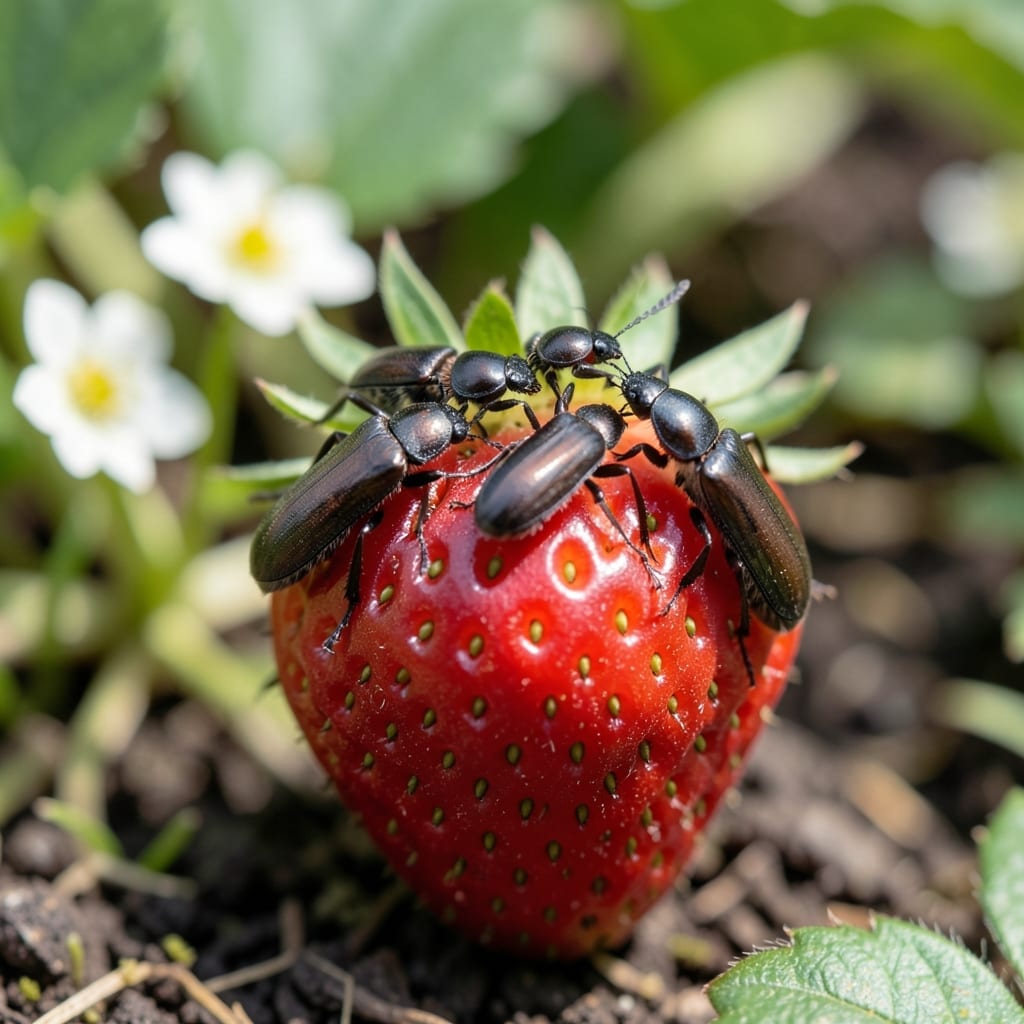
I lost half my strawberry crop to sap beetles last season. These tiny pests weaken plants and ruin fruit before you even notice them.
Here’s the thing—they’re attracted to overripe berries and damaged fruit. I learned the hard way that daily harvesting and removing rotten fruit is your first line of defense.
You’ll spot their damage by the small, sunken holes in ripening strawberries and the beetles themselves—tiny, oval, and often black or brown.
With the right approach, you can protect your harvest and keep these pests from coming back next year.
Sap beetles target strawberries for specific biological and environmental reasons. Understanding these triggers helps you intervene effectively before they wreak havoc on your crop.
Sap beetles are drawn to fermenting sugars released by overripe, cracked, or injured strawberries. As fruit softens, it emits volatile organic compounds (VOCs) that signal a food source. Unlike healthy berries, damaged ones provide easy entry points for beetles to lay eggs and feed.
These pests thrive in temperatures between 75–85°F (24–29°C) with high humidity. Such conditions accelerate fruit ripening and decay, creating ideal breeding grounds. Fields with poor air circulation or dense plantings trap moisture, further attracting sap beetles.
Leftover rotten fruit, plant debris, or spilled juice in the field act as magnets for sap beetles. Decaying organic matter releases odors that guide beetles to your strawberry patch. Regularly removing overripe berries and debris disrupts their food supply and discourages infestations.
In ecosystems with few ground beetles, birds, or parasitic wasps—natural predators of sap beetles—their populations can spiral out of control. Monoculture strawberry fields often lack biodiversity, reducing predatory pressure and allowing sap beetles to multiply unchecked.
Sap beetles can wreak havoc on your strawberry crop, but you can turn the tide with these targeted fixes and prevention strategies.
Sap beetles are drawn to soft, fermenting berries. Pick ripe strawberries daily and discard any overripe or damaged ones immediately. This removes their food source and disrupts their breeding cycle. Use a sealed compost bin to prevent them from returning to the garden.
Fallen leaves, rotting plant matter, and spilled fruit attract sap beetles. Keep your garden beds clean by removing debris regularly. This eliminates hiding spots and reduces their population naturally.
Floating row covers are a simple yet effective way to block sap beetles from reaching your strawberries. Secure the edges tightly to the soil to prevent gaps. For a low-cost alternative, try fine mesh netting draped over plants, ensuring it doesn’t touch the fruit.
Set up bait traps using overripe fruit or beer in shallow containers. Sap beetles will be lured in and drown. Place traps near your strawberry plants but not directly on them to avoid drawing more beetles to your crop. Check and empty traps weekly.
Rotate crops annually to disrupt sap beetle life cycles. Avoid over-fertilizing with nitrogen, which can produce excess foliage and soft fruit that attracts pests. Plant resistant varieties like ‘Tristar’ or ‘Seascape’ if sap beetles are a recurring issue. 💡 Pro tip: Mulch with straw to keep berries off the soil, reducing damage and decay that invites beetles.
Tiny white eggs, about 1mm long, are laid in clusters on overripe or damaged fruit. They’re often hidden in crevices or under sepals. Check berries carefully during peak ripening to spot them early.
A few beetles can ruin 50% of fruit within 3-5 days if left unchecked. They target the ripest berries first, so daily harvesting is critical during warm weather.
No, they don’t bite or sting. They’re only interested in fermenting fruit and plant sap. You can safely handle infested berries—just wear gloves if the idea bothers you.
Yes, with consistency. Row covers, traps, and sanitation can match chemical control if applied early. The key is daily monitoring and immediate removal of affected fruit.