
Beautiful Plants For Your Interior
Beautiful Plants For Your Interior
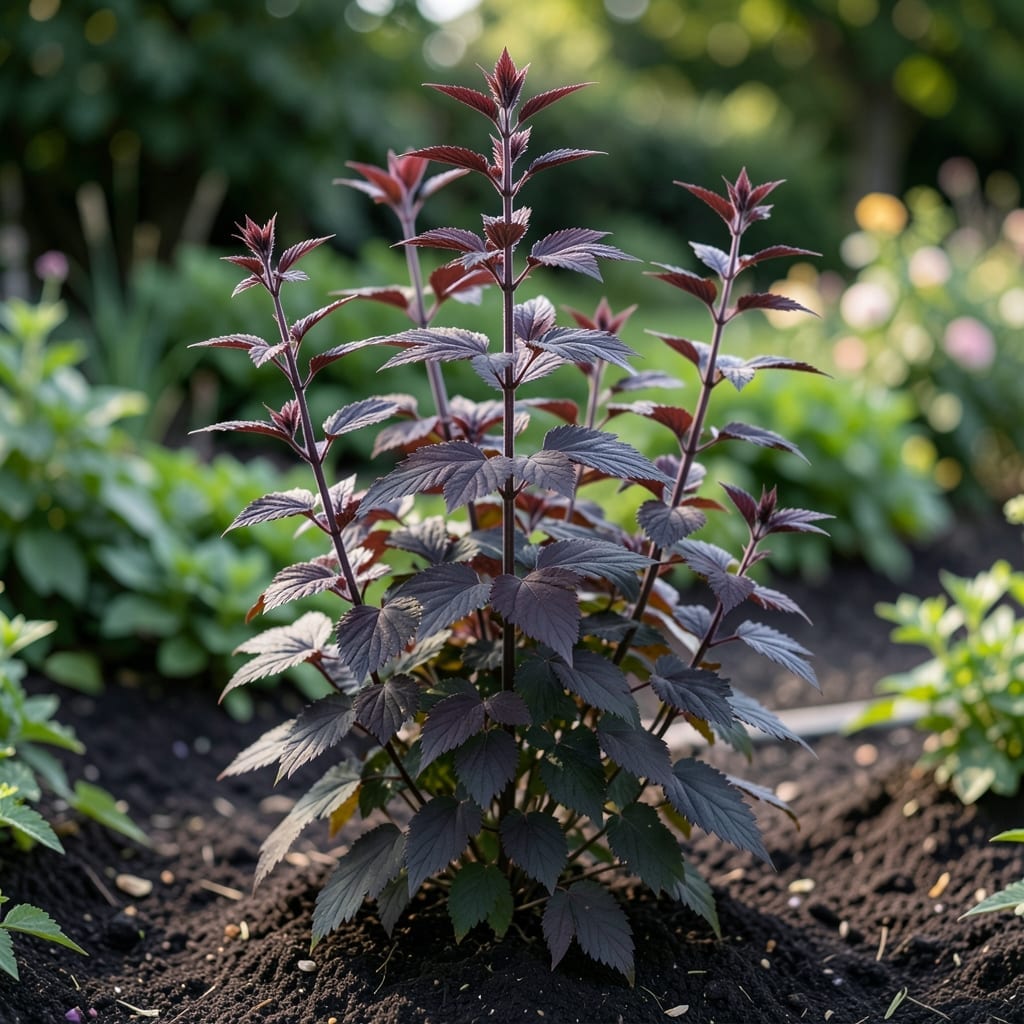
I fell for ‘Black Tower’ elderberry the first time I saw its dark, almost black foliage standing tall in a neighbor’s garden. This upright beauty solves the problem of adding drama to tight spaces.
It thrives in full sun to partial shade with minimal fuss, reaching 8-10 feet tall but just 3-4 feet wide. Perfect for small yards, privacy screens, or that awkward corner that needs vertical interest.
📚 In This Guide
This striking elderberry cultivar brings dramatic vertical interest without taking up much space.
Select a spot with full sun to partial shade—Sambucus Black Tower thrives with at least 6 hours of sunlight daily. I’ve found it tolerates afternoon shade well, especially in hotter climates where intense sun can scorch the deep purple-black foliage.
The soil should be well-draining and moderately fertile. Avoid low-lying areas where water pools, as this plant hates soggy roots. A slightly acidic to neutral pH (6.0-7.5) works best for vibrant leaf color.
Space it 3-4 feet apart from other plants to give its upright, columnar form room to shine. Real talk: it looks stunning as a standalone focal point near a fence or entrance.
Dig a hole twice as wide and just as deep as the root ball. Loosen the roots gently if they’re circling the pot—this encourages outward growth. Place the plant in the hole so the top of the root ball sits slightly above ground level to prevent settling.
Backfill with native soil, tampering lightly as you go to eliminate air pockets. Water deeply right after planting to help the soil settle around the roots. I always add a 2-3 inch layer of mulch around the base to retain moisture and suppress weeds.
Don’t pile mulch against the stem—that’s a surefire way to invite rot.
Keep the soil evenly moist during the first growing season to help the plant establish. After that, Sambucus Black Tower is fairly drought-tolerant, but the foliage looks its best with regular watering.
Check the soil weekly—water when the top inch feels dry to the touch. A deep soak once a week is better than frequent shallow watering, which encourages shallow root growth.
Here’s the thing—overwatering is just as damaging as underwatering. Yellowing leaves often signal too much moisture, while crispy edges mean it’s thirsty.
Prune in late winter or early spring before new growth starts. Remove any dead, damaged, or crossing branches first. This plant has a naturally upright habit, but a light trim helps maintain its striking columnar shape.
Cut back about one-third of the oldest stems to the ground to encourage fresh, vigorous growth. I use clean, sharp pruners to make precise cuts at a 45-degree angle just above a bud.
Don’t skip this (I learned the hard way)—neglected plants can become leggy and lose their dramatic vertical appeal.
Apply a balanced, slow-release fertilizer in early spring to support healthy growth. Follow the package instructions, but err on the side of less rather than more—too much fertilizer leads to excessive leafy growth at the expense of the plant’s form.
Watch for pests like aphids or elderberry borers. A strong blast of water usually dislodges aphids, but borers may require pruning out affected stems. Sambucus Black Tower is generally low-maintenance, but a little attention ensures it stays a standout in your garden.
You’ll notice the dark foliage deepens in color as the season progresses, making it a year-round star.
Small details make a big difference when planting this striking elderberry.
Selection Tip: For that deepest purple-black foliage mentioned in Step 1, prioritize spots getting those 6+ hours of sun. I’ve seen plants in partial shade stay greenish-purple—the full sun really brings out the drama.
Drainage Check: That 1-hour drainage test in Step 1 is non-negotiable. I learned this the hard way after losing a plant to root rot. Dig your 12-inch hole, fill with water, and time it precisely—if it doesn’t drain within that hour, amend the soil or use a raised bed.
Planting Height: The 1 inch above soil level in Step 3 might seem fussy, but it prevents settling that can suffocate roots. I’ve had plants sink 2-3 inches after heavy rain—this buffer saves them every time.
Watering Wisdom: The 5-10 gallons in Step 3 isn’t excessive—it settles the soil and eliminates air pockets. Create that 3-inch berm as suggested; it’s the difference between water running off and actually soaking in during that critical first year.
Sambucus Black Tower is a striking elderberry cultivar with deep purple-black foliage. It typically reaches 6-8 feet tall and 3-4 feet wide, making it perfect for vertical accents in small gardens.
Plant in early spring or fall for best results. This timing allows the roots to establish before extreme heat or cold, ensuring a strong start.
Yes! Its compact size makes it ideal for large containers. Just ensure good drainage and regular watering to keep the soil consistently moist.
Yellow leaves often indicate overwatering or poor drainage. Check soil moisture and adjust watering. If the issue persists, test soil pH—elderberries prefer slightly acidic conditions.
Consider ‘Black Beauty‘ elderberry or ‘Purple Pillar’ rose of Sharon for similar vertical drama. Both offer dark foliage and compact growth habits.