
Beautiful Plants For Your Interior
Beautiful Plants For Your Interior
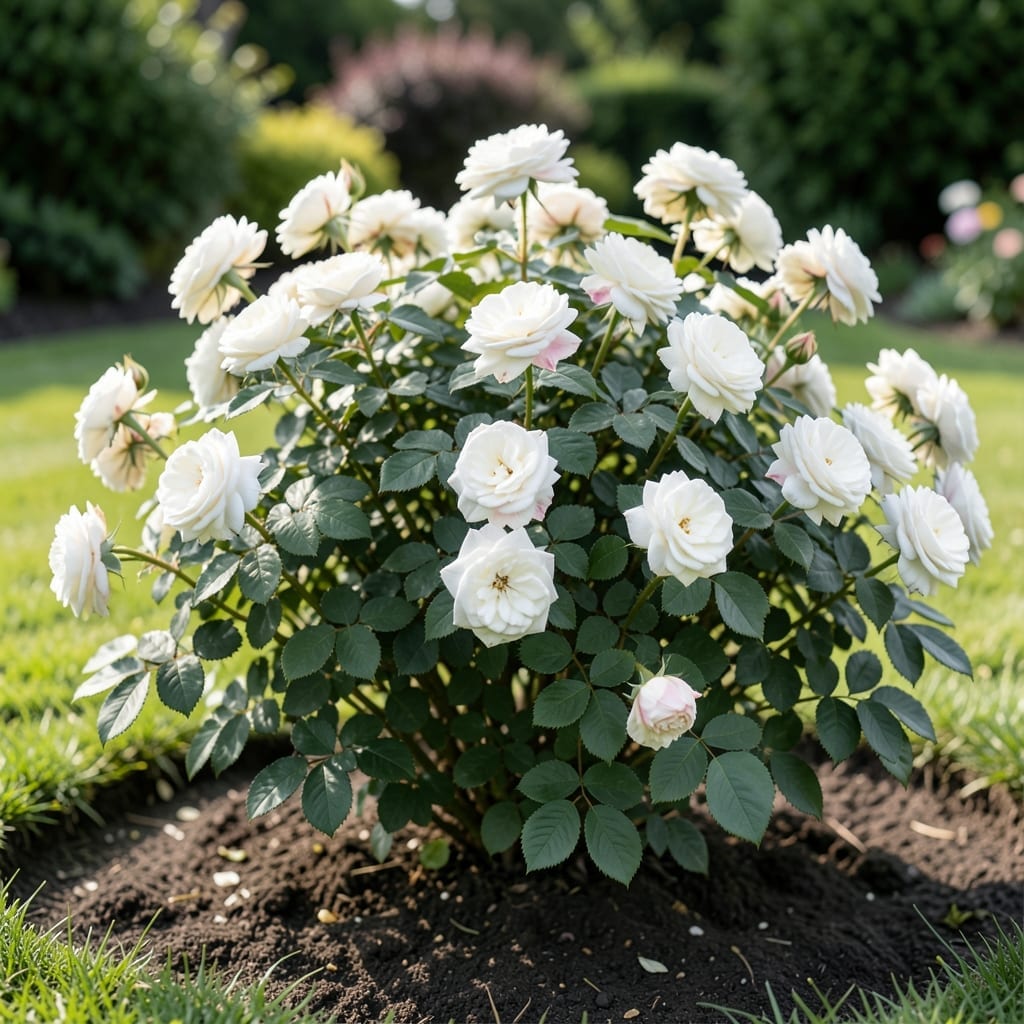
White Drift roses transformed my landscape with their disease-resistant beauty. These ground-cover roses spread low and wide, blanketing spaces with pure white blooms from spring until frost.
I started with three plants along my front walk. By the second season, they had filled in completely, requiring almost no maintenance beyond occasional pruning. The key is well-draining soil and full sun for those prolific flowers.
📚 In This Guide
Here’s the method I use to keep White Drift roses blooming nonstop from spring to frost.
Choose a location with full sun (at least 6-8 hours of direct sunlight daily) and well-draining soil. White Drift roses are tolerant of various soil types but thrive in loamy, slightly acidic soil with a pH between 6.0-6.5. I always test the soil first—it’s a game-changer for avoiding future issues.
Avoid low-lying areas where water pools, as this can lead to root rot. If your soil is heavy clay, amend it with compost or aged manure to improve drainage. Dig a hole twice as wide and deep as the root ball to give the roots room to spread out comfortably.
Gently remove the rose from its container and loosen the roots if they’re tightly bound. Place the plant in the hole so the bud union (the swollen area where the stems meet the roots) sits 1-2 inches above the soil line in cold climates or at soil level in warmer regions. This protects the plant from freeze damage and encourages strong root development.
Backfill the hole with native soil, watering lightly as you go to eliminate air pockets. Once the hole is filled, water deeply to settle the soil around the roots. I like to add a 2-3 inch layer of mulch around the base to retain moisture and suppress weeds, but keep it a few inches away from the stems to prevent rot.
White Drift roses need consistent moisture, especially during their first growing season. Water deeply at the base of the plant 2-3 times per week, ensuring the soil stays evenly moist but not soggy. A good rule of thumb: if the top inch of soil feels dry, it’s time to water again.
Fertilize in early spring as new growth appears, using a balanced, slow-release rose fertilizer. I apply it every 4-6 weeks throughout the growing season, stopping 6-8 weeks before the first frost to avoid encouraging tender new growth that won’t harden off in time for winter. Always follow the package instructions for application rates.
Prune in late winter or early spring, just as the buds begin to swell but before they break. Remove any dead, diseased, or crossing branches first. Then, shape the plant by cutting back the remaining canes by about one-third to encourage bushy growth and abundant blooms.
Deadhead spent blooms regularly to promote continuous flowering. Simply snip off the faded flower just above a set of healthy leaves or a bud. This prevents the plant from putting energy into seed production and redirects it toward new blooms. White Drift roses are repeat bloomers, so this step ensures a steady supply of flowers all season long.
Keep an eye out for common rose pests like aphids, spider mites, and Japanese beetles. I inspect the leaves and stems weekly, especially on the undersides where pests like to hide. A strong blast of water can dislodge aphids, while neem oil or insecticidal soap works well for heavier infestations.
Prevent diseases like black spot and powdery mildew by ensuring good air circulation around the plant. Space roses at least 3-4 feet apart and water at the base to keep the foliage dry. If you notice black spots or white powdery residue on the leaves, remove the affected foliage immediately and treat with a fungicide if necessary.
Small details in planting and care make the biggest difference for these hardy roses.
Sunlight Requirement: Don’t compromise on the 6-8 hours of full sun daily mentioned in Step 1. I’ve seen White Drift roses struggle with fewer than 6 hours—they’ll produce sparse blooms and leggy growth. Morning sun is ideal as it dries dew quickly, reducing disease risk.
Planting Depth: In Step 2, that 1-2 inch bud union positioning above soil line in cold climates isn’t arbitrary. Planting too deep invites rot, while too shallow exposes roots to freeze. In warmer zones, soil-level planting works, but never bury the union.
Watering Technique: The 2-3 times per week schedule in Step 3 assumes average conditions. During heatwaves, I check soil daily—if that top inch is dry, water immediately. Deep watering encourages robust root systems that reach farther into the soil.
Pruning Timing: Step 4’s late winter pruning window is critical. Pruning too early in cold climates risks frost damage to new growth, while pruning too late delays the first flush of blooms. The one-third reduction might seem drastic, but it invigorates the plant for more abundant flowering.
Water deeply 1-2 times per week, depending on weather. Ensure the soil is moist but well-drained to prevent root rot.
Plant in early spring or fall for optimal root establishment. Avoid extreme heat or frost periods.
Watch for aphids, black spot, or powdery mildew. Treat with neem oil or fungicides if needed.
Yes! Use a large pot with good drainage and quality potting mix. Ensure it gets 6+ hours of sunlight daily.
Check sunlight, water, and fertilizer levels. Prune dead wood and ensure proper air circulation.