
Beautiful Plants For Your Interior
Beautiful Plants For Your Interior
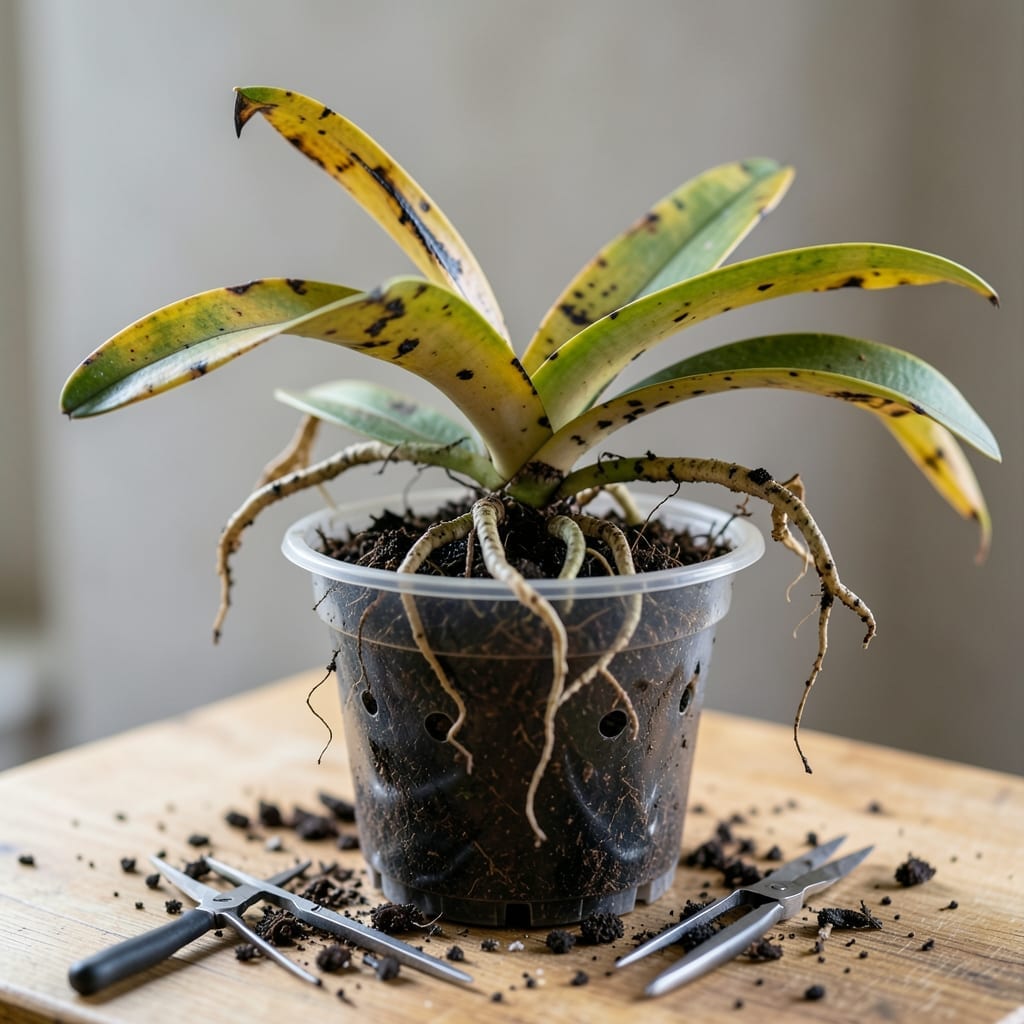
Yellowing leaves on your orchid aren’t just sad—they’re a distress signal. I’ve saved dozens from the brink by catching root rot early, and the fix is simpler than you’d think.
Overwatering suffocates roots, turning them mushy and brown while leaves turn yellow and limp. The good news? Most orchids bounce back within weeks with the right treatment and adjusted care routine.
You’ll learn to spot the difference between thirsty plants and drowning ones, then revive them with a few tools and 10 minutes of focused work. No green thumb required.
This method works for phalaenopsis, dendrobium, and most common house orchids. Let’s get those roots breathing again.
Root rot in orchids is a silent killer, often triggered by a mix of environmental and care-related factors. Understanding the why behind it is the first step to prevention. Here’s a breakdown of the primary causes:
Excess moisture is the most common culprit. Orchids, especially epiphytic types like Phalaenopsis, thrive in well-aerated roots. When waterlogged, their roots suffocate, unable to absorb oxygen. This creates an anaerobic environment where harmful bacteria and fungi (e.g., Phytophthora or Pythium) flourish, breaking down root tissues. Actionable fix: Water only when the top inch of the medium is dry, and ensure pots have drainage holes.
Standard potting soil retains too much water for orchids. Even “orchid mix” can become dense over time, trapping moisture. Sphagnum moss, while popular, compacts easily and holds water against roots. Science-backed solution: Use chunky, airy media like bark chips, perlite, or charcoal to promote airflow and rapid drainage.
Cool temperatures (below 60°F/15°C) slow down root metabolism, reducing their ability to absorb water. Combined with stagnant air, this prolongs drying time, creating a perfect storm for rot. Pro tip: Place orchids in a warm spot (65–80°F) with gentle air movement, like near a ceiling fan on low.
Fungal spores or bacteria from unclean tools or reused pots can infect healthy roots. Sterilizing pruning tools with rubbing alcohol and using fresh media for repotting minimizes this risk. Remember: Prevention is easier than cure—always prioritize hygiene.
Stopping root rot in overwatered orchids starts with quick, decisive action. Below are targeted fixes for each root cause, paired with simple prevention tips to keep your plant thriving long-term.
If soggy soil is the culprit, stop watering immediately and let the orchid dry out. Remove it from its pot and inspect the roots—mushy, black roots must be trimmed with sterilized scissors. Repot in fresh, fast-draining orchid mix (bark-based works best). Water only when the top inch of mix is dry, typically every 7–10 days.
Prevention tip: 💡 Use a clear pot to monitor root health and moisture levels. Stick to the “soak and dry” method: water thoroughly, then let excess drain completely.
Orchids hate “wet feet.” If your pot lacks drainage holes or uses dense soil, switch to a slotted orchid pot and a chunky, airy mix. Add perlite or charcoal to improve airflow. Elevate the pot on a tray with pebbles to prevent water pooling.
Prevention tip: 🎯 Avoid decorative cache pots without drainage—opt for functional designs that allow water to escape.
Stale air traps moisture around roots. Place your orchid in a bright, well-ventilated area (east-facing windows are ideal). Use a small fan on low to gently circulate air, but avoid direct drafts. For severe cases, a dehumidifier can help in humid climates.
Prevention tip: ✨ Group orchids loosely to promote airflow, and avoid overcrowding plants on shelves.
If roots are slimy or foul-smelling, they may have a fungal or bacterial infection. Soak the roots in a hydrogen peroxide solution (1 part 3% H₂O₂ to 4 parts water) for 10 minutes to disinfect. For stubborn cases, use a copper-based fungicide per label instructions. Always sterilize tools between cuts.
Prevention tip: 🌡️ Water in the morning so leaves dry by evening, reducing infection risks. Avoid getting water on leaves or crowns.
Look for yellowing leaves, mushy black roots, and a foul odor. Healthy roots are firm and green or silver, while rotten ones turn dark and squishy.
Remove it from the pot, trim black roots with sterilized scissors, and repot in fresh bark mix. Skip watering for 5-7 days to let roots recover.
No—old mix may harbor fungi or bacteria. Always use fresh, chunky orchid media like bark or perlite to prevent recurrence.
Water only when the top 1 inch of mix is dry, usually every 7-10 days. Overwatering again will undo your progress.