
Beautiful Plants For Your Interior
Beautiful Plants For Your Interior
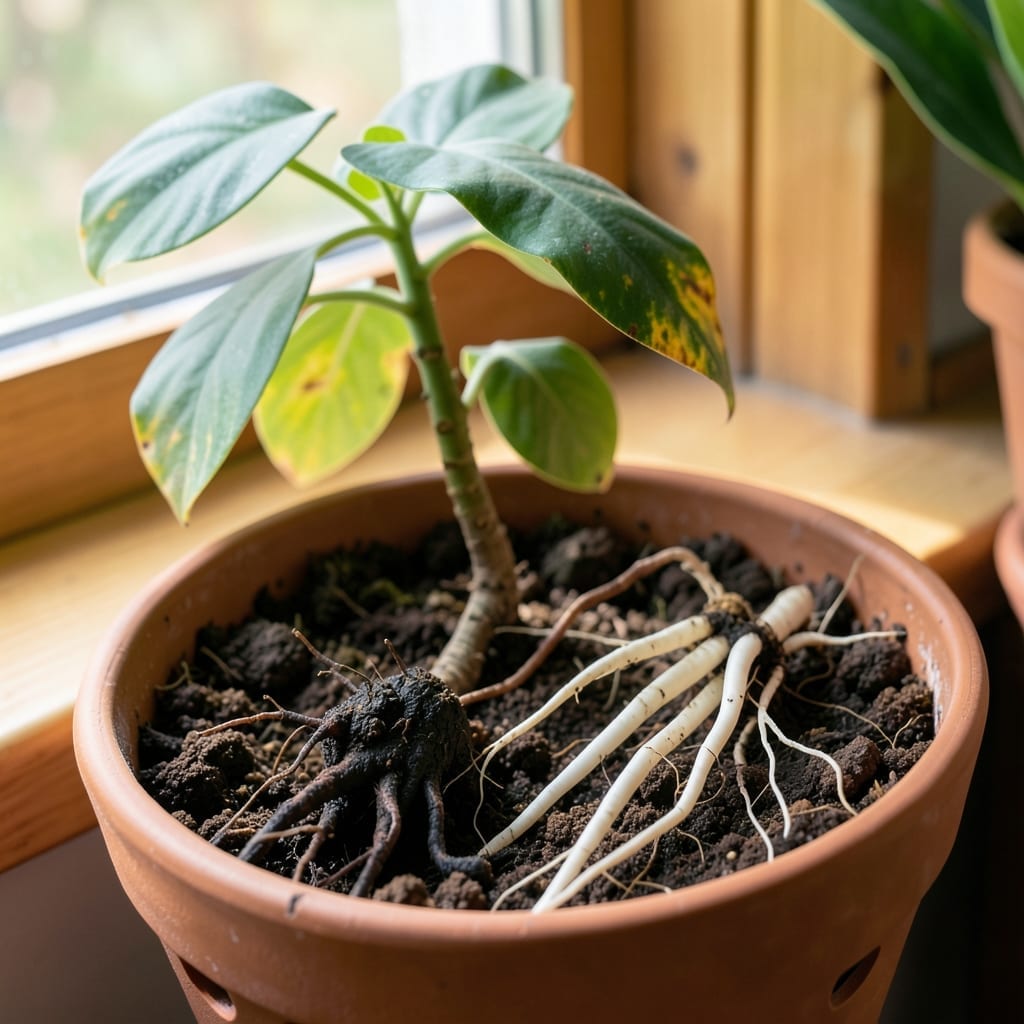
I lost my first three orchids to root rot before I learned to spot the early signs. It starts with yellowing leaves and wilting stems, even when the soil stays wet.
Plants like peace lilies, ferns, and tomatoes show classic symptoms—mushy brown roots, black stems, and that telltale sour smell. The key is catching it before the roots turn completely to sludge.
Prevention is simpler than you think: well-draining soil, pots with drainage holes, and a watering schedule that lets the top inch dry out. No special tools required.
Once you know what to look for, you’ll save plants you thought were goners. Here’s how to spot it fast and stop it in its tracks.
Root rot doesn’t appear out of nowhere—it’s the result of specific conditions that allow harmful pathogens to thrive. Here’s why it happens:
Excess water saturates the soil, pushing out oxygen and creating a suffocating environment for roots. Fungi like Phytophthora and Pythium flourish in these anaerobic conditions, attacking weakened roots. Clay-heavy or compacted soil worsens the problem by trapping moisture.
Pathogens can linger in reused potting mix, garden beds, or even unsterilized pruning tools. Fusarium and Rhizoctonia fungi, for example, survive in soil for years, infecting new plants when introduced. Always disinfect tools and use fresh, sterile soil for vulnerable species.
Injured or stressed roots (from transplant shock, nutrient deficiencies, or physical damage) are more susceptible to infection. Over-fertilizing can also burn roots, creating entry points for disease. Healthy plants with strong root systems resist rot more effectively.
High temperatures (75–85°F) and humidity accelerate fungal and bacterial growth. Greenhouses or poorly ventilated indoor setups are hotspots for Armillary root rot if airflow is restricted. Proper spacing and ventilation help mitigate this risk.
Tackling root rot early can save your plants. Here’s how to address common causes with practical fixes and prevention tips to keep your garden thriving.
If soggy soil is the culprit, stop watering immediately and let the top 1-2 inches of soil dry out. Repot the plant in fresh, well-draining soil, and ensure the pot has drainage holes. Prevention tip: 💡 Use a moisture meter or the finger test—water only when the soil feels dry.
Plants in heavy or compacted soil suffocate. Mix in perlite, sand, or bark to boost drainage. Switch to pots with drainage holes if yours lack them. Prevention tip: ✨ Elevate pots on stands to avoid water pooling at the base.
For fungal root rot, remove infected roots with sterilized scissors and treat the remaining roots with a copper-based fungicide or hydrogen peroxide solution (1 part peroxide to 10 parts water). Prevention tip: 🌡️ Space plants properly to improve airflow and reduce humidity.
If the soil harbors pathogens, discard it and replant in fresh, sterilized potting mix. For outdoor gardens, solarize the soil by covering it with clear plastic for 4-6 weeks to kill off fungi and bacteria. Prevention tip: 🎯 Rotate crops yearly to prevent soil-borne diseases.
Act fast, and your plants will thank you! 🌿
Healthy roots are firm and white or light tan. If they’re dark, mushy, or smell foul, your plant likely has root rot.
If most roots are black and mushy, recovery is unlikely. Trim any healthy roots and propagate cuttings from the top growth.
Inspect roots every 2-3 months for indoor plants. For outdoor gardens, check after heavy rains or if plants show wilting.
Yes! A 1:10 hydrogen peroxide to water solution can kill fungus and oxygenate roots. Soak affected roots for 10 minutes before repotting.