
Beautiful Plants For Your Interior
Beautiful Plants For Your Interior
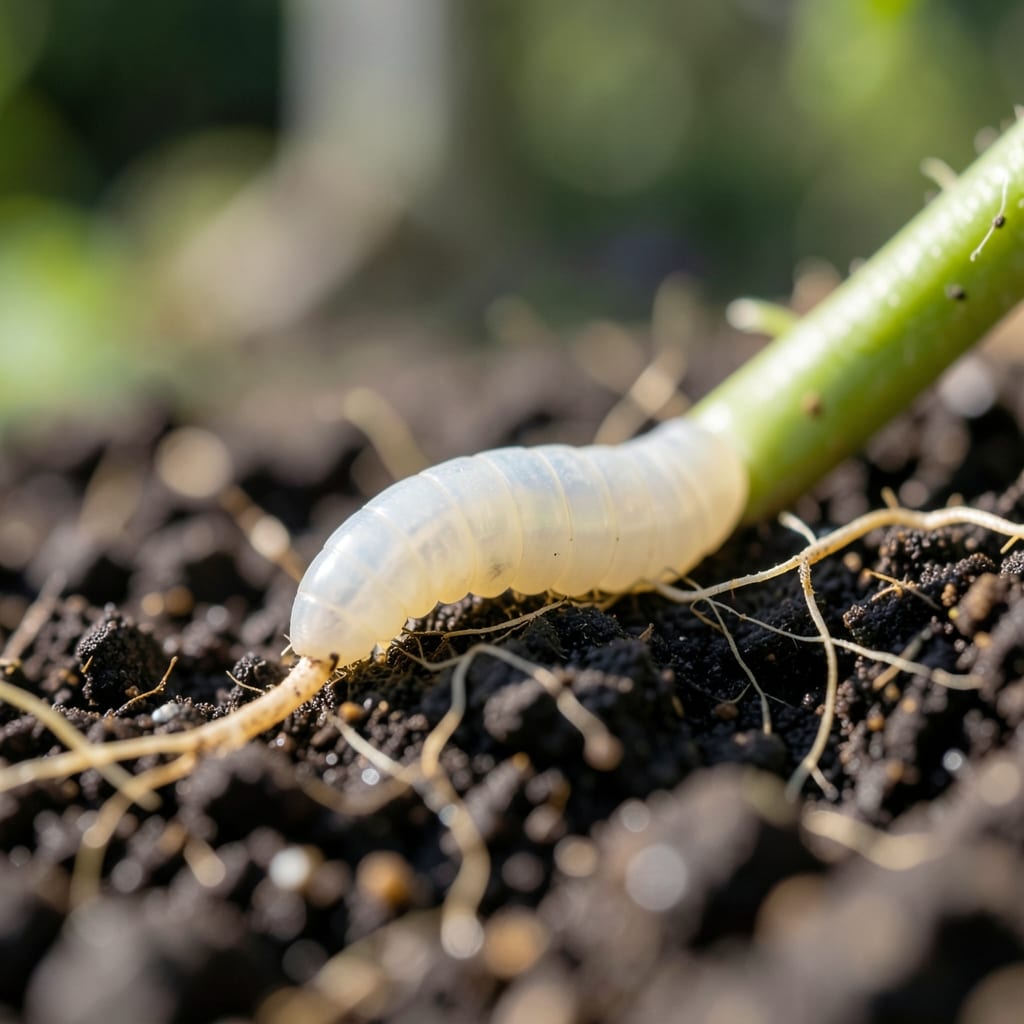
Invisible enemies lurking in your soil can devastate your garden overnight. Root nematodes are microscopic worms that attack plant roots, stunting growth and reducing yields without you even noticing.
Here’s the thing—I lost an entire tomato crop to these pests before learning natural control methods. Now my soil stays healthy and productive with simple, organic solutions that work season after season.
📚 In This Guide
These natural methods will restore balance to your soil and protect your plants.
Begin by examining both the foliage and the root system of affected plants. Above ground, you’ll notice stunted growth, yellowing leaves, or wilting during the coolest parts of the day—classic signs of nematode stress. I always check the roots next, as this is where the real damage shows.
Gently dig up a plant and inspect the roots for galls, knots, or swollen areas that look like tiny beads on a string. These are the calling cards of root-knot nematodes. Healthy roots should be firm and white, so discolored or mushy roots also indicate a problem that needs addressing.
Purchase species like Heterorhabditis bacteriophora or Steinernema feltiae, which are natural predators of harmful nematodes. These microscopic allies seek out and destroy pest nematodes without harming plants, earthworms, or other beneficial soil organisms.
Apply them in the early morning or late afternoon when temperatures are below 85°F and the soil is moist. I’ve found that spraying the solution directly onto the soil and lightly watering it in afterward ensures the nematodes move down where they’re needed most. Reapply every 4-6 weeks during the growing season for continuous protection.
Choose plant varieties labeled as nematode-resistant, such as certain tomatoes, peppers, or sweet potatoes. These plants naturally suppress nematode populations, giving your garden a fighting chance. I always rotate these into my garden beds where nematodes have been an issue.
In between growing seasons, plant cover crops like marigolds or mustard. Marigolds release natural compounds that repel nematodes, while mustard acts as a biofumigant when tilled into the soil, suppressing nematode populations. Both improve soil health while tackling the problem at its source.
Soil solarization is a chemical-free way to reduce nematode populations. Start by watering the soil deeply to a depth of 12 inches, then cover it with a clear plastic tarp. Secure the edges tightly to trap heat and moisture.
Leave the tarp in place for 4-6 weeks during the hottest part of the summer. The heat will kill nematodes, weed seeds, and other pathogens in the top layers of soil. I’ve used this method successfully in raised beds, where the controlled environment makes it especially effective.
After removing the tarp, aerate the soil with a garden fork to help it recover before planting.
Small details make a big difference when tackling these soil pests naturally.
The Temperature Factor: In Step 2, applying beneficial nematodes only works when temperatures are below 85°F. Early morning or late afternoon applications prevent these microscopic allies from drying out or becoming ineffective in the heat. I’ve seen them fail completely when applied midday in warmer weather.
Timing Insight: For Step 4, the 4-6 week solarization period isn’t arbitrary—it takes that long for soil temperatures to reach levels that kill nematodes at all life stages. Don’t cut this short or you’ll only get partial results. I mark my calendar to avoid removing the tarp too early.
Application Technique: When introducing beneficial nematodes in Step 2, spraying the solution directly onto moist soil and then lightly watering it in ensures they move down to where harmful nematodes live. A dry application will leave them stranded on the surface, unable to do their job effectively.
Soil Preparation: Before solarizing in Step 4, watering the soil deeply to 12 inches is crucial. This depth ensures the heat penetrates sufficiently to break the nematode life cycle. Skimping on the water means the heat won’t distribute evenly through the soil profile.
Use organic methods like planting marigolds, adding neem cake, or introducing beneficial nematodes (e.g., Steinernema carpocapsae). Crop rotation and solarizing soil also help disrupt nematode life cycles.
Treat in early spring or fall before planting. Solarization works best in hot summer months. For biological controls, apply when soil temps are warm (60–85°F) for optimal nematode activity.
Yes! Try compost tea, garlic or chili pepper sprays, or diatomaceous earth. These repel or reduce nematode populations without harsh chemicals.
Nematode damage may already be severe. Check roots for galls or decay. Ensure proper watering and soil health, as stress can mimic nematode symptoms. Reapply treatments if needed.