
Beautiful Plants For Your Interior
Beautiful Plants For Your Interior
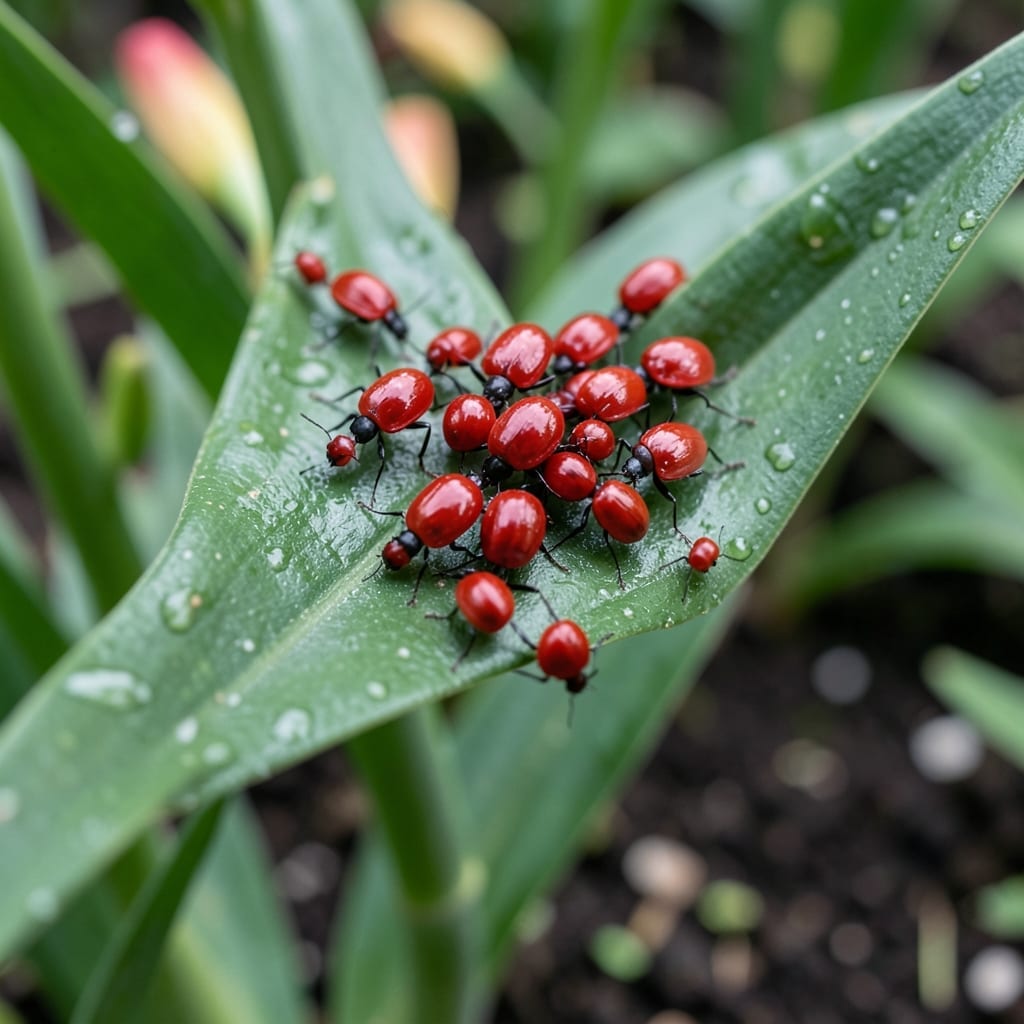
Red bugs on your lilies aren’t just unsightly—they’re a direct threat to this season’s blooms. I spotted them first on my Stella d’Oros three seasons ago, and ignoring them cost me half my flowers that summer.
These pests, usually lily leaf beetles or aphids, target leaves, buds, and stems, leaving skeletonized foliage and stunted growth in their wake. The damage compounds fast, especially in warm, dry spells when populations explode.
Organic removal works, but timing is everything. Hand-picking adults early morning or using neem oil at first sight stops the cycle before it spirals. Your lilies rebound with stronger stems and fuller flowers.
Works for all lily varieties, from Asiatics to trumpet types. Here’s how to protect them.
Red insects on lily plants are often a sign of underlying environmental or biological triggers. Here’s why they show up:
Excess moisture in the soil creates an ideal breeding ground for pests like red lily leaf beetles and aphids. Overwatered plants weaken, reducing their natural defenses. Ensure your lilies are planted in well-draining soil and water only when the top inch of soil is dry.
Red insects thrive when their natural predators (e.g., ladybugs, lacewings) are absent. Monoculture gardens or heavy pesticide use can disrupt this balance. Introduce beneficial insects or plant companion species like marigolds or dill to restore ecological harmony.
Red spider mites and aphids proliferate in hot, humid weather. These pests dehydrate plants by piercing leaves and sucking sap. Mitigate this by improving air circulation around lilies and using neem oil as a preventive spray during peak humidity.
Weak or stressed lilies attract pests more easily. A deficiency in nitrogen or potassium can make plants vulnerable. Conduct a soil test and amend with organic fertilizers (e.g., compost or fish emulsion) to strengthen plant resilience.
Dealing with red insects on your lily plants can be frustrating, but these practical solutions will help you restore their health. Below are targeted fixes for common causes, along with prevention tips to keep your lilies thriving.
Aphids are a frequent culprit behind red bugs on lilies. Blast them off with a strong stream of water to dislodge them, then apply a soapy water spray (1 tsp mild dish soap per liter of water). For stubborn cases, use neem oil (mix 2 tbsp with 1 gallon of water) and spray every 3–4 days until they’re gone. Prevention tip: 💡 Encourage ladybugs and lacewings—natural predators of aphids—by planting companion flowers like marigolds or yarrow nearby.
Red spider mites thrive in dry conditions. Increase humidity around your lilies by misting the leaves daily or placing a tray of water near the plants. Wipe leaves with a damp cloth to remove mites, and treat with insecticidal soap if the infestation persists. Prevention tip: 🌡️ Keep your garden well-watered and avoid over-fertilizing, which can attract mites.
These bright red beetles can defoliate lilies quickly. Handpick adults and larvae daily and drop them into soapy water. Apply kaolin clay as a barrier spray to deter them from laying eggs. Prevention tip: ✨ Rotate your lily plantings yearly to disrupt the beetles’ life cycle.
For all treatments, apply in the early morning or late evening to avoid harming beneficial insects like bees. Consistency is key—repeat treatments as needed until the pests are fully gone.
Lily leaf beetles, aphids, and red spider mites are the usual culprits. Beetles are bright red with black heads, while aphids appear as tiny red clusters on new growth.
Look for skeletonized leaves, yellowing foliage, or sticky residue (aphid honeydew). Spider mites leave fine webbing, while beetles chew irregular holes.
Yes, aphids and spider mites can migrate to nearby plants. Isolate infested lilies and treat immediately to prevent spreading.
Chemical pesticides work but may harm beneficial insects. Opt for neem oil or insecticidal soap first, and apply at dusk to protect pollinators.