
Beautiful Plants For Your Interior
Beautiful Plants For Your Interior
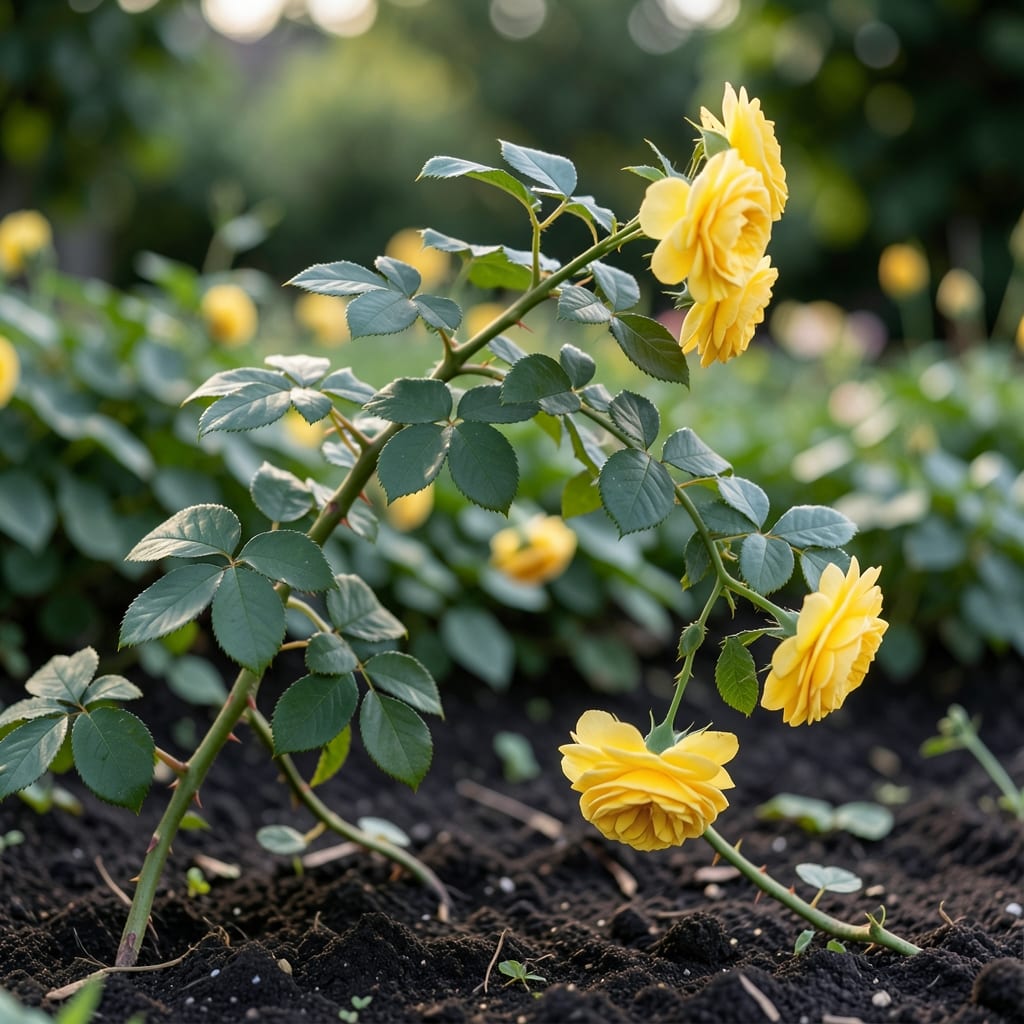
Nothing beats the sight of yellow rambling roses cascading over a fence in full bloom. I’ve watched these vigorous climbers transform boring walls into living art, with their clusters of bright, cheerful flowers.
They’re surprisingly low-maintenance once established, thriving in full sun with minimal fuss. The key is giving them room to roam—these plants can stretch 10-20 feet in a single season, rewarding you with months of color and fragrance.
📚 In This Guide
Here’s the method I use to coax vibrant, long-lasting blooms from these vigorous climbers every season.
Choose a location with full sun exposure (at least 6-8 hours of direct sunlight daily) and well-draining soil. Rambling roses thrive in slightly acidic to neutral soil (pH 6.0-7.0). Test your soil and amend it with compost or well-rotted manure to improve fertility and drainage.
Dig a hole that is twice as wide and deep as the root ball. This gives the roots room to spread and establishes a strong foundation. I always loosen the soil at the bottom and sides of the hole to encourage outward root growth.
Place the bare-root or container-grown rose in the hole, ensuring the graft union (the swollen area where the rose was budded onto the rootstock) sits 2-3 inches below soil level in cold climates or at soil level in warmer regions. This protects the graft from freeze damage.
Backfill the hole with the amended soil, gently firming it around the roots to eliminate air pockets. Water thoroughly with 1-2 gallons of water to settle the soil. I always create a small soil mound around the base to help direct water to the roots during the first few waterings.
Rambling roses are vigorous growers and need a sturdy support system. Install a trellis, arbor, or fence at planting time to avoid disturbing the roots later. The support should be at least 6-8 feet tall to accommodate the rose’s mature height.
Tie the main canes to the support with soft garden twine or cloth strips, securing them at 12-18 inch intervals. Avoid using wire or anything that could cut into the stems as they thicken. I check the ties every few weeks during the growing season to prevent girdling.
Water deeply 2-3 times per week during the first growing season, providing 1-2 gallons per plant each time. This encourages deep root growth. Once established, reduce watering to once per week, but increase to daily during extreme heat or drought.
Always water at the base of the plant to keep the foliage dry, which helps prevent fungal diseases. I water early in the morning so the leaves have time to dry before evening. Check soil moisture by inserting your finger 2 inches deep—if it feels dry, it’s time to water.
Prune rambling roses in late winter or early spring, just as new growth begins. Remove dead, diseased, or crossing canes first, then thin out about one-third of the oldest canes to the ground to rejuvenate the plant.
Shape the remaining canes by cutting back lateral branches to 2-3 buds. This directs energy toward strong, flowering growth. I also remove any suckers that emerge from below the graft union, as they drain energy from the main plant. After pruning, apply a balanced fertilizer to support new growth.
These insights will help you avoid common pitfalls and grow stunning blooms.
Sunlight Essentials: The 6-8 hours of daily direct sunlight isn’t just a suggestion—it’s critical for abundant flowering. I’ve seen roses struggle with only 4-5 hours, producing sparse, weak blooms. If your garden has partial shade, prioritize morning sun, which is less intense and helps prevent petal scorch during hot afternoons.
Soil Preparation Secret: When amending soil in Step 1, don’t just add compost to the hole—mix it into the surrounding soil as well. This encourages roots to spread beyond the planting area. I also recommend adding a handful of bone meal to the hole for extra phosphorus, which promotes strong root development and prolific blooming.
Support System Timing: Install your 6-8 foot tall trellis or arbor at planting time as mentioned in Step 3. Waiting until the rose is established means you’ll risk damaging roots when installing supports later. I learned this the hard way when I had to prune back established canes to fit them to a new trellis, which set back blooming for a full season.
Watering Wisdom: The 2-3 times weekly watering during the first season is non-negotiable for establishing deep roots. I use a moisture meter to check at that 2-inch depth mentioned in Step 4—it takes the guesswork out of when to water. During heat waves, I water in the early morning and then again in the late afternoon, always at the base to keep foliage dry.
Prune your rambling rose yellow after flowering (usually late summer) to remove dead wood and shape the plant. Light pruning in winter can also encourage new growth. Avoid heavy pruning in spring, as it may reduce blooms.
Yellow leaves often signal nutrient deficiencies (like nitrogen or iron) or overwatering. Check soil drainage and fertilize with a balanced rose feed. Pest infestations or fungal diseases (e.g., black spot) could also be culprits.
Yes! Choose a large container (20+ inches deep) with good drainage. Use high-quality potting mix and ensure the plant gets full sun. Container-grown roses need frequent watering and occasional feeding.
Plant in early spring or fall when temperatures are mild. This gives roots time to establish before extreme heat or frost. Avoid planting in peak summer or winter to reduce stress on the rose.
Yes! Try ‘Mermaid’ or ‘Rambling Rector’—both are vigorous, disease-resistant climbers with similar charm. For yellow blooms, ‘Golden Showers’ is a hardy alternative with repeat flowering.