
Beautiful Plants For Your Interior
Beautiful Plants For Your Interior
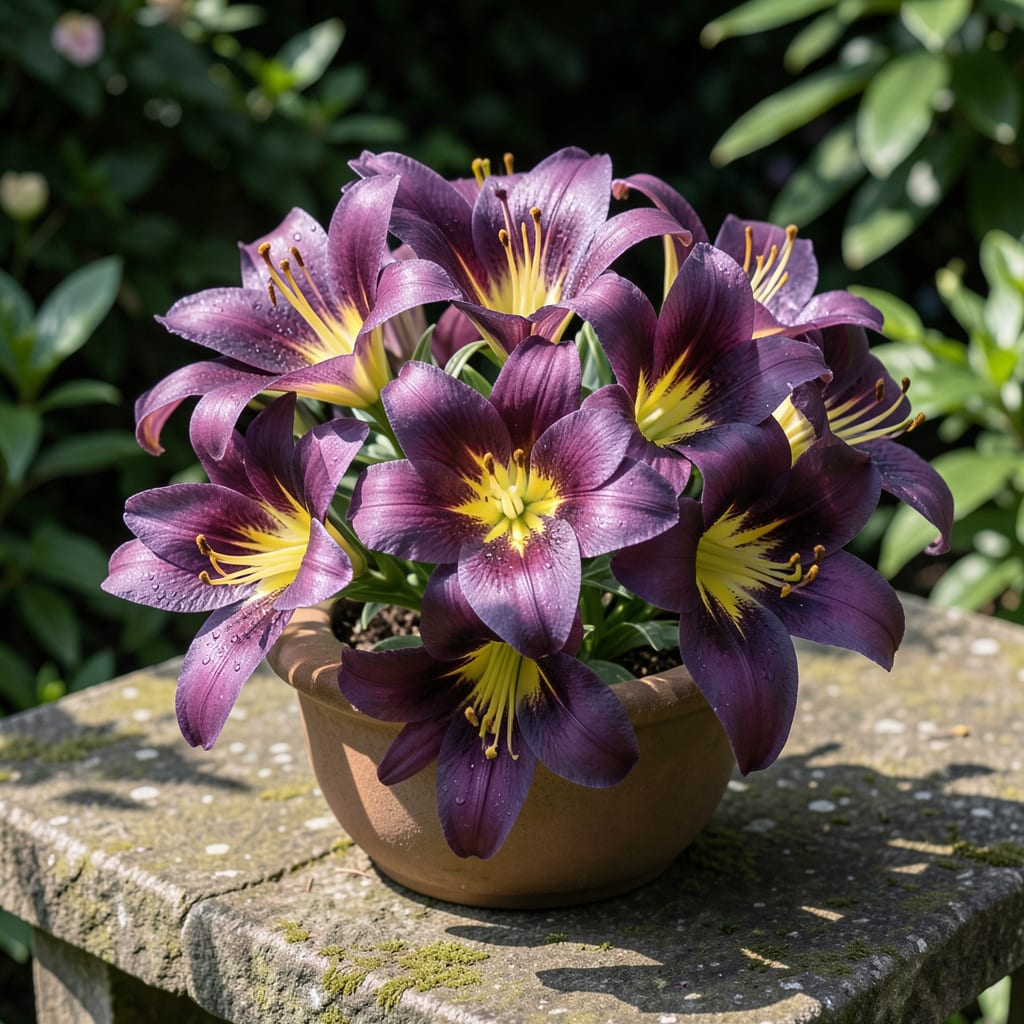
Summer gardens come alive with purple and yellow lilies. I planted my first batch three years ago, and they’ve returned bigger and brighter every season with almost no effort.
These resilient blooms thrive in full sun with well-draining soil. Once established, they handle heat better than most perennials, and their vibrant colors attract pollinators for weeks of nonstop beauty.
📚 In This Guide
Here’s the method I rely on to create a stunning summer display with these bold, cheerful blooms.
Choose a spot with full sun to partial shade—at least 6 hours of direct sunlight daily for vibrant color. Lilies prefer well-draining soil with a pH between 6.0 and 6.5. Test your soil by squeezing a handful: if it crumbles easily, it’s loose enough; if it stays in a tight ball, amend with compost.
Avoid low-lying areas where water pools, as soggy soil will rot the bulbs. I’ve lost more lilies to poor drainage than any other issue. If your garden has heavy clay, consider raised beds or containers with drainage holes.
Dig a hole 4-6 inches deep and twice as wide as the bulb. Lilies perform best in rich, fertile soil, so mix in a generous amount of organic matter like compost or well-rotted manure. This improves both drainage and nutrient content.
Space bulbs 8-12 inches apart to allow for mature growth and air circulation. Planting too close leads to crowded, weak stems. For a natural look, arrange bulbs in clusters of three rather than straight lines.
Place the bulb in the hole with the pointed end facing upward. The base should sit 4-6 inches below the soil surface—this depth protects it from temperature swings. Backfill with the amended soil, pressing lightly to eliminate air pockets.
Water thoroughly after planting to settle the soil and encourage root growth. You’ll know it’s enough when the top 2-3 inches of soil feel evenly moist. Don’t water again until the surface begins to dry, usually in 3-5 days depending on weather.
Keep the soil consistently moist but not waterlogged during the growing season. Lilies are drought-tolerant once established, but consistent moisture in early growth produces the most flowers. I water deeply once a week rather than shallow daily watering, which encourages deep root systems.
Apply a balanced, slow-release fertilizer in early spring when shoots emerge, and again after flowering. Look for 10-10-10 or 5-10-5 ratios—this supports both foliage and bloom production. Avoid high-nitrogen fertilizers, which promote leafy growth at the expense of flowers.
As stems grow, install stakes or a grow-through support ring to prevent toppling, especially for taller varieties. Lilies often reach 3-4 feet and their heavy blooms can bend stems in wind or rain. Tie stems loosely with soft twine or garden tape to allow for growth.
Deadhead spent flowers by pinching them off at the base, but leave the foliage until it yellows and dies back naturally. This allows the plant to store energy in the bulb for next year’s blooms. Cutting back too early weakens the plant and reduces future flowering.
These proven strategies will help you achieve a thriving, colorful display.
Sunlight Strategy: Those 6 hours of daily direct sunlight are non-negotiable for vibrant blooms. I learned this the hard way after planting some in too much shade—they produced weak stems and pale flowers. If your garden has partial shade, prioritize morning sun over afternoon shade to maximize energy uptake.
Drainage Wisdom: The quick soil test mentioned in Step 1 is your best defense against bulb rot. If your soil stays in a tight ball when squeezed, don’t just add compost—consider amending with coarse sand or perlite. I’ve saved countless bulbs by planting in raised beds when dealing with clay-heavy soil.
Planting Depth Insight: That 4-6 inch planting depth isn’t arbitrary—it protects bulbs from both freezing temperatures and summer heat. Shallower planting leads to temperature stress, while deeper planting can delay emergence. The sweet spot really is in that range, with the pointed end always facing up.
Spacing Logic: The 8-12 inch spacing allows for proper air circulation, which prevents fungal diseases. I arrange mine in staggered clusters of three rather than straight rows for a more natural look while maintaining the recommended distance between planting holes.
Plant them in early spring or fall for optimal growth. This timing allows roots to establish before summer heat or winter frost.
Provide full sun to partial shade, well-draining soil, and regular watering. Deadhead spent blooms to encourage more flowers.
Yes! Use a large pot with drainage holes and rich potting mix. Ensure they get at least 6 hours of sunlight daily.
Overwatering, poor drainage, or nutrient deficiencies may cause yellowing. Check soil moisture and fertilize if needed.
Try daylilies, irises, or tulips for purple and yellow hues. These also thrive in summer gardens with minimal care.
