
Beautiful Plants For Your Interior
Beautiful Plants For Your Interior
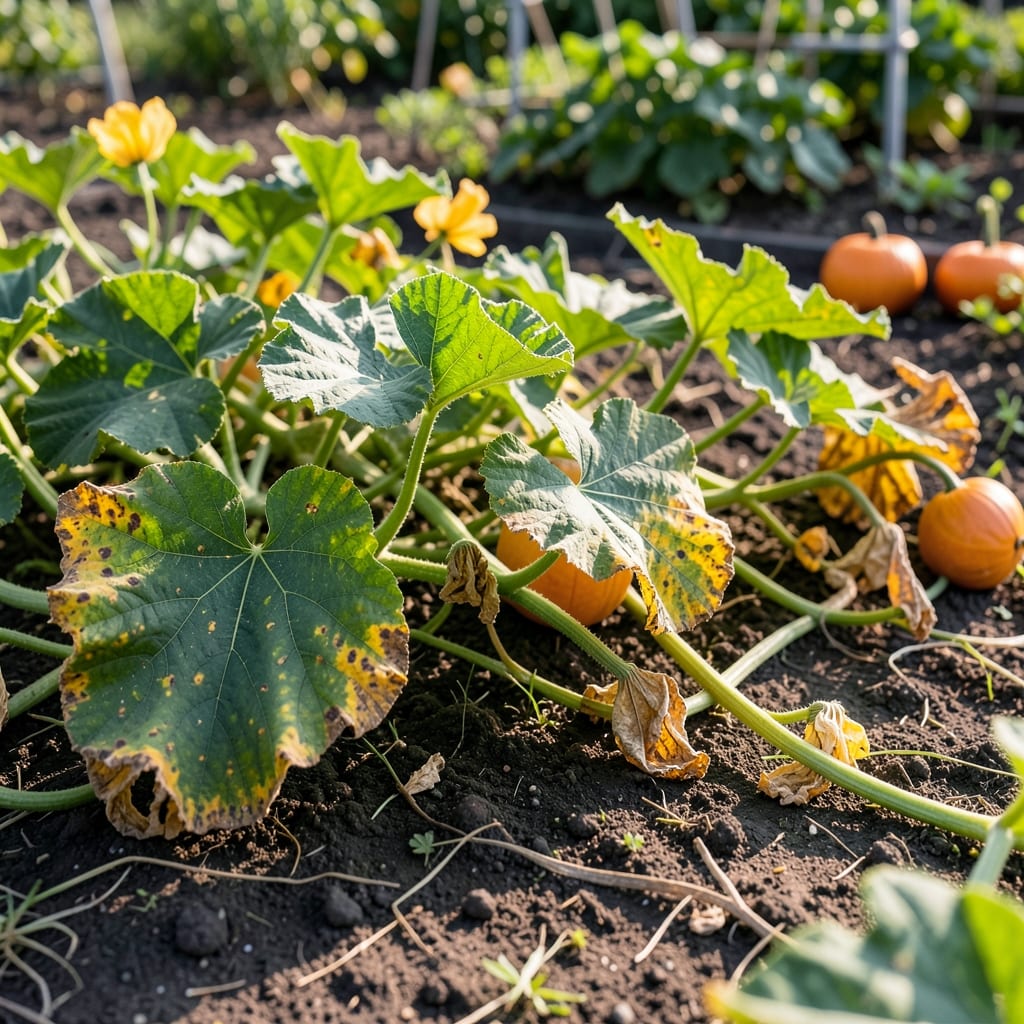
Nothing kills harvest momentum like watching pumpkin vines wither overnight. I lost an entire patch to vine rot my second season, and the lesson stuck hard.
This sneaky problem starts with yellowing leaves and soft stems, then spreads like wildfire through your patch. The culprit is usually overwatering or poor drainage, but humidity and soil born fungi play their part too.
You can stop it before it starts with simple habits: water at the base, not the leaves, and give vines plenty of air circulation. A little prevention saves weeks of heartbreak.
Organic solutions work when caught early. The key is acting fast before the rot claims your entire harvest.
Pumpkin vine rot is a frustrating issue that can derail your harvest, but understanding its root causes helps you prevent it. Below are the most common culprits behind this problem.
Pumpkin vines thrive in well-drained soil, but overwatering or heavy rainfall can create waterlogged conditions. This excess moisture encourages fungal pathogens like Phytophthora and Pythium to thrive, leading to root and vine rot. Poor drainage exacerbates the issue by trapping water around the roots.
Pathogens such as Fusarium, Verticillium, and Erwinia (a bacterial culprit) are common causes of vine rot. These organisms enter through wounds or stressed tissue, often spreading rapidly in warm, humid conditions. Infected vines may show wilting, yellowing, or blackened stems.
Pumpkin plants need good air circulation to stay healthy. High humidity and crowded plantings create a perfect environment for fungal spores to germinate and spread. Without proper spacing or pruning, vines become more susceptible to rot.
Many rot-causing organisms live in the soil, waiting for the right conditions to attack. Using contaminated soil or garden tools can introduce these pathogens to your pumpkin patch. Crop rotation and soil solarization can help reduce their presence.
Over-fertilization, especially with nitrogen, can lead to excessive foliage growth at the expense of strong vine development. Weak or stressed vines are more vulnerable to infections. A balanced fertilizer and proper soil testing can prevent this issue.
When pumpkin vine rot strikes, quick and targeted action can save your crop. Below are practical fixes for common causes, paired with prevention tips to keep your vines thriving.
Start by removing infected vines to prevent the spread of Phytophthora or Fusarium. Trim affected areas with clean shears and dispose of debris far from the garden. Next, thin out dense foliage to boost airflow. Apply a copper-based fungicide or organic options like neem oil or baking soda spray (1 tbsp baking soda + 1 tsp dish soap + 1 gallon water) every 7–10 days. Prevention: Space plants 3–4 feet apart and water at the base to avoid wetting leaves.
Stop watering immediately if the soil is soggy. Let the top 1–2 inches of soil dry out before resuming. For clay-heavy or compacted soil, mix in compost or sand to improve drainage. Raise beds or use mulch (straw or wood chips) to prevent waterlogging. Prevention: Use drip irrigation to deliver water directly to roots and avoid overhead watering.
If vines are wilting from heat stress, erect temporary shade cloth (30–50% shade) during peak afternoon hours. For humidity-related rot, improve ventilation by pruning excess leaves. Avoid working with plants when they’re wet to reduce disease risk. Prevention: Plant in well-ventilated areas and choose heat-tolerant pumpkin varieties.
Inspect vines for squash bugs or cucumber beetles, which create entry points for rot. Handpick pests or use row covers early in the season. Apply diatomaceous earth around the base of plants to deter crawlers. Prevention: Rotate crops yearly and interplant with pest-repelling herbs like basil or marigolds.
Pro tip 💡: Always sanitize tools and garden gloves after handling infected plants to avoid spreading pathogens.
Look for yellowing leaves, soft or discolored stems, and wilting during the day. Early signs often include dark spots or a foul odor from the base of the plant.
Use drip irrigation at the base and water deeply 2-3 times per week. Avoid overhead watering and ensure soil drains well to prevent soggy conditions.
If caught early, remove affected vines and treat with fungicide. For severe cases, it’s best to pull the plant to protect others in the patch.
Yes! Rotate pumpkins with unrelated crops like beans or corn for at least 2-3 years. This breaks the life cycle of soil-borne pathogens.