
Beautiful Plants For Your Interior
Beautiful Plants For Your Interior
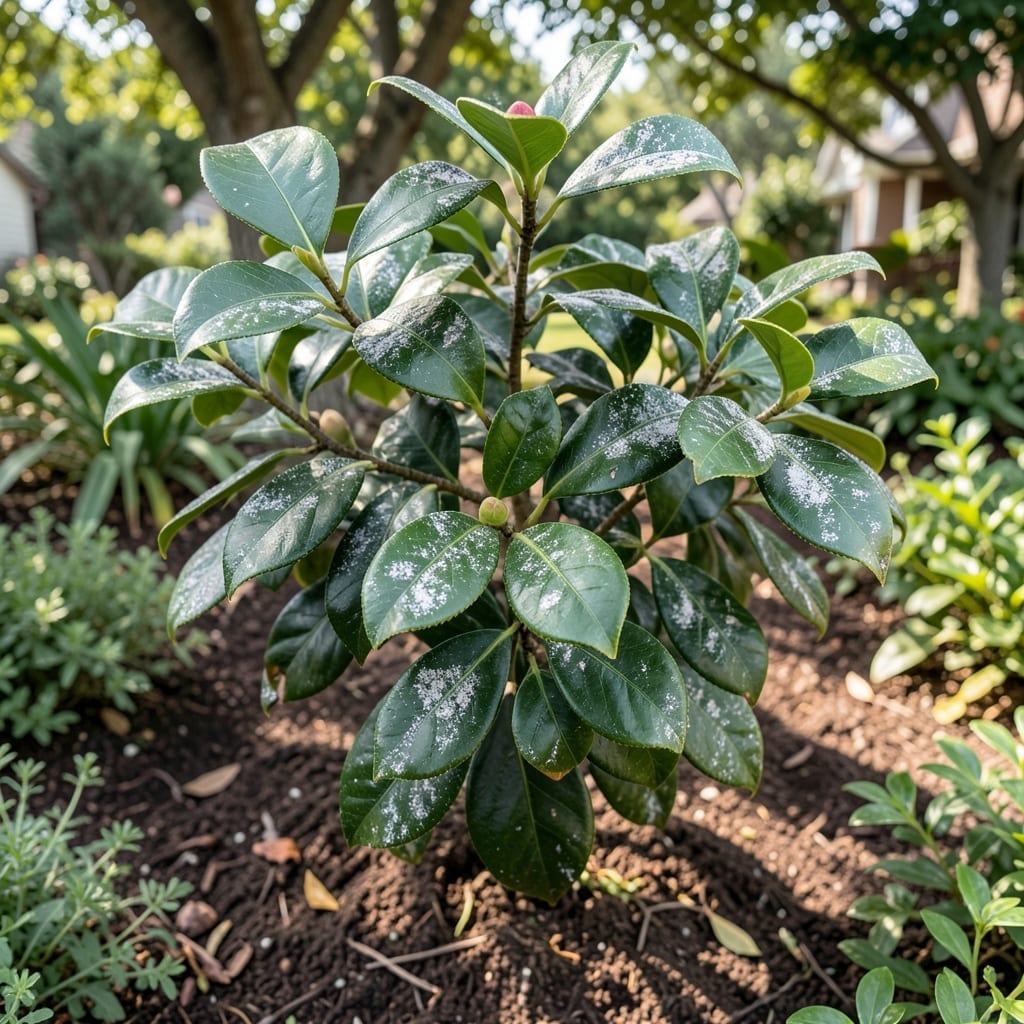
White powder on camellia leaves means trouble. I first noticed it after a wet spring, and it spread fast—covering buds and stunting growth.
This fungus loves humidity and poor air flow. Left untreated, it weakens plants and ruins blooms. The good news? Natural remedies like neem oil and baking soda sprays work surprisingly well without harsh chemicals.
Prevention is simpler than cure: space plants properly, water at the base, and prune for airflow. A little attention now saves months of frustration later.
Even better, these methods protect your garden’s ecosystem while keeping camellias healthy and flowering beautifully.
Powdery mildew on camellias thrives under specific environmental and cultural conditions. Understanding these triggers helps prevent and manage outbreaks effectively.
This fungal disease flourishes in environments with 60–80% relative humidity combined with stagnant air. Camellias planted too closely together or in shaded, poorly ventilated areas trap moisture, creating ideal conditions for Erysiphe or Oidium spores to germinate and spread.
Wet foliage, especially when water sits on leaves for extended periods, accelerates spore growth. Overhead irrigation or frequent rain can leave camellia leaves damp, providing the moisture powdery mildew needs to take hold. Water at the base to keep foliage dry.
Powdery mildew thrives in moderate temperatures (60–80°F or 15–27°C). Sudden temperature swings, particularly warm days followed by cool, dewy nights, stress the plant and make it more susceptible to infection.
Camellias grown in dense plantings or with excessive nitrogen fertilization (promoting soft, succulent growth) are more vulnerable. Stressed or weak plants lack the vigor to resist fungal spores, while overcrowding reduces airflow and light penetration.
Some camellia cultivars, particularly those with glossy, broad leaves (e.g., Camellia japonica), are genetically more prone to powdery mildew. Older or poorly maintained plants may also show reduced resistance.
Tackling powdery mildew on your camellias starts with identifying the root cause and applying the right fix. Here’s a practical, cause-to-solution guide to restore your plant’s health:
If you’re wetting the leaves while watering, switch to drip irrigation or a soaker hose to keep foliage dry. Water early in the day so any moisture on the leaves evaporates quickly in the sunlight. Prevention tip: Always water at the base to avoid creating a humid environment that fungi love.
Thick foliage or crowded plantings trap moisture and encourage mildew. Prune dense branches to open up the canopy and allow air to flow freely. Space camellias at least 3–4 feet apart for better circulation. Prevention tip: Regularly thin out inner growth to keep airflow consistent.
Powdery mildew thrives in humid conditions. Use a dehumidifier in greenhouses or ensure outdoor plants have good spacing. Mulch with gravel or inorganic materials to minimize soil moisture evaporation. Prevention tip: Avoid overhead misting and opt for well-draining soil to keep humidity in check.
At the first sign of white, powdery spots, prune affected leaves and stems and dispose of them in sealed bags (not compost). Apply a baking soda solution (1 tbsp baking soda + 1 tsp dish soap + 1 gallon of water) or neem oil spray weekly until the issue clears. Prevention tip: Sterilize pruning tools with rubbing alcohol between cuts to avoid spreading spores.
💡 Pro tip: Boost your camellia’s resistance by applying a sulfur-based fungicide preventatively in early spring or after heavy rains.
It appears as white, powdery spots on the upper leaf surfaces. These patches can spread quickly, turning yellow or brown if untreated. Check the undersides too, as spores often start there.
Rarely, but severe cases weaken the plant and reduce flowering. Young or stressed camellias are most vulnerable. Act fast with treatment to prevent long-term damage.
Yes! A mix of 1 tablespoon baking soda, 1 teaspoon dish soap, and 1 gallon of water works well. Spray weekly until the issue clears. Always test on a small area first.
Improve airflow by spacing plants 3-4 feet apart and pruning densely. Water at the base in the morning, and avoid overhead sprinkling.