
Beautiful Plants For Your Interior
Beautiful Plants For Your Interior
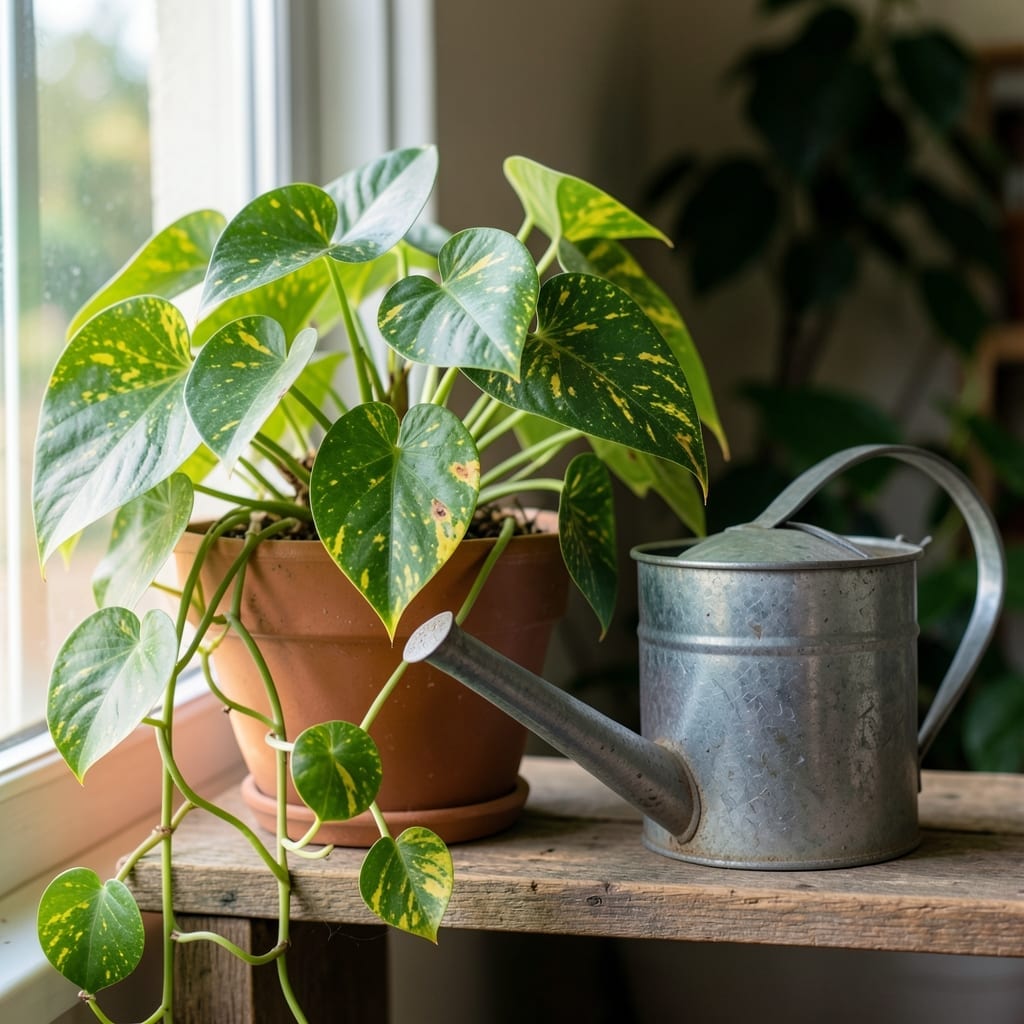
Yellow leaves and mushy stems on your pothos mean one thing: too much love in the watering department.
I’ve drowned more pothos than I care to admit before learning the rescue routine. The fix starts with stopping all water and checking the roots—black and squishy means rot, firm and white means hope.
After trimming the bad roots and repotting in fresh soil, most plants bounce back within 2-3 weeks. The key is patience and a new watering schedule: only when the top inch of soil feels dry.
Prevention is simpler than the cure. Use pots with drainage holes and let the plant tell you when it’s thirsty. No more guessing games.
Overwatering your pothos isn’t just about how much water you give—it’s about how often and how well the plant can handle it. Here’s why it happens, broken down into the most common culprits:
Pothos thrive in well-draining soil and containers with drainage holes. When water can’t escape, it pools at the bottom, suffocating the roots. Science behind it: Roots need oxygen to respire. Saturated soil displaces air pockets, leading to anaerobic conditions where roots can’t absorb nutrients, causing rot.
Many plant parents water on a rigid schedule (e.g., “every Monday”) instead of checking soil moisture. Pothos prefer their soil to dry out slightly between waterings. Actionable fix: Stick your finger 1–2 inches into the soil—if it’s damp, wait. Overwatering disrupts the plant’s natural water uptake balance.
A pot that’s too large holds excess moisture, increasing the risk of root rot. Why? The soil-to-root ratio is off—roots can’t absorb all the water, leaving the medium soggy. Opt for a pot just 1–2 inches wider than the root ball to prevent this.
Dense or peat-heavy soils retain too much moisture. Pothos need a light, airy mix (e.g., perlite or orchid bark) to allow water to flow through. Pro tip: Amend your soil with 30% perlite or sand to improve drainage.
In low light, pothos grow slowly and use less water. Coupled with cold temps (below 50°F), evaporation slows, keeping soil damp longer. Solution: Reduce watering frequency in winter or dimly lit spaces.
If your pothos is suffering from overwatering, don’t panic—it’s often fixable! Here’s how to tackle the most common issues and nurse your plant back to health.
If the leaves are turning yellow, the first step is to stop watering immediately and let the soil dry out. Check the top 1-2 inches of soil—if it’s damp, wait longer. Once dry, resume watering only when the soil feels dry to the touch. Use a well-draining potting mix to prevent future sogginess.
Prevention tip: 💡 Stick your finger in the soil before watering—if it’s moist, hold off!
For mushy, black, or smelly roots, act fast. Gently remove the plant from its pot and trim away all affected roots with clean scissors. Repot in fresh, dry soil and a clean container with drainage holes. Avoid watering for a few days to let the roots recover.
Prevention tip: 🎯 Always use pots with drainage holes and empty the saucer after watering.
If your pothos looks limp, it may need better airflow or light. Move it to a spot with bright, indirect light and ensure it’s not sitting in a drafty or overly humid area. A small fan can help circulate air and speed up drying.
Prevention tip: ✨ Rotate your plant occasionally for even light exposure.
With these steps, your pothos should bounce back in no time. Stay consistent, and your plant will thank you with lush, vibrant growth!
Check for mushy, dark brown or black roots that fall apart easily. Healthy roots are firm and white. A foul smell from the soil is another sure sign of rot.
It’s difficult but possible. Trim all dead roots, then propagate healthy stems in water. New roots may grow within 2-4 weeks if the stems are still green.
Wait 5-7 days before watering to let roots recover. After that, water only when the top 1-2 inches of soil are dry.
Use a well-draining mix with 50% potting soil and 50% perlite or orchid bark. This ensures excess water drains quickly.