
Beautiful Plants For Your Interior
Beautiful Plants For Your Interior
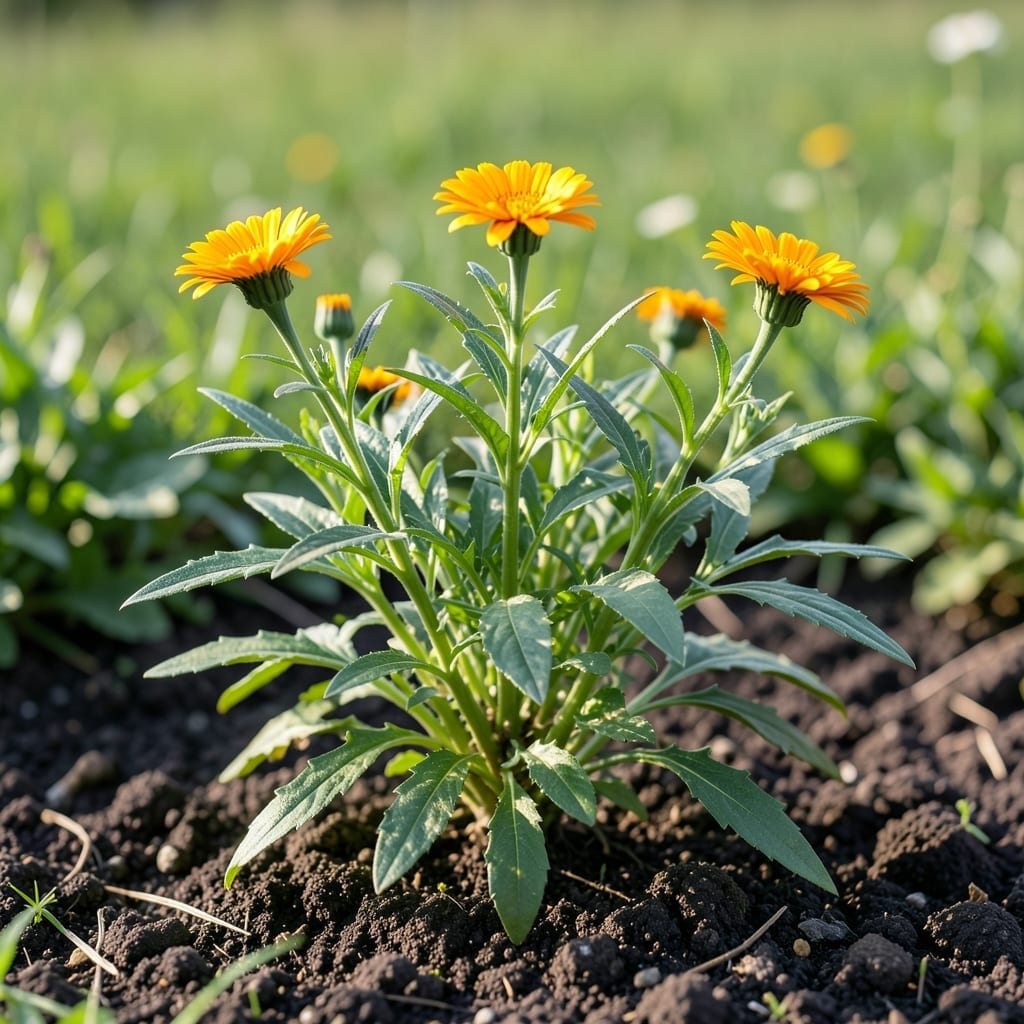
Those bright orange flowers hide a secret in their leaves. I learned the hard way that pot marigold foliage can reveal pest attacks, fungus issues, or nutrient gaps before the blooms ever suffer.
Spotting the early warning signs—yellow edges, black spots, or sticky residue—means you can fix problems before they spread. The right approach keeps your plants healthy and productive all season long.
📚 In This Guide
Here’s how to safely identify and handle pot marigold leaves with confidence and care.
Pot marigold leaves grow in an alternate pattern along the stem, meaning each leaf emerges at a different height rather than in pairs. I always start by checking the leaf shape—it should be lance-shaped or slightly oblong, with edges that can be smooth or finely serrated. The color is a deep, rich green, often with a slightly textured surface.
Look closely for the pinnate venation, where veins branch out from a central midrib like the spine of a feather. This is a hallmark of pot marigolds and helps distinguish them from look-alikes. If the leaves are opposite or whorled, you’re likely dealing with a different plant.
Crush a small section of the leaf between your fingers to release the scent. Pot marigold leaves emit a distinct, slightly pungent aroma that’s earthy and a bit peppery. This is a key sensory checkpoint—if there’s no scent or it smells floral, it’s not a pot marigold.
The texture is another giveaway. Run your fingers along the surface—it should feel slightly rough or hairy, especially on the underside. This fine pubescence is a protective adaptation and another reliable identifier.
While focusing on leaves, glance at the stems and any nearby flowers. Pot marigold stems are often reddish at the base and can be slightly ribbed. The flowers, if present, are daisy-like with yellow to orange petals and a darker central disk, which further confirms the identification.
If the plant has no flowers, rely on the stem’s color and texture. A reddish tint and a slightly fuzzy stem are strong indicators. I’ve found that even in the absence of blooms, these traits are consistent across the species.
Pot marigold leaves can cause mild skin irritation in sensitive individuals due to their natural compounds. I always recommend wearing gloves when handling them, especially if you’re harvesting or pruning. This protects your hands from potential reactions while allowing you to work comfortably.
After handling, wash your hands thoroughly with soap and water. This removes any residual sap or oils that might linger on your skin. If you notice redness or itching, discontinue handling and rinse the affected area immediately.
If you’re still unsure, cross-reference your observations with a reliable field guide or consult a local horticulturist. I like to take clear photos of the leaves, stems, and any flowers to share for verification. This step ensures accuracy, especially if you’re new to identifying pot marigolds.
Field guides often highlight subtle differences between similar-looking plants, such as leaf margins or vein patterns. An expert can also provide insights into regional variations, which can sometimes complicate identification.
These insights will sharpen your identification skills and keep you safe while handling.
The Leaf Detail: In Step 1, focus on the 2-4 inch length and ½ to 1 inch width—these precise dimensions are key. The lance-shaped form with slightly toothed edges is distinctive, but I’ve found the faint hairy texture along the veins is the most reliable visual clue when flowers aren’t present.
Stem Structure: For Step 2, remember that pot marigolds never form basal clumps. That upright, branching habit with leaves evenly distributed is unique. The reddish tint near the base in cooler weather is a subtle but telling detail I didn’t notice until I’d handled dozens of specimens.
Flower Confirmation: Step 3’s flower characteristics are non-negotiable. True pot marigolds only produce orange or yellow blooms—never white or purple. The 1-2 inch width and slightly raised center are dead giveaways, and that mild spicy scent when crushed is the final verification.
Safety First: Heed Step 4’s warning about skin irritation. I learned the hard way that even brief contact can cause reactions in sensitive individuals. Always wear gloves for prolonged handling, and never touch your face until you’ve washed your hands thoroughly with soap and water.
Yes! Pot marigold (Calendula officinalis) leaves are edible and often used in salads or teas. Ensure they’re pesticide-free and properly identified, as some look-alike plants may be toxic.
Look for light green, slightly hairy leaves with a faint, pleasant aroma. True pot marigold leaves are lance-shaped with smooth or lightly toothed edges. Always cross-check with a trusted guide.
Harvest leaves in the morning when their essential oils are most concentrated. Pick young, tender leaves for the best flavor, avoiding any with signs of disease or pests.
Yes! They can replace mild herbs like parsley or basil in recipes, though their flavor is slightly peppery. Start with small amounts to adjust to taste.
Yellowing leaves may indicate overwatering, poor drainage, or nutrient deficiencies. Check soil moisture and ensure proper drainage to keep your plant healthy.