
Beautiful Plants For Your Interior
Beautiful Plants For Your Interior
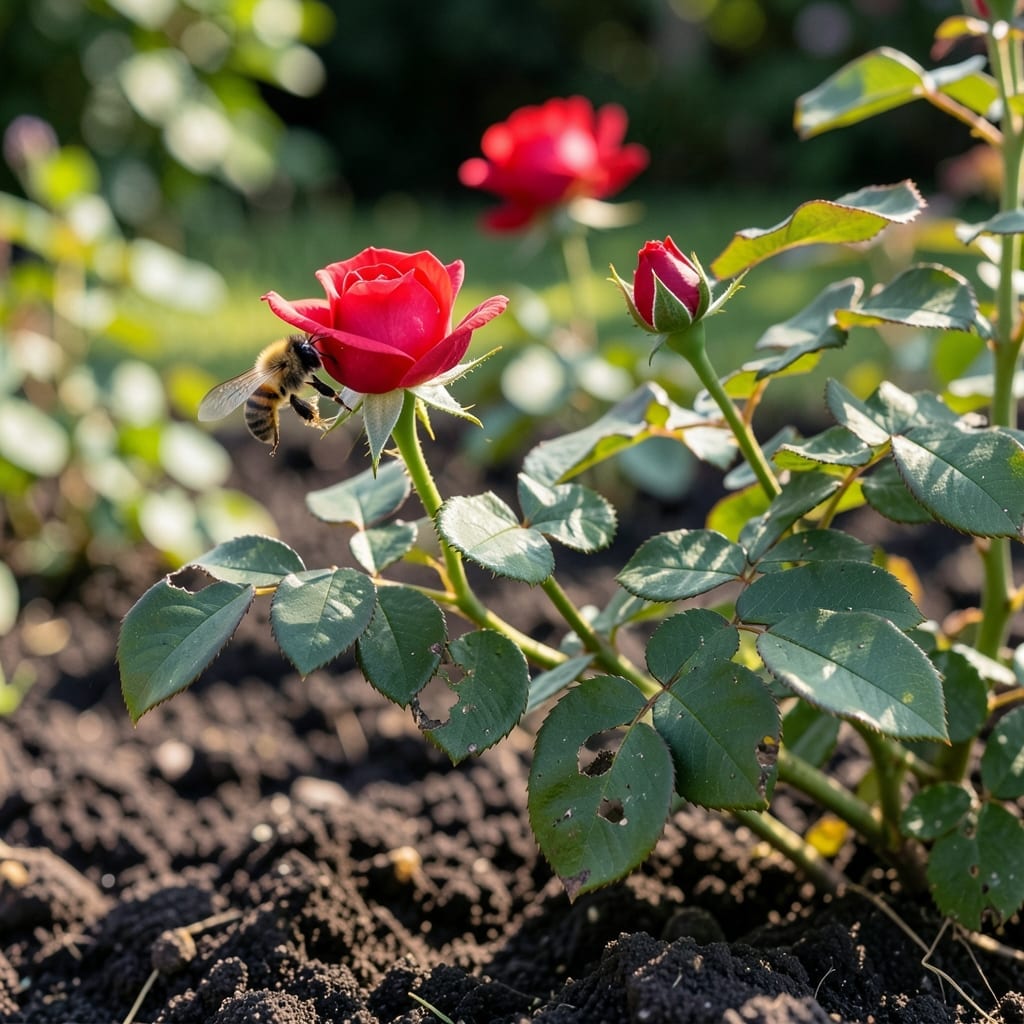
Leaf cutter bees cut leaves to line their underground nests, using the pieces to create waterproof cells where they lay eggs and store pollen for their larvae to eat.
These solitary bees are master engineers, using their mandibles to precisely cut oval or circular pieces from leaves. 🌟 I find it fascinating that they roll these fragments into tiny, cigar-shaped cells that act as protective nurseries. Each cell is carefully provisioned with a pollen ball before the egg is laid, ensuring the larva has food as it develops.
💡 In This Article
The process begins with the female bee selecting soft, pliable leaves—often from roses, lilacs, or legumes. Using her powerful mandibles, she makes precise, semi-circular cuts, typically 0.5-1 inch in diameter, to create near-perfect leaf fragments. These pieces are carried back to her underground burrow, which she’s previously excavated in loose, well-drained soil. 🔥
Inside the burrow, she rolls each leaf piece into a thimble-shaped cell, overlapping the edges to form a seamless, waterproof chamber. This design is critical because it prevents moisture from seeping in, which could drown the egg or spoil the pollen.
Each cell is roughly 0.25 inches wide and 0.75 inches long—just enough space for one egg and its food supply. ✨
Once the cell is shaped, she provisions it with a mixture of pollen and nectar, forming a nutrient-rich ball that will sustain the larva. She then lays a single egg on top of this food source before sealing the cell with additional leaf pieces.
This meticulous layering creates a series of cells, each separated by leaf partitions, forming a linear nursery tunnel. 💫
The waterproofing isn’t just functional—it’s a survival strategy. Underground nests are vulnerable to flooding, and the leaf’s natural waxes and resins create a barrier that even heavy rain can’t penetrate. This ensures the developing larva stays dry and safe until it’s ready to emerge as an adult bee, typically after 4-6 weeks of growth. ⚡
What’s remarkable is the bee’s ability to select leaves with just the right texture. Too thick, and the pieces are hard to cut and roll; too thin, and they won’t hold their shape. This precision is why you’ll often see them targeting specific plants, ignoring others entirely.
The entire process, from cutting to sealing, can take a female bee 20-30 trips per cell. 🌟
They use the leaves to line their underground nests, creating waterproof cells. These cells protect their eggs and store pollen as food for the developing larvae.
With their strong mandibles, they make precise, semi-circular cuts, typically 0.5-1 inch in diameter. This allows them to carry the leaf fragments back to their nests efficiently.
No, they rarely cause significant damage. The small, circular cuts are usually cosmetic and don’t harm the plant’s overall health. In fact, they’re beneficial pollinators!
They select soft, pliable leaves that are easy to cut and roll. Plants like roses, lilacs, and legumes are favorites because their leaves have the right texture.
Typically, the larvae develop into adult bees in about 4-6 weeks. The waterproof leaf cells ensure they stay safe and dry during this time.