
Beautiful Plants For Your Interior
Beautiful Plants For Your Interior
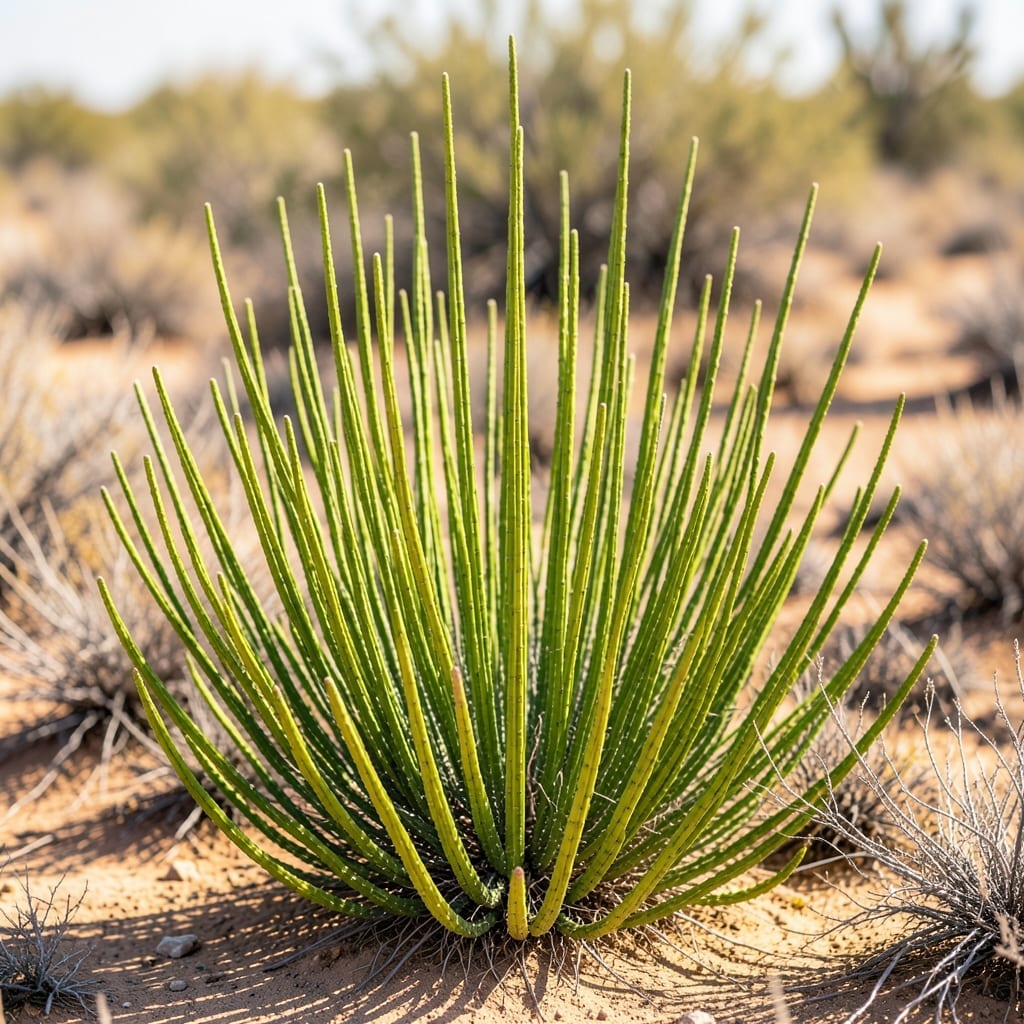
I fell hard for these architectural plants the first time I saw their rigid, pencil-thin stems. 🌵 Their stark silhouettes create living sculptures in arid gardens, requiring minimal care once established in the right conditions.
Most thrive in full sun and well-draining soil, needing water only when the ground dries completely. They grow slowly but steadily, forming dramatic vertical accents that contrast beautifully with softer desert plants.
You’ll get the best results in warm climates where frost is rare. In colder zones, they make striking container specimens that winter indoors near a sunny window.
Perfect for xeric landscapes, rock gardens, or modern outdoor spaces where their geometric forms can really shine.
The striking resemblance of certain plants to the Euphorbia tirucalli (pencil cactus) isn’t random—it’s a result of convergent evolution, where unrelated species develop similar traits due to shared environmental pressures. Here’s why these doppelgängers emerge in nature:
Many pencil cactus lookalikes, like Stapelia or Echinocactus species, thrive in drought-prone regions. Their slender, cylindrical stems minimize surface area to reduce water loss through transpiration. This adaptation mirrors the pencil cactus’s own strategy for surviving in harsh, dry conditions.
In botany, succulence (water storage in stems) and photosynthetic stems (replacing leaves) are energy-efficient traits. Plants like Cereus cacti or Senecio species independently evolved these features to maximize sunlight absorption while conserving moisture—just like the pencil cactus.
Some lookalikes, such as Alluaudia (Madagascar ocotillo), mimic the pencil cactus’s spiny, segmented appearance to ward off herbivores. The sharp, pencil-like branches signal danger, deterring animals from taking a bite.
Actionable tip: If you’re cultivating these plants, replicate their native arid conditions—well-draining soil and minimal watering—to maintain their iconic silhouette.
If your pencil cactus lookalike (like Euphorbia tirucalli or similar succulents) is struggling, these targeted fixes will help restore its striking, architectural form. Addressing issues early keeps your plant thriving with minimal fuss.
Overwatering is the most common culprit. Let the soil dry out completely between waterings—these plants store water in their stems. If the soil stays soggy, repot the plant in well-draining cactus mix and a pot with drainage holes. To prevent recurrence, water only when the top 2 inches of soil are bone-dry.
Pro tip: 💡 Use a moisture meter or the “stick test” (insert a wooden stick—if it comes out dry, it’s time to water).
Dab visible pests with a cotton swab soaked in rubbing alcohol, then spray the plant with neem oil or insecticidal soap. Repeat every 5–7 days until gone. Prevention: Inspect new plants before bringing them near your collection and keep airflow good to discourage infestations.
These sun-loving plants need 6+ hours of bright, direct light daily. Move it to a south-facing window or supplement with a grow light. If growth is still slow, feed with a diluted succulent fertilizer every 4–6 weeks in spring and summer. Avoid fertilizing in winter when growth naturally pauses.
Soft, mushy stems often signal root rot from cold drafts or excess moisture. Trim affected roots with sterilized shears, repot in fresh soil, and place in a warm spot (70–80°F). Prevent it: Keep plants away from cold windows or AC vents, and always use pots with drainage.
Alluaudia procera (Madagascar ocotillo) and Senecio articulatus (candle plant) are great alternatives. Both feature slender, vertical growth and thrive in similar arid conditions with minimal watering needed.
Most lookalikes, like Euphorbia tirucalli, contain toxic sap that can irritate skin and cause serious issues if ingested. Keep them out of reach of cats and dogs. Always wear gloves when handling.
Expect slow to moderate growth—about 6-12 inches per year in ideal conditions. They prefer full sun and well-draining soil to reach their full potential. Patience pays off with their striking height!
Yes! Place near a south-facing window for maximum light. Use a cactus-specific potting mix and water sparingly—only when soil is completely dry. Rotate occasionally for even growth.