
Beautiful Plants For Your Interior
Beautiful Plants For Your Interior
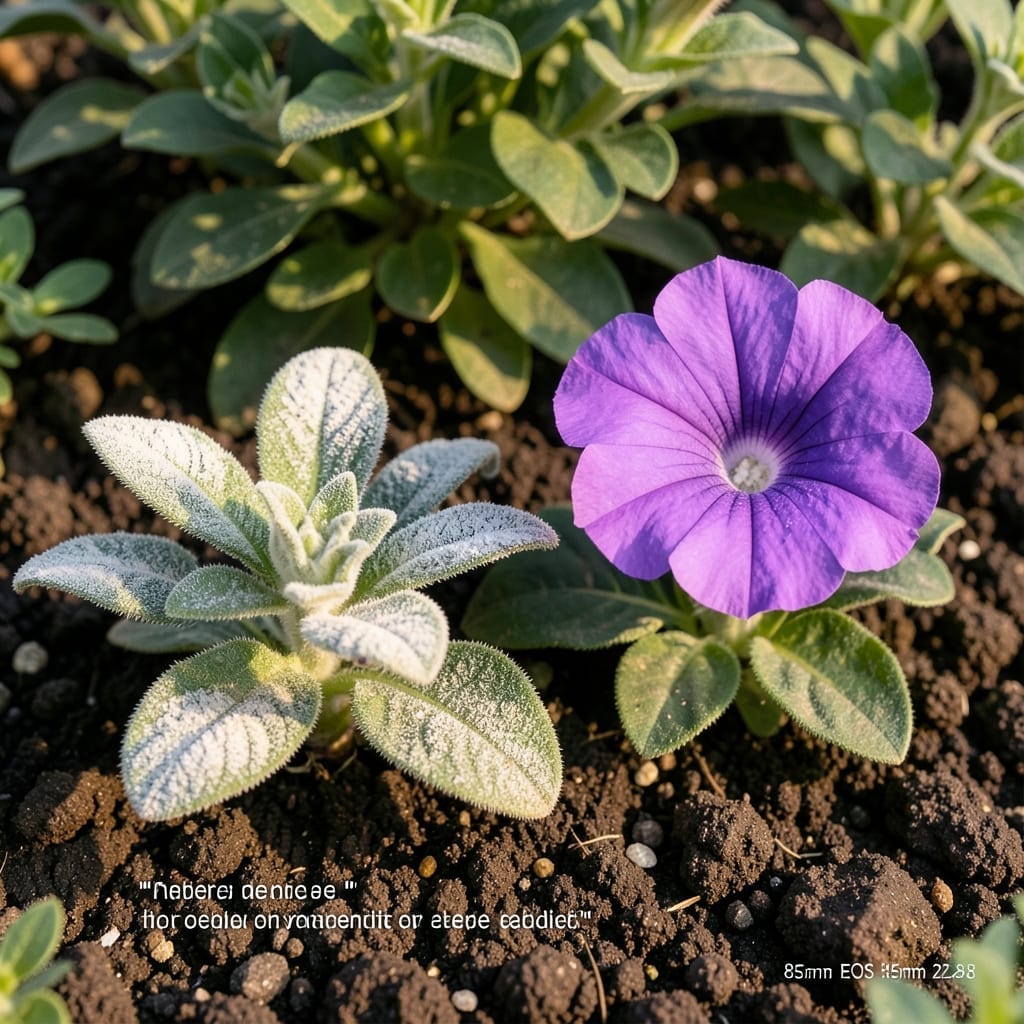
White dust on your petunias isn’t just unsightly—it’s a silent thief. 🌿 I lost half my wave petunias to powdery mildew one summer before learning the early signs: faint white spots on upper leaves, then a powdery coating spreading fast.
Fix it with better airflow and morning watering, or treat with neem oil. Resistant varieties exist, but catching it early saves your flowers. This guide shows you how to spot it before it spreads.
📚 In This Guide
Here’s how I spot trouble early and stop it in its tracks before it spreads to every plant.
Start by inspecting the upper surfaces of leaves every 2-3 days, especially during humid weather. Powdery mildew appears as white, powdery spots that look like someone sprinkled flour on the foliage. Don’t confuse this with dust—it won’t brush off easily.
I check in the morning when dew is still present, as this fungal disease thrives in damp conditions. The spots typically start on older leaves first before spreading to new growth. You’ll also notice leaves may begin to yellow or curl slightly as the infection progresses.
As soon as you confirm powdery mildew (and not just dust), move the infected petunias at least 3-4 feet away from healthy plants. This fungus spreads quickly through air currents and direct contact. I use a separate watering can for affected specimens to prevent contamination.
Real talk: even touching a mildewed leaf then brushing against a healthy plant can transfer spores. Wash your hands with soap after handling infected plants. The goal is containing the outbreak while you implement treatment.
Prune any dense foliage to create better airflow between plants. I remove about one-third of the affected growth, focusing on the most crowded areas first. This both reduces current spores and prevents future outbreaks by improving ventilation.
Water at the base of plants in the morning so leaves dry quickly in the sun. Avoid overhead watering entirely until the problem clears. You’ll see improvement within 5-7 days if humidity levels drop significantly.
Mix 1 tablespoon baking soda and 1 teaspoon mild liquid soap in a gallon of water for a safe, effective spray. I apply this every 7-10 days until the mildew disappears, always in the evening to prevent leaf burn from sun exposure.
For severe cases, I use neem oil diluted according to package instructions. Apply it to both upper and lower leaf surfaces, as spores can hide underneath. The key is consistency—stopping treatment too soon allows the fungus to return.
Space petunias at least 12-18 inches apart to maintain good airflow. I’ve found that plants in crowded beds develop mildew much more frequently. Thin out overgrown areas immediately if you notice reduced air movement.
Ensure your petunias get full sun (at least 6 hours daily) as shaded, damp areas invite fungal growth. You’ll prevent future outbreaks by maintaining these ideal conditions throughout the growing season.
Took me a few seasons to perfect these prevention and treatment strategies.
Early Detection Timing: Those 2-3 day inspection intervals in Step 1 are crucial—powdery mildew can spread across an entire bed in just a week. I set calendar reminders during humid stretches to ensure I don’t miss the window. Morning checks are most effective because dew makes the white spots more visible against the green leaves.
Isolation Technique: When moving infected plants in Step 2, use a clean tarp or wheelbarrow to transport them to avoid dropping spores along the way. The 3-4 foot distance works, but I’ve found adding a physical barrier like a cardboard box between healthy and infected plants prevents airborne spread even better.
Treatment Consistency: The 7-10 day spray schedule in Step 4 isn’t just a suggestion—it’s the minimum time needed to break the mildew’s life cycle. I mark my calendar and treat even if I don’t see new spots, because invisible spores can linger. Evening applications prevent the baking soda solution from burning leaves in the sun.
Long-Term Prevention: That 12-18 inch spacing in Step 5 isn’t just about airflow—it also ensures each plant gets its share of the 6 hours of daily sun. I use a ruler to measure when planting; it’s easy to underestimate how much space petunias need as they grow.
Ensure good air circulation, avoid overhead watering, and space plants properly. Remove affected leaves promptly and use fungicidal sprays like neem oil as a preventive measure.
Look for white, powdery spots on leaves, stems, or flowers. Leaves may also curl or turn yellow. Early detection helps prevent spreading.
Yes! A mix of 1 teaspoon baking soda and 1 quart of water with a drop of dish soap can help. Spray weekly, but avoid using in direct sunlight to prevent leaf burn.
Apply treatments early in the morning or late afternoon. This allows the solution to dry before heat or sunlight intensifies, reducing stress on the plants.
If untreated, severe infections can weaken or kill petunias. Act quickly with fungicides or natural remedies to protect your plants and maintain their health.