
Beautiful Plants For Your Interior
Beautiful Plants For Your Interior
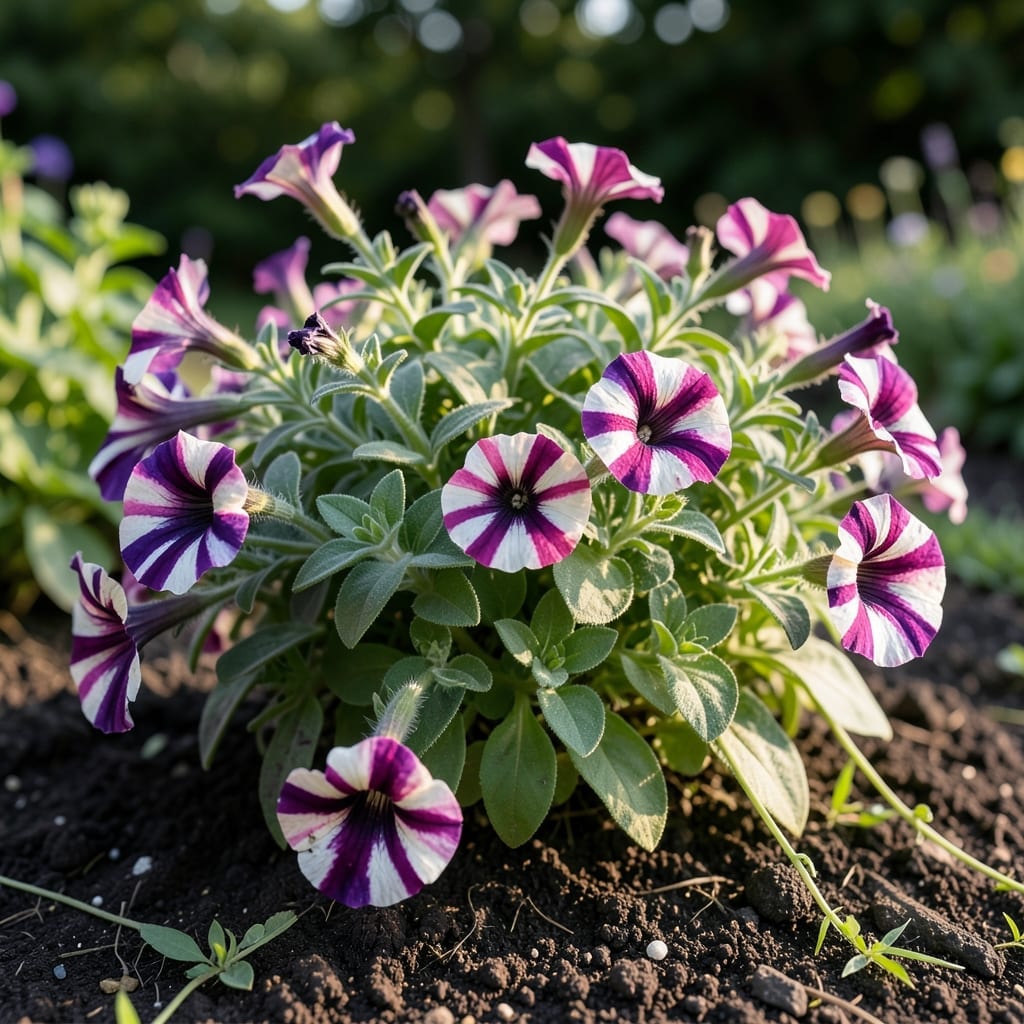
Last summer, I discovered how Painted Love petunias can turn a dull corner into a riot of color. Their velvety blooms, striped with deep purple and white, keep pumping out flowers all season long with minimal effort.
These thrive in full sun and well-draining soil, and they’ll reward you with non-stop color from spring until frost. A little deadheading and regular watering is all they ask for in return.
📚 In This Guide
Here’s the method I rely on for vibrant, long-lasting blooms in any garden space.
Select a spot with full sun—at least 6-8 hours of direct sunlight daily. Petunia Painted Love thrives in bright conditions, and insufficient light leads to leggy growth and fewer flowers. I always check the area at midday to confirm it’s not shaded by buildings or trees.
Ensure the soil drains well to prevent root rot. If your garden has heavy clay, consider planting in raised beds or containers. The soil should feel loose and crumbly, not compacted or soggy after rain.
Work the soil to a depth of 12-15 inches and mix in a 2-3 inch layer of compost or well-rotted manure. This boosts fertility and improves drainage, which is critical for healthy petunias. Avoid fresh manure—it can burn young plants.
Test the soil pH; petunias prefer a slightly acidic to neutral range (6.0-7.0). If needed, amend with lime to raise pH or sulfur to lower it. I always water the prepared bed a day before planting to let the soil settle.
Space the plants 10-12 inches apart to allow for air circulation and reduce disease risk. Dig a hole slightly larger than the root ball, place the plant in, and backfill with soil. Press gently to remove air pockets but don’t compact the soil too tightly.
Water immediately after planting to help the roots establish contact with the soil. I use a watering can with a rose attachment to avoid dislodging the soil or damaging the delicate stems.
Keep the soil consistently moist but not waterlogged. Water at the base of the plant in the early morning to allow foliage to dry before evening, reducing the risk of fungal diseases. Petunias in containers may need daily watering, especially in hot weather.
Fertilize every 7-10 days with a balanced, water-soluble fertilizer (e.g., 10-10-10). I dilute it to half-strength to avoid burning the plants. You’ll notice a surge in blooms shortly after starting this routine.
Pinch back the tips of young plants when they’re 4-6 inches tall to encourage bushier growth. Use your fingers or clean pruning shears to remove the top 1-2 inches of each stem. This step feels counterintuitive but results in fuller, more floriferous plants.
Deadhead spent blooms regularly by removing the entire flower stem down to the next set of leaves. This prevents seed formation and directs the plant’s energy toward producing new flowers. You’ll see fresh buds forming within days of consistent deadheading.
Took me a few seasons to get these right, so here are the lessons I learned.
The Sunlight Factor: Those 6-8 hours of direct sunlight daily are non-negotiable for vibrant blooms. I learned this the hard way when my first batch grew leggy with pale flowers. In hotter climates, morning sun with afternoon shade works, but don’t skip the full sun requirement in cooler areas.
Soil Preparation Tip: The drainage test in Step 1 is worth doing—dig that 1-foot hole and fill it with water. If it doesn’t drain within 1 hour, your petunias will suffer. I now amend heavy clay soil with compost every year before planting.
Planting Spacing: The 12-18 inches apart spacing in Step 3 might seem generous, but these plants spread aggressively. Planting too close together leads to poor air circulation and fewer blooms. Trust the process—it looks sparse at first but fills in beautifully.
Maintenance Secret: That mid-season cut back by one-third in Step 5 is magical. I was hesitant to prune my thriving plants, but the first time I did it, they came back bushier with even more flowers. Don’t wait until they look bad—be proactive.
Keep soil moist but well-drained, and place in full sun. Deadhead spent blooms to encourage continuous flowering. Fertilize weekly with a balanced liquid fertilizer for vibrant growth.
Plant after the last frost in spring when soil temperatures reach 60°F. They thrive in warm weather and will bloom until the first fall frost.
Try Wave Petunias or Supertunias for similar cascading blooms. Calibrachoa (Million Bells) offers a compact, low-maintenance option with a comparable look.
Wilting often signals underwatering or heat stress. Check soil moisture—water deeply if dry. If the soil is soggy, improve drainage to prevent root rot.
Yes! They’re perfect for hanging baskets or pots. Use a well-draining potting mix and ensure containers have drainage holes to avoid waterlogging.