
Beautiful Plants For Your Interior
Beautiful Plants For Your Interior
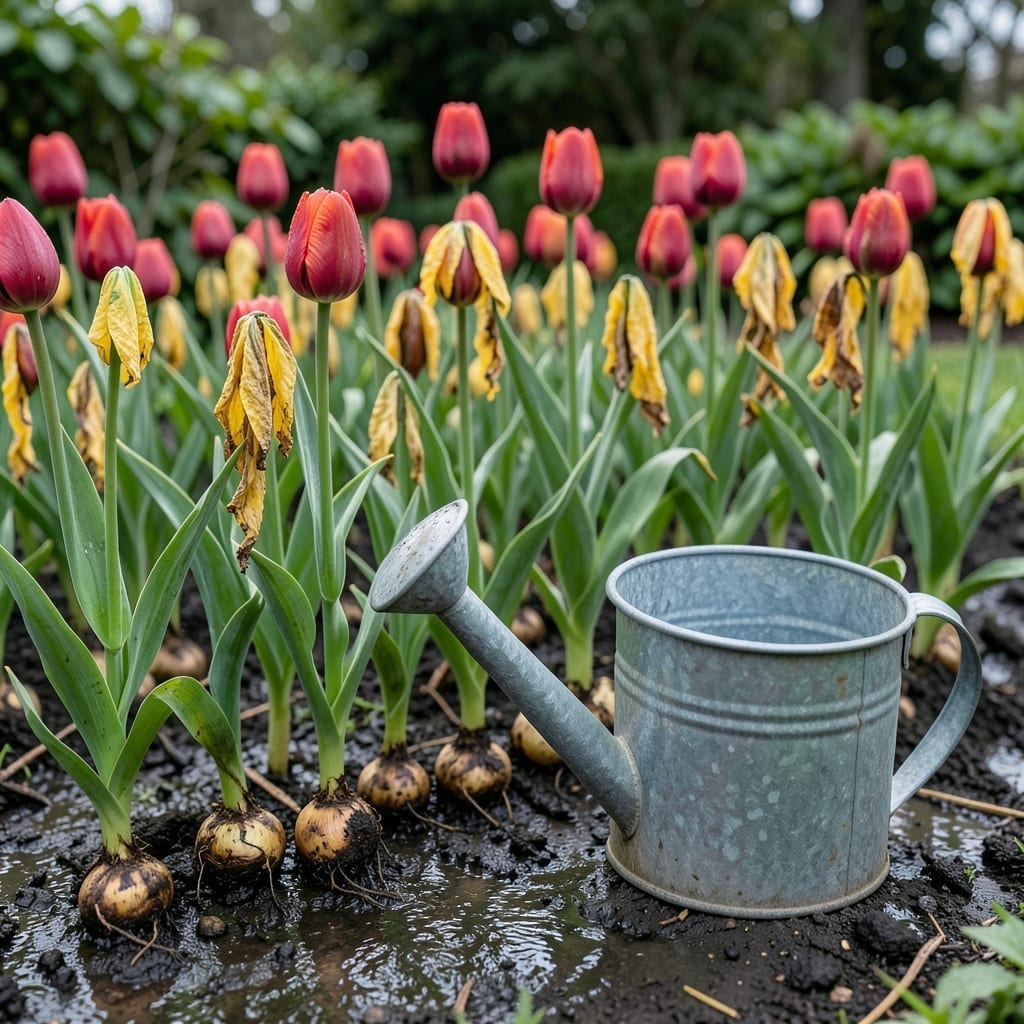
Yellowing leaves and mushy stems are your first warning signs. I’ve lost more tulips to overwatering than I’d like to admit—soggy soil is the silent killer.
Root rot sets in fast when drainage is poor, and once it starts, the damage spreads quickly. The fix isn’t complicated: stop watering immediately and check the roots for dark, slimy spots.
Recovery starts with dry soil and fresh air for the roots. A well-draining pot or raised bed prevents this next time, and your tulips will bounce back stronger.
Watch for new growth in 2-3 weeks. If the bulbs are firm, they’re not done yet.
Overwatering tulips often stems from a few preventable mistakes. Understanding these causes helps you adjust your care routine and keep your plants thriving.
Tulips require minimal water once established. Their bulbs store moisture, and frequent watering—especially in poorly draining soil—leads to waterlogged roots. The soil should dry out between waterings to allow oxygen to reach the roots.
Heavy or clay-rich soil retains water, suffocating tulip roots. Without proper drainage, excess moisture lingers, creating ideal conditions for root rot. Amending soil with sand or organic matter improves airflow and water flow.
Potted tulips in oversized containers hold too much moisture. The bulb can’t absorb all the water, leading to stagnation. Choose pots just slightly larger than the bulb, with drainage holes to prevent water buildup.
Tulips in shaded, humid areas dry more slowly. Combined with frequent watering, this slows evaporation and increases rot risk. Ensure they receive full sun and avoid watering during rainy spells.
If your tulips are showing signs of overwatering, don’t panic—here’s how to nurse them back to health.
If the leaves are turning yellow, the roots are likely drowning. Stop watering immediately and check the soil. If it’s soggy, repot the bulbs in fresh, well-draining soil mixed with perlite or sand. Elevate pots to allow excess water to drain away. For in-ground tulips, amend heavy clay soil with compost to boost drainage.
Wilting despite wet soil means the roots can’t absorb oxygen. Let the soil dry out completely before watering again. If the bulbs feel mushy, dig them up, trim any black or slimy roots with sterilized shears, and replant in dry, loose soil. Avoid watering for at least a week to let them recover.
White mold or a foul smell signals fungal growth. Remove affected bulbs and discard them (don’t compost!). For remaining healthy bulbs, spray with a copper-based fungicide and ensure they’re in a sunny, breezy spot to dry out. Prevention tip: Always water at the base in the morning so foliage stays dry.
💡 Pro Tip: Tulips thrive on neglect! Water only when the top 2 inches of soil are dry, and always use pots with drainage holes. In beds, plant bulbs in raised mounds to prevent waterlogging.
Water established tulips only when the top 2 inches of soil are dry. Their bulbs store moisture, so weekly watering is often too much. In cool weather, you may only need to water every 10-14 days.
Yes, if caught early. Remove the plant, trim black/slimy roots, and replant in fresh, dry soil. Avoid watering for at least 1 week to let roots heal. Severe cases may require discarding the bulb.
Use well-draining mix with perlite or sand. For garden beds, amend clay soil with compost. Always plant in raised areas or pots with drainage holes to avoid waterlogging.