
Beautiful Plants For Your Interior
Beautiful Plants For Your Interior
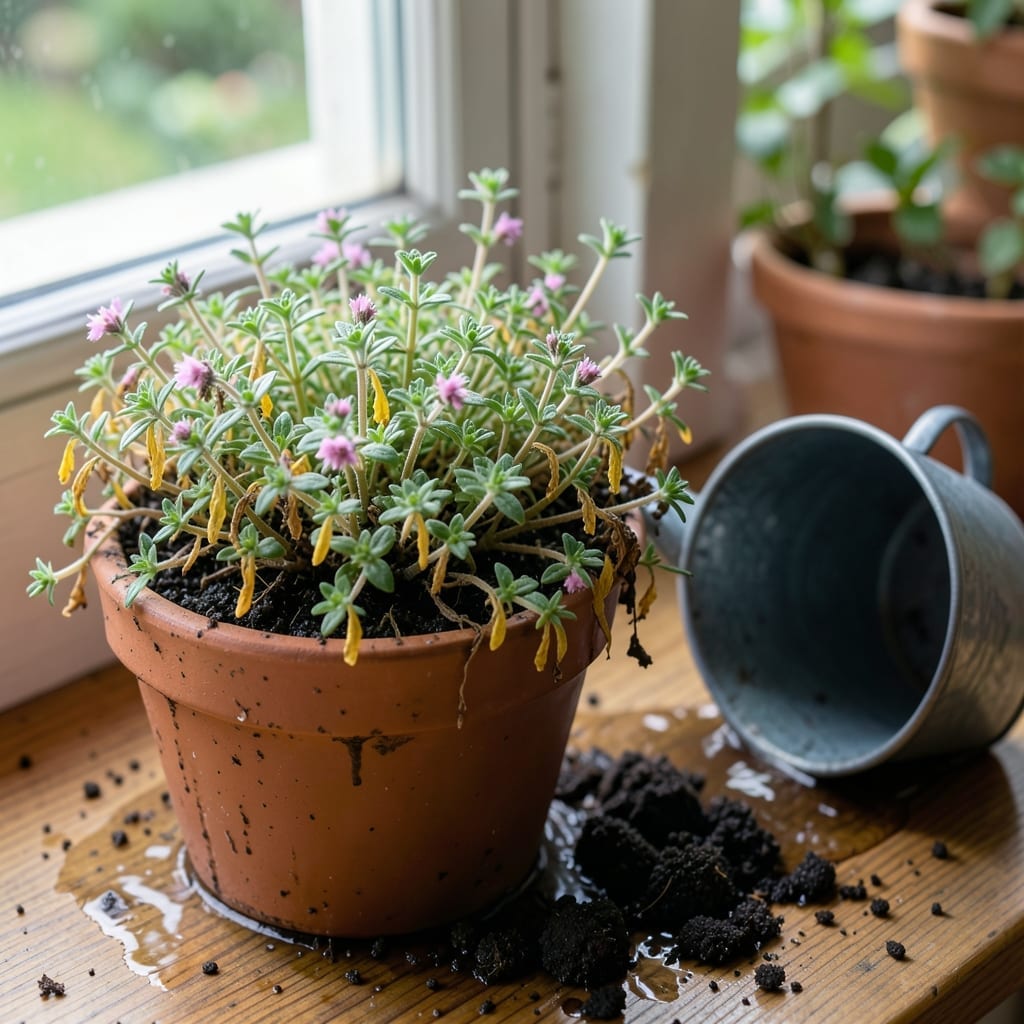
Yellow stems and drooping leaves on thyme usually mean one thing: too much water. I’ve saved more than a few sad-looking thyme plants by catching this early and adjusting my care routine.
The problem isn’t just water—it’s the roots suffocating in soggy soil. Thyme thrives in dry conditions, so overwatering leads to root rot, yellowing foliage, and a plant that just can’t bounce back without intervention.
With a few simple steps, you can revive your thyme and get it back to its fragrant, vibrant self. Proper drainage and a lighter hand with the watering can make all the difference.
This method works for potted or in-ground thyme, and it’s easier than you think. Let’s get your plant back on track.
Overwatering thyme often stems from a few common but preventable missteps. Understanding the root causes helps you adjust your care routine and restore your plant’s health.
Thyme is a drought-tolerant Mediterranean herb that thrives in dry conditions. Its roots are adapted to low-moisture environments, and frequent watering disrupts this balance. When soil stays soggy, oxygen is displaced, suffocating the roots and leading to rot. A good rule: Water only when the top 1–2 inches of soil are completely dry.
Thyme hates “wet feet.” If your pot lacks drainage holes or the soil retains too much moisture (e.g., dense clay or peat-heavy mixes), water pools at the roots. This creates an anaerobic environment where root asphyxiation and fungal diseases like Phytophthora thrive. Use well-draining soil (e.g., sandy loam or cactus mix) and ensure containers have drainage.
Bigger pots hold more soil—and more water. For thyme, this means the root zone stays damp longer than it should, even if you water sparingly. Stick to smaller, shallow containers (6–8 inches deep) to match thyme’s compact root system and prevent waterlogging.
Humidity, temperature, and sunlight affect how quickly soil dries. In cool, humid climates or shaded spots, thyme’s soil stays moist for days. Conversely, hot, sunny conditions may require slightly more frequent watering. Always check soil moisture with your finger—don’t rely on a fixed schedule.
If your thyme is suffering from too much water, don’t worry—it’s often fixable! Here’s how to nurse it back to health, depending on the issue:
Fix: Trim away any yellowed or mushy parts with clean scissors to prevent rot from spreading. Repot the plant in fresh, well-draining soil (mix in perlite or sand for better airflow). Hold off on watering for a few days to let the roots dry out.
Prevent it: Always check the top inch of soil—if it’s dry, water lightly; if damp, wait. Use a pot with drainage holes to avoid soggy roots. 💡
Fix: Stop watering immediately and move the pot to a sunny, breezy spot to speed up evaporation. If the soil is waterlogged, gently tip the pot to drain excess water. For severe cases, remove the plant, inspect the roots, and trim any black or slimy sections before repotting.
Prevent it: Water only when the soil feels dry to the touch, and avoid letting the pot sit in a saucer of water. ✨
Fix: Scrape off the top layer of moldy soil and replace it with fresh, dry mix. Increase airflow around the plant and reduce humidity. A light dusting of cinnamon (a natural antifungal) on the soil can help too!
Prevent it: Space plants apart for better air circulation, and avoid misting thyme—it prefers dry conditions. 🌡️
With a little patience and these adjustments, your thyme should bounce back to its fragrant, thriving self!
Water only when the top 1-2 inches of soil are completely dry. Thyme prefers dry conditions, so this may mean watering every 1-2 weeks depending on your climate and pot size.
Yes, if caught early. Trim away black or mushy roots, repot in fresh, well-draining soil, and avoid watering for a few days. Severe cases may not recover, so prevention is key.
Use a sandy loam or cactus mix with added perlite. This ensures excellent drainage and prevents water from pooling around the roots. Avoid dense, moisture-retentive soils.
Yellow leaves often signal overwatering or poor drainage. Check the roots for rot and ensure your pot has drainage holes. Adjust your watering habits immediately.