
Beautiful Plants For Your Interior
Beautiful Plants For Your Interior
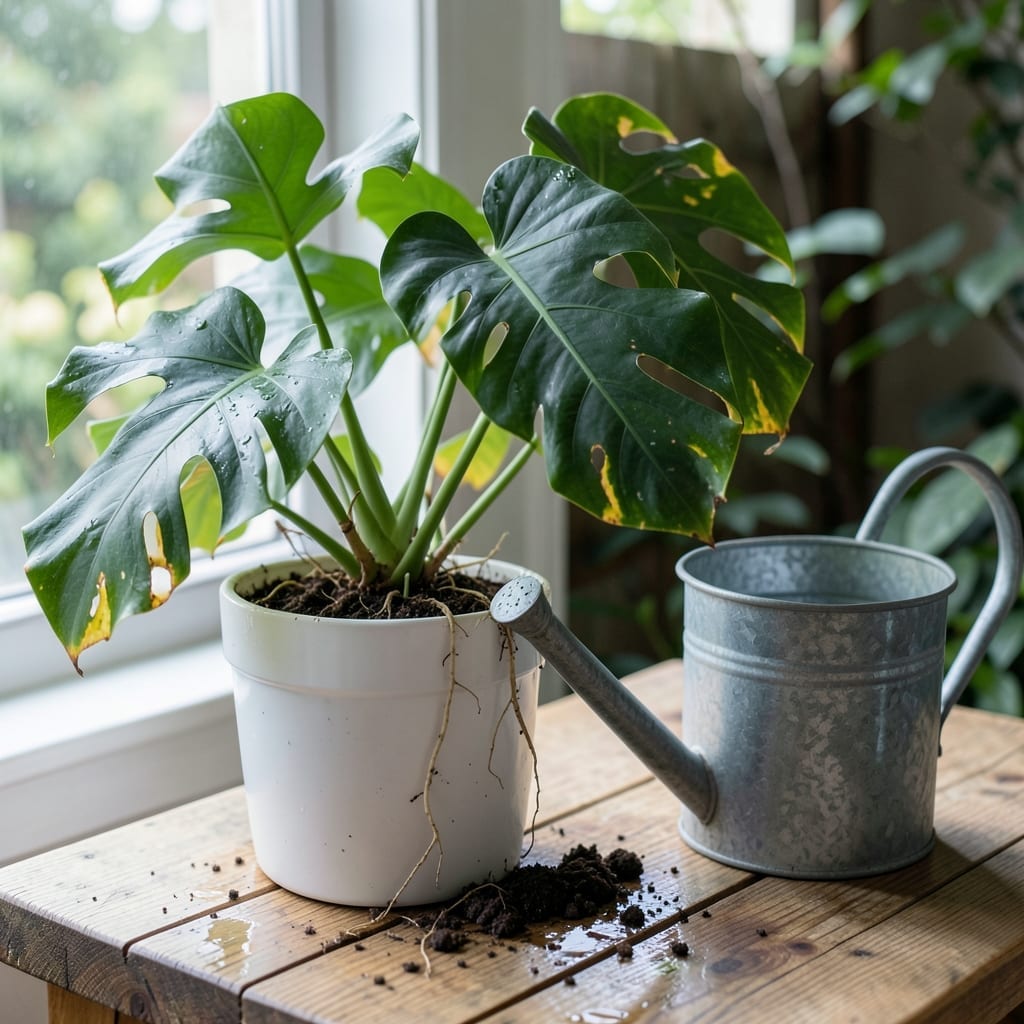
Yellow leaves on your Swiss cheese plant aren’t just unsightly—they’re a cry for help. I’ve rescued mine from the brink more times than I’d like to admit by catching overwatering early. The first sign is always the same: leaves turning soft and yellow overnight.
Root rot sets in fast when soil stays soggy. The fix isn’t complicated, but it does require action. You’ll need to check the roots, trim the damaged ones, and repot in fresh, well-draining soil. Most plants bounce back within 2-3 weeks if you act quickly.
Prevention is simpler than treatment. Water only when the top 2 inches of soil are dry, and always use pots with drainage holes. This plant thrives on neglect more than constant attention.
Don’t toss it yet—even the saddest-looking specimens often recover with the right care. Here’s exactly how to bring yours back to life.
Understanding why your Swiss cheese plant (Monstera deliciosa) gets overwatered starts with recognizing the root causes. Here’s a breakdown of the most common culprits:
Overwatering often happens when plant owners stick to a rigid watering schedule rather than checking the soil’s moisture. Swiss cheese plants thrive when the top 1-2 inches of soil dry out between waterings. Watering too frequently—especially in cooler or humid conditions—prevents the roots from accessing oxygen, leading to root asphyxiation and eventual rot.
Pots without drainage holes trap excess water, creating a soggy environment that suffocates the roots. Even with drainage, compacted or water-retentive soil (like pure peat) can hold moisture for too long. Always use well-draining soil mixes (e.g., perlite or orchid bark) and containers with holes to let excess water escape.
In low-light or cooler environments (below 60°F/15°C), the plant’s metabolism slows, reducing its water uptake. If you continue watering at the same rate as in warmer, brighter conditions, the soil stays wet longer, increasing the risk of root rot caused by fungal pathogens like Phytophthora.
Larger pots hold more soil, which retains moisture for extended periods. A Swiss cheese plant in an oversized container may struggle to absorb all the water, leaving the roots submerged. Opt for pots just 1-2 inches wider than the root ball to balance growth and drainage.
Addressing these factors will help you avoid the pitfalls of overwatering and keep your plant thriving. 🌿
Here’s how to nurse your plant back to health, step by step:
If the leaves are turning yellow but the soil isn’t soggy, trim the affected leaves with clean scissors to redirect energy to healthy growth. Prevention tip: Water only when the top 1-2 inches of soil are dry—stick your finger in to check! 💡
Your plant is likely drowning. Stop watering immediately and let the soil dry out completely. If the smell is strong, repot the plant in fresh, well-draining soil (mix in perlite or orchid bark for better aeration). Prevention tip: Always use pots with drainage holes to avoid waterlogging. ✨
Gently remove the plant from its pot and inspect the roots. Healthy roots are firm and white; rotten ones are mushy and dark. Trim away all rotten roots with sterilized shears, then repot in clean soil. Prevention tip: Avoid letting the pot sit in a saucer of water—empty it after watering. 🌡️
Even overwatered plants can wilt from stress. After addressing the soil and roots, move the plant to bright, indirect light to help it recover. Avoid direct sun, which can scorch weakened leaves. Prevention tip: Use a moisture meter to take the guesswork out of watering. 🎯
Check for mushy, dark brown roots and a foul odor from the soil. Healthy roots are firm and white. If you spot rot, trim it immediately and repot in fresh soil.
Yes! Trim yellow leaves to redirect energy. Ensure the soil dries between waterings and the pot has drainage. Recovery takes 2-3 weeks with proper care.
Use a well-draining mix with perlite, orchid bark, or coarse sand. This improves aeration and prevents soggy conditions. Avoid dense, water-retentive soils.
Water only when the top 1-2 inches of soil are dry. In cooler or humid conditions, this may mean watering less frequently. Always check the soil first.