
Beautiful Plants For Your Interior
Beautiful Plants For Your Interior
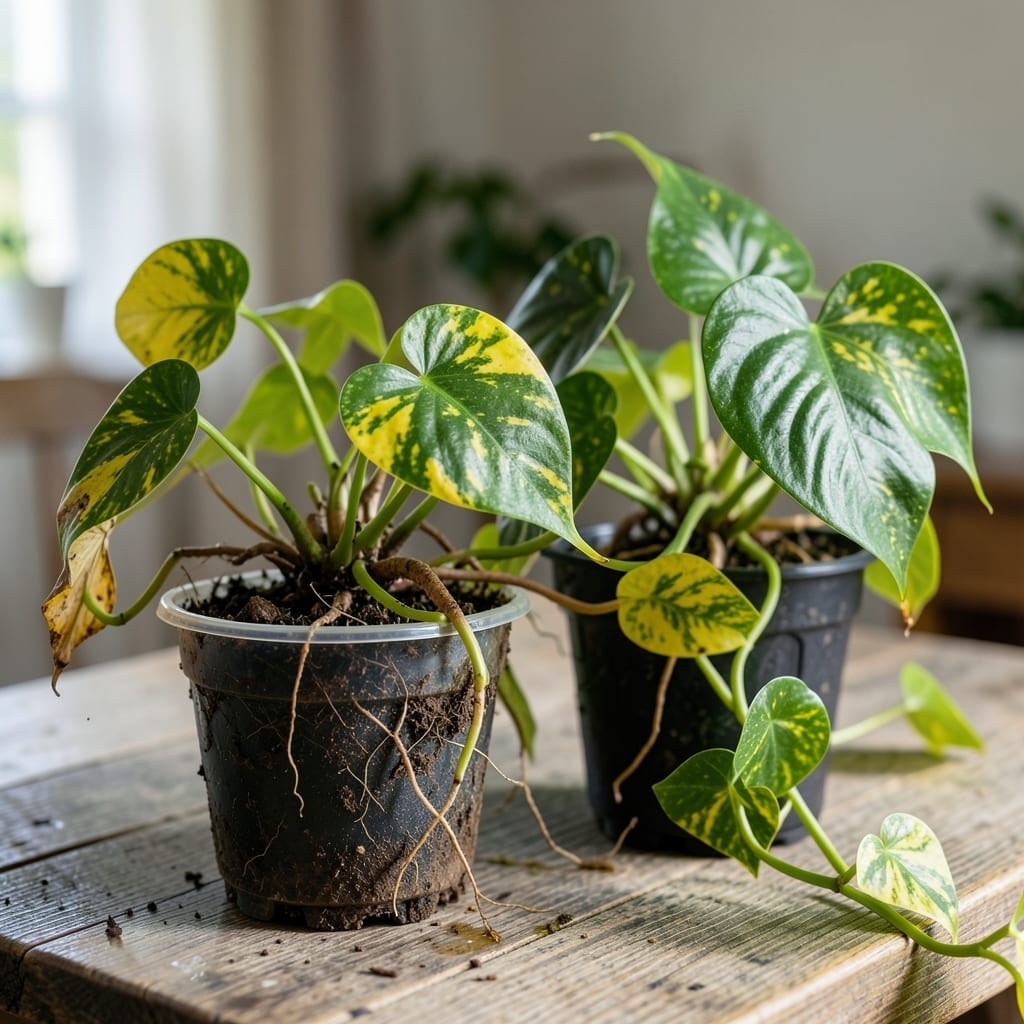
Yellow leaves and mushy stems are your pothos crying for help. I’ve saved more than a dozen from this exact scenario, and the key is acting fast before the roots turn to sludge.
The problem isn’t just too much water—it’s soggy soil that suffocates the roots. Most people water on a schedule instead of checking the soil first. 30 seconds with your finger in the dirt prevents weeks of recovery.
You’ll see new growth within 2-3 weeks after fixing the issue. The plant bounces back stronger, with darker green leaves and more vigorous vines than before the crisis.
Works for any pothos variety, from golden to marble queen. Here’s the rescue plan.
Overwatering your pothos disrupts the delicate balance between moisture and oxygen in the soil, creating the perfect conditions for root rot. Here’s a breakdown of the primary causes:
Pothos thrive in well-draining soil, but soggy conditions suffocate the roots. When soil stays waterlogged, oxygen is displaced, and anaerobic bacteria (like Pythium and Phytophthora) multiply. These pathogens attack the roots, turning them mushy and brown—a classic sign of rot.
Pots without drainage holes trap water at the bottom, drowning the roots over time. Even with drainage, compacted soil or low-quality mixes (e.g., heavy clay or dense peat) prevent proper water flow, leading to stagnation. Always use containers with drainage and a chunky, aerated potting mix (e.g., perlite or orchid bark).
Pothos in dimly lit or cold environments (below 60°F/15°C) evaporate water more slowly. Combined with overwatering, this slows metabolism, reducing the plant’s ability to absorb moisture. The result? Water sits too long, inviting fungal growth. Move your pothos to bright, indirect light and maintain consistent warmth.
Many plant owners water on a schedule (e.g., weekly) rather than checking soil moisture. Root rot develops when the top 1–2 inches of soil never dry out. Always test with your finger—water only when the topsoil feels dry. In winter, pothos may need water just every 2–3 weeks.
Reviving an overwatered pothos starts with addressing the root of the problem—literally. Here’s how to tackle each issue head-on with simple, actionable fixes.
If your pothos is drowning, stop watering immediately. Remove the plant from its pot and gently shake off excess soil. Repot it in fresh, well-draining potting mix (add perlite or coarse sand for better airflow). Use a pot with drainage holes to prevent future water buildup. Pro tip: 🌱 Place a layer of pebbles at the bottom to enhance drainage.
Inspect the roots and snip off any black, mushy, or foul-smelling sections with sterilized scissors. Healthy roots are firm and white or light tan. After trimming, soak the remaining roots in a 1:10 hydrogen peroxide-to-water solution (or a fungicide) for 10 minutes to kill off fungus. Let the roots air-dry for a few hours before repotting.
Pothos thrives on neglect! Water only when the top 1-2 inches of soil are dry. Stick your finger in the soil—if it feels damp, wait. Use a pot with drainage and empty the saucer after watering to avoid soggy roots. Pro tip: ⏰ Set a reminder to check soil moisture weekly instead of watering on autopilot.
Look for yellowing leaves, mushy stems, or a foul odor from the soil. Gently remove the plant from its pot—healthy roots are firm and white, while rotten roots appear black and squishy.
Yes, if some healthy roots remain. Trim all rotten roots with sterilized scissors, treat the remaining ones with hydrogen peroxide, and repot in fresh, well-draining soil. Recovery takes 2-3 weeks.
Water only when the top 1-2 inches of soil are dry. This could mean every 1-2 weeks in summer or 3-4 weeks in winter. Always check the soil first!
Use a well-draining mix with 50% potting soil and 50% perlite or orchid bark. This ensures proper airflow and prevents water from pooling around the roots.