
Beautiful Plants For Your Interior
Beautiful Plants For Your Interior
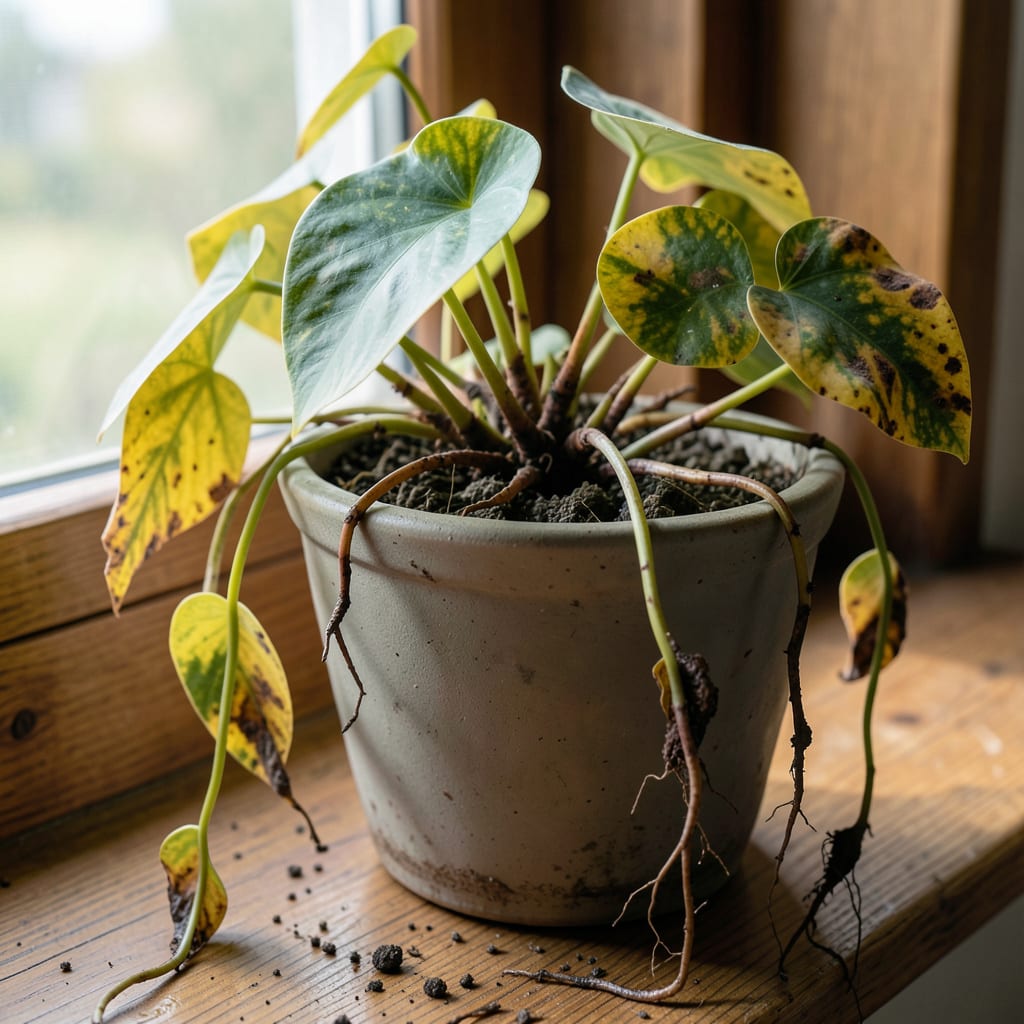
Yellow leaves and droopy vines on your pothos often scream overwatering. I’ve lost count of how many I’ve saved from the brink by catching this early.
Root rot sets in when soil stays soggy, suffocating the roots. The fix isn’t complicated—just stop watering and let the soil dry out completely between drinks.
You’ll see new growth within 2-3 weeks if the roots aren’t too far gone. Trim black, mushy roots and repot in fresh, well-draining soil for the best recovery.
Prevention is easier than cure: stick your finger in the soil before watering. If it’s damp, wait. Simple as that.
Root rot in pothos is almost always a result of excess moisture disrupting the plant’s natural balance. Here’s why it happens, broken down by the most common triggers:
Pothos thrive in well-draining soil that allows roots to breathe. When overwatered, soil becomes waterlogged, suffocating the roots and preventing oxygen uptake. This anaerobic environment fosters fungal pathogens like Phytophthora and Pythium, which attack the roots, causing them to turn mushy and black. Even with good intentions, frequent watering without checking soil moisture (top 1-2 inches should be dry) is a fast track to rot.
Dense, clay-rich, or poorly aerated potting mixes retain too much water, especially in containers without drainage holes. Pothos roots need air pockets to function; compacted soil eliminates these, leading to root asphyxiation. Organic matter like perlite or orchid bark improves drainage and reduces rot risk.
Plastic or non-porous pots trap moisture longer than terracotta. Without drainage holes, water pools at the bottom, creating a stagnant zone where roots drown. Even self-watering pots can cause issues if the reservoir isn’t monitored. Always ensure containers have multiple drainage holes and elevate them to prevent waterlogging.
Cool environments (below 60°F/15°C) slow evaporation, keeping soil damp for extended periods. Combined with high humidity, this creates a perfect storm for fungal growth. Pothos in drafty or air-conditioned spaces are especially vulnerable if overwatered.
If your pothos is suffering from root rot due to overwatering, don’t panic—there’s still hope! Here’s how to nurse it back to health, step by step.
Start by gently removing the plant from its pot and inspecting the roots. Healthy roots are firm and white or light tan, while rotten roots are mushy, dark, and may fall apart. Trim away all affected roots using clean, sharp scissors or pruning shears. Sterilize the tools with rubbing alcohol before and after to prevent spreading disease.
Discard the old, waterlogged soil, as it may harbor harmful fungi or bacteria. Choose a well-draining potting mix (a blend with perlite or orchid bark works well) and a clean pot with drainage holes. If reusing the same pot, wash it thoroughly with a bleach solution (1 part bleach to 9 parts water) to kill any lingering pathogens.
Let the plant dry out completely before watering again. Stick your finger about an inch into the soil—if it feels dry, it’s time to water. Water deeply but infrequently, allowing excess water to drain away. Empty the saucer under the pot after 10-15 minutes to prevent the roots from sitting in water.
With these steps, your pothos should bounce back, growing lush and vibrant once again. Consistency is key—stick to the routine, and your plant will thank you!
Look for yellowing leaves, mushy stems, and a foul odor from the soil. Gently remove the plant and check for black, soft roots—healthy ones are firm and white.
Yes, if caught early! Trim the rotten roots, repot in fresh, well-draining soil, and adjust your watering habits. Recovery takes 2-3 weeks with proper care.
Wait until the top 1-2 inches of soil are dry. This usually means watering every 10-14 days, but always check first. Overwatering is the #1 cause of rot.
Terracotta is ideal—its porous material helps soil dry faster. If using plastic, ensure it has drainage holes and avoid letting the pot sit in water.
