
Beautiful Plants For Your Interior
Beautiful Plants For Your Interior
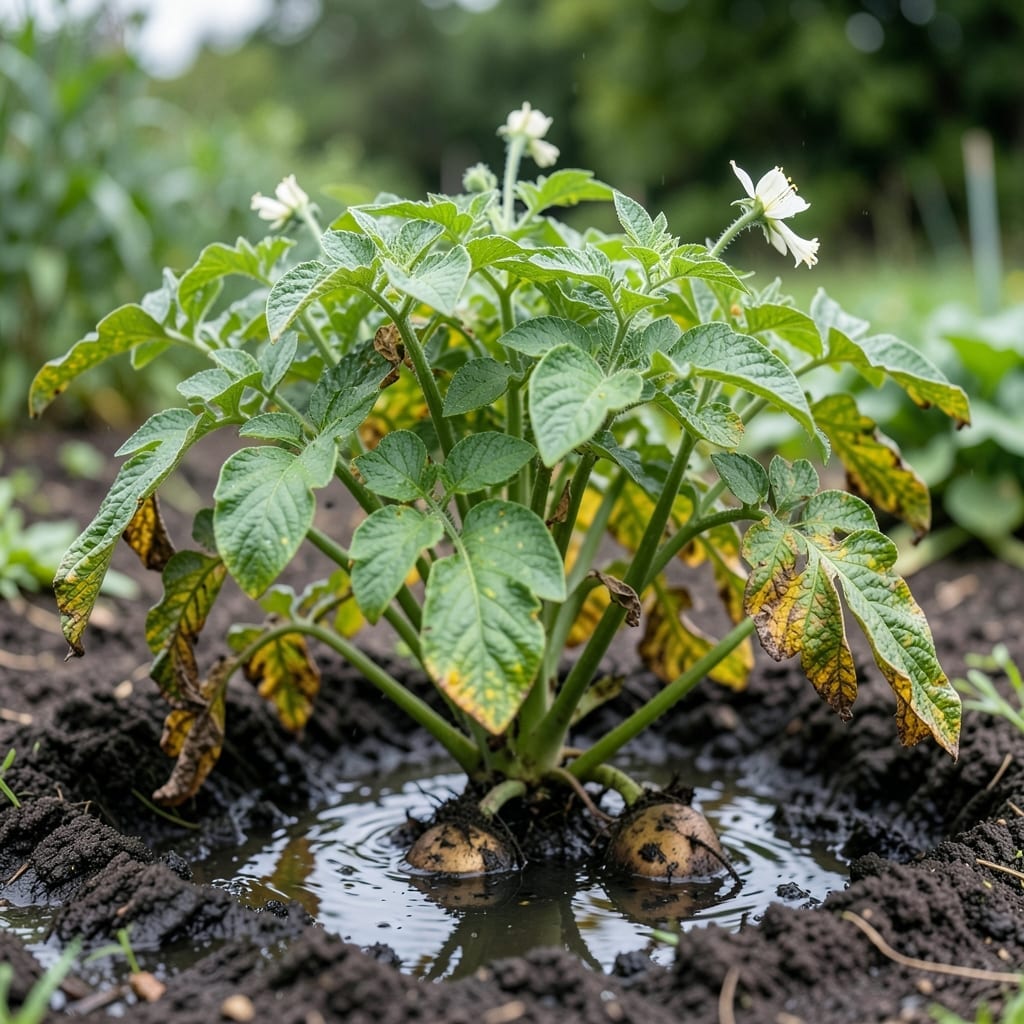
Yellowing leaves and soggy soil spelled trouble for my potato patch last season. Overwatering sneaks up fast, turning healthy plants into droopy, stunted messes with roots gasping for air.
I learned the hard way that potatoes need consistent moisture, not a swamp. The fix starts with letting the soil dry out between waterings and improving drainage—2-3 inches of compost or sand can work wonders.
Within 48 hours, you’ll see perked-up foliage and soil that doesn’t squish like a wet sponge. The key is acting fast before rot sets in and ruins the whole crop.
Works in containers, raised beds, or open ground. Here’s how to bring them back from the brink.
Overwatering potatoes often stems from a few preventable missteps. Here’s why it happens:
Potatoes thrive in well-draining soil. When planted in heavy clay or compacted soil, water lingers around the roots, suffocating them. Soggy conditions block oxygen uptake, leading to root rot and stunted growth. Always use loose, loamy soil or amending with sand to improve drainage.
Many gardeners assume potatoes need constant moisture, but too much water disrupts their natural growth cycle. Potatoes require consistent but moderate hydration—about 1–2 inches per week, including rainfall. Overwatering dilutes soil nutrients and encourages fungal diseases like Phytophthora infestans (late blight).
Weather plays a huge role. Cool, rainy seasons or high humidity slow evaporation, leaving soil waterlogged. Additionally, container-grown potatoes can suffer if pots lack drainage holes. Adjust watering frequency based on climate and container type to prevent saturation.
Potatoes need less water during early tuber formation. Overwatering at this stage causes hollow heart or cracking. Later, as tubers mature, excessive moisture can lead to soft, watery flesh or premature rotting. Tailor your watering to each growth phase for optimal results.
Overwatering potatoes can lead to yellowing leaves, root rot, or stunted growth, but these issues are often reversible if addressed quickly. Below are targeted solutions for the most common overwatering symptoms, along with prevention tips to keep your spuds thriving.
If your potato plants have yellow leaves but the roots are still firm, they may just need a break from excess moisture. Stop watering immediately and let the soil dry out. Check that your containers or garden beds have proper drainage—add holes or perlite to the soil if needed. Move potted plants to a sunnier spot to help evaporate excess water. Prevention tip: Water only when the top 1-2 inches of soil feel dry.
Soft, mushy roots or a foul smell mean root rot has set in. Gently dig up the plant and inspect the tubers. Discard any rotted potatoes and trim blackened roots with clean shears. Repot healthy sections in fresh, well-draining soil or a new garden spot. Avoid watering for 3-5 days post-repotting. Prevention tip: Use raised beds or containers with drainage holes to prevent waterlogging.
Even if the plant looks wilted, resist the urge to water more. Overwatering can suffocate roots, mimicking drought stress. Switch to deep, infrequent watering—give 1-2 inches per week, less if rain is frequent. Mulch around plants to retain moisture without oversaturating. Prevention tip: Use a moisture meter to check soil conditions before watering.
💡 Pro tip: Potatoes need consistent moisture but hate soggy feet. A drip irrigation system on a timer can help deliver water precisely where it’s needed—without the guesswork!
Look for yellowing leaves, wilting despite wet soil, or a foul smell from the roots. Mushy stems or blackened roots are sure signs of overwatering. Check soil by feeling 2 inches down—if it’s soggy, hold off on watering.
Yes, if caught early! Stop watering immediately and let the soil dry. For root rot, remove affected tubers and repot healthy ones in fresh, well-draining soil. Avoid watering for 3-5 days to help recovery.
Water deeply 1-2 times per week, providing 1-2 inches total, including rain. Use your finger to test soil moisture—water only when the top 1-2 inches feel dry. Morning watering helps prevent fungal issues.