
Beautiful Plants For Your Interior
Beautiful Plants For Your Interior
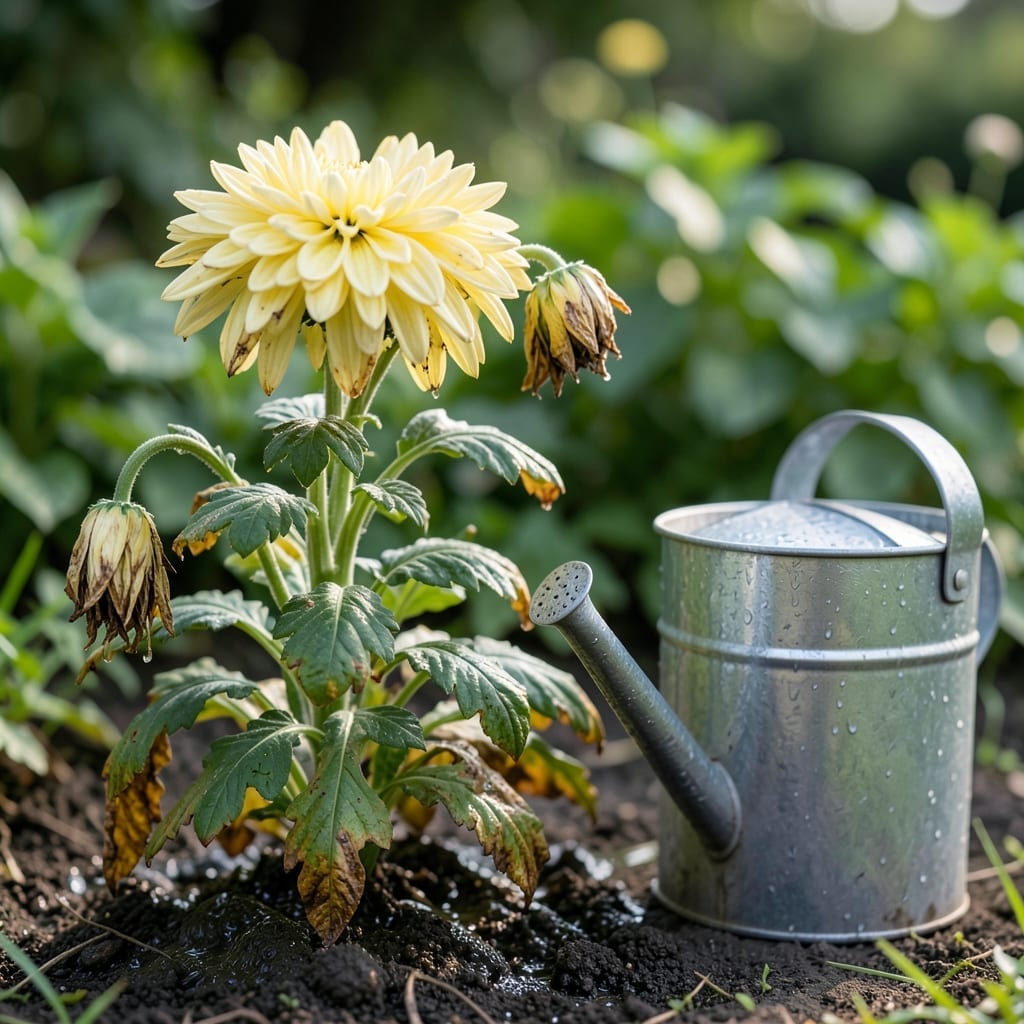
Yellowing leaves and soggy soil? I’ve been there with mums drowning in good intentions. 5 steps fixed mine every time, and they’re easier than you think.
Overwatering suffocates roots, turning vibrant blooms into sad, wilting messes. The fix starts with stopping the water and letting the soil breathe. Most people miss the first sign—soft stems that flop over like they’ve given up.
Within 3-5 days of the right care, you’ll see perked-up foliage and roots that remember how to drink. The turnaround is fast if you act before rot sets in.
Works for potted mums, garden beds, or that “just one more splash” plant on your porch. Here’s how to bring them back.
Overwatering chrysanthemums (mums) often stems from well-intentioned but misguided care. Here’s why it happens:
Many gardeners assume mums need frequent watering, especially during dry spells. However, mums thrive in moist but well-drained soil. Overwatering saturates the soil, displacing oxygen and suffocating roots. The plant’s ability to absorb nutrients is compromised, leading to root rot and wilting.
Containers without drainage holes or dense, clay-heavy soil trap excess water. Mums require loamy, fast-draining soil to prevent waterlogging. Without proper drainage, roots drown, and fungal diseases like Pythium or Phytophthora thrive in the stagnant moisture.
Humidity, rainfall, and temperature affect watering needs. Overwatering often occurs when gardeners stick to a rigid schedule without adjusting for natural precipitation or cooler weather, which slows evaporation. Mums in shaded areas also retain moisture longer, increasing the risk of oversaturation.
Placing mums in oversized pots or failing to repot bound roots leads to excessive moisture retention. Compacted roots can’t access air pockets, and excess water fills the gaps, accelerating decay. Always choose pots 1–2 inches wider than the root ball to ensure proper airflow.
Overwatering can leave your mums looking sad and droopy, but don’t worry—there are simple ways to bring them back to life. Below are targeted fixes for common overwatering issues, along with prevention tips to keep your mums thriving long-term.
If your mums have yellow leaves, the roots may be suffocating in soggy soil. Repot the plant in fresh, well-draining potting mix and ensure the container has drainage holes. Use a mix with perlite or sand to boost aeration. Prevention tip: 💡 Always check that water can flow freely out of the pot—no puddles allowed!
Wilting despite wet soil? The roots are likely drowning. Stop watering immediately and let the top 1-2 inches of soil dry out before watering again. Move the plant to a sunny spot to speed up evaporation. Prevention tip: ✨ Stick your finger in the soil—if it feels damp, wait another day or two.
Black, mushy roots are a sign of rot. Gently remove the plant, trim away affected roots with clean scissors, and repot in fresh soil. Avoid fertilizing until the plant recovers. Prevention tip: 🌡️ Use a moisture meter to avoid guessing—water only when the soil reads “dry.”
White mold or fungus on the soil? Scrape off the top layer and sprinkle cinnamon (a natural fungicide) on the soil. Move the plant to a breezy area. Prevention tip: 🎯 Space plants apart for better airflow and avoid overhead watering.
With these steps, your mums will bounce back—and you’ll avoid overwatering woes in the future!
Water when the top 1-2 inches of soil feel dry. This usually means every 5-7 days, but check soil moisture first. Overwatering is more harmful than underwatering for these hardy plants.
Look for yellowing leaves, soft stems, or wilting despite wet soil. These appear before root rot sets in. Catching these early means easier recovery.
Yes, if caught early. Trim black, mushy roots with clean shears and repot in fresh, dry soil. Hold off on watering for 3-4 days to let roots recover.
Use a well-draining mix with perlite or sand. Avoid dense garden soil that holds too much moisture. Ensure containers have drainage holes to prevent waterlogging.