
Beautiful Plants For Your Interior
Beautiful Plants For Your Interior
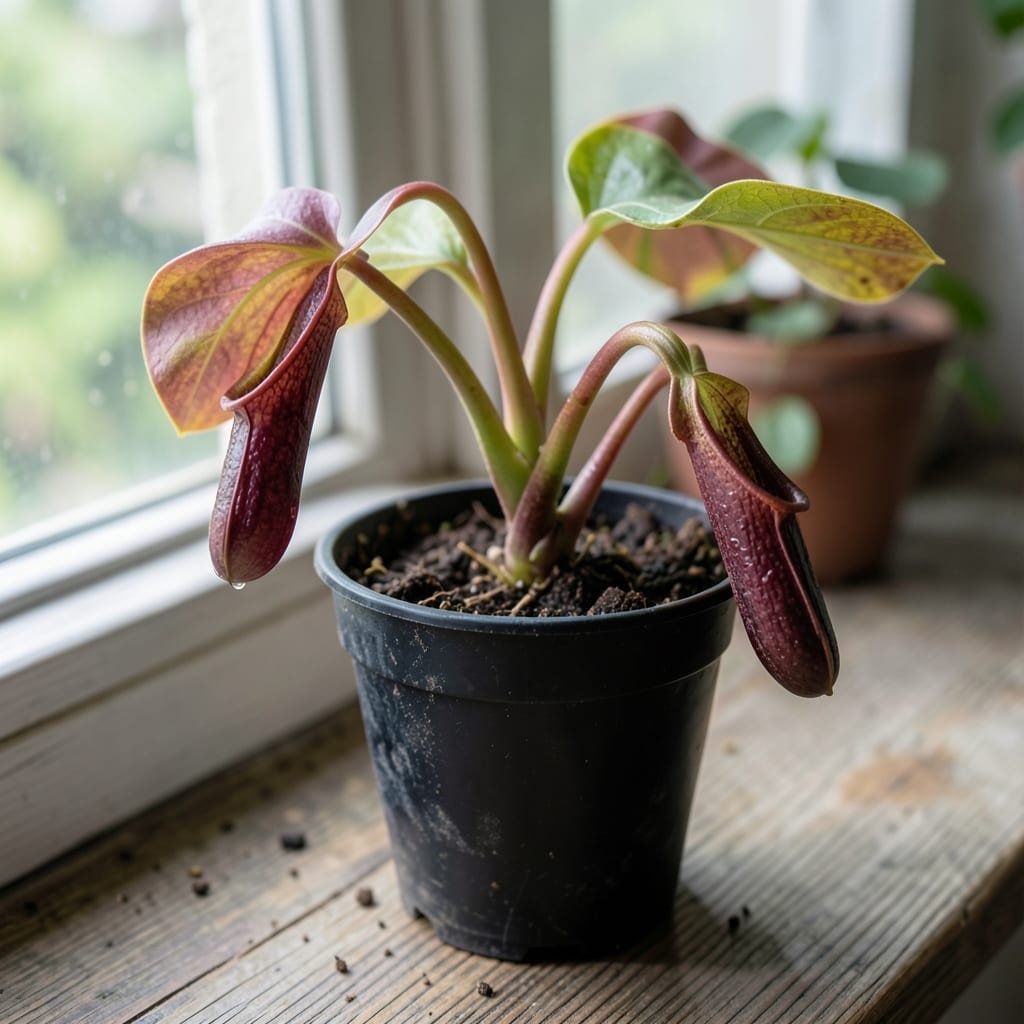
Drooping leaves on your pitcher plant usually mean one thing—too much water. I’ve rescued several from this exact problem, and the fix is simpler than you’d think.
Pitcher plants hate soggy roots. They’re bog plants, sure, but they need air too. Overwatering suffocates them, turning leaves yellow and mushy before they collapse. The solution starts with letting the soil dry slightly between waterings.
The recovery isn’t instant, but within 2-3 weeks of proper care, new growth appears. You’ll see fresh pitchers forming and the plant regaining its upright posture.
Prevention is even easier: use distilled or rainwater, and always check soil moisture before adding more. Your plant will thank you with vibrant, healthy growth.
Pitcher plants thrive in moist but well-drained conditions, so overwatering often stems from misconceptions about their natural habitat. Below are the most common causes, explained with actionable insights.
Many growers assume pitcher plants need constant saturation, mimicking bogs. However, Nepenthes (tropical pitcher plants) prefer humid air over soggy soil. Frequent watering without allowing the medium to dry slightly between sessions leads to root suffocation and rot. Fix: Water only when the top inch of the mix feels dry.
Standard potting soil retains too much moisture, while pitcher plants require airy, chunky mixes (e.g., sphagnum moss, perlite, or orchid bark). Compacted or water-retentive substrates trap water around roots, promoting fungal growth. Fix: Repot into a 50/50 mix of peat moss and perlite and use pots with drainage holes.
High humidity benefits pitcher plants, but misting the leaves (not the soil) is often misinterpreted as a need for more water. Excess moisture in the soil—rather than the air—causes root rot. Fix: Use a humidity tray or humidifier instead of extra watering.
Placing pitcher plants in low-light, cool areas slows evaporation, leaving soil damp for too long. These plants need bright, indirect light and warm temperatures (70–85°F) to process water efficiently. Fix: Move to a sunnier, warmer spot and adjust watering accordingly.
If your pitcher plant is suffering from overwatering, don’t panic—it’s often fixable with the right steps. Below are targeted solutions for common issues, along with prevention tips to keep your plant thriving.
Fix: Stop watering immediately and let the soil dry out. Gently remove the plant from its pot and inspect the roots. Trim any mushy, black, or foul-smelling roots with sterile scissors. Repot in fresh, well-draining carnivorous plant soil (avoid regular potting mix). Place the plant in bright, indirect light to aid recovery.
Prevention: Use the “finger test”—only water when the top inch of soil feels dry. Always use distilled, rain, or reverse-osmosis water to avoid mineral buildup.
Fix: Act fast! Remove the plant from its container and rinse the roots under lukewarm water. Prune all affected roots (soft, discolored, or slimy) with clean tools. Soak the remaining healthy roots in a diluted hydrogen peroxide solution (1 part 3% H₂O₂ to 3 parts water) for 10 minutes to disinfect. Repot in fresh, moist (not soggy) carnivorous plant medium.
Prevention: Ensure your pot has drainage holes, and never let the plant sit in a saucer of water. A layer of sphagnum moss on top can help retain moisture without waterlogging.
Fix: Reduce watering frequency and increase humidity around the plant. Mist lightly or use a humidity tray with pebbles. If the soil is compacted, loosen it gently to improve aeration. Feed the plant a single small insect (like a fruit fly) to boost its strength.
Prevention: Stick to a consistent watering schedule—typically every 1-2 weeks in warm weather, less in cooler months. Avoid fertilizers, as they can burn the roots.
💡 Pro Tip: Pitcher plants prefer damp conditions, not swampy ones. When in doubt, underwater slightly—these plants are more tolerant of dryness than excess moisture!
Look for yellowing leaves, mushy stems, or a foul odor from the soil. The pitchers may also turn black and fall off prematurely.
Use a 50/50 mix of peat moss and perlite or orchid bark. This ensures good drainage while retaining just enough moisture for healthy growth.
Water only when the top 1 inch of soil feels dry. In warm weather, this is usually every 1-2 weeks. Always use distilled or rainwater.
Yes! Trim the affected roots, disinfect the healthy ones with diluted hydrogen peroxide, and repot in fresh, well-draining soil. Recovery takes 2-3 weeks.