
Beautiful Plants For Your Interior
Beautiful Plants For Your Interior
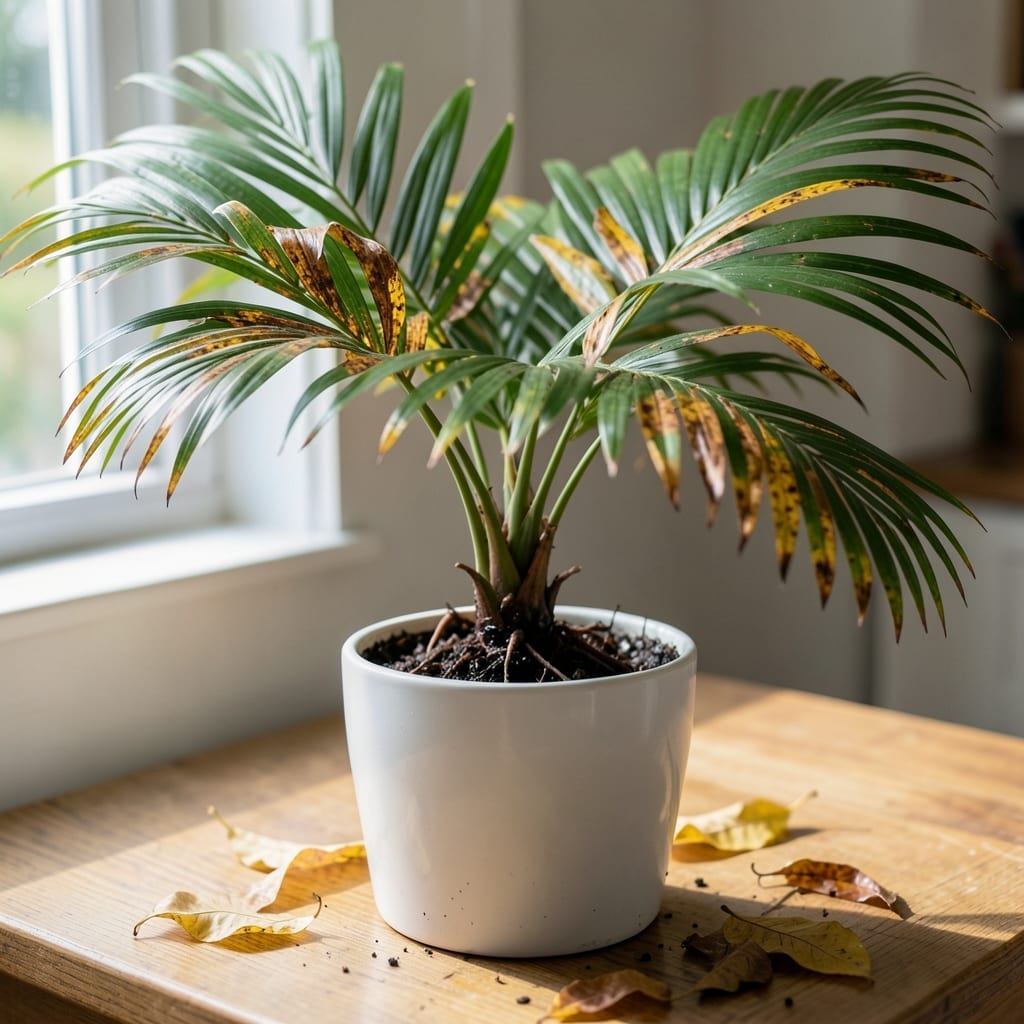
My parlor palm nearly died from overwatering last winter. It started with yellow leaves, then the soil smelled sour, and the roots turned to mush. I caught it just in time.
Here’s the thing—parlor palms are tough but hate soggy soil. The first sign is usually drooping fronds that don’t perk up, even after you water. Then the leaves turn yellow or brown, starting at the tips.
Rescue means stopping the water, checking the roots, and repotting in fresh, dry mix. Most bounce back within 3-4 weeks if you act fast.
Prevention is simpler than cure: water only when the top 1-2 inches of soil are dry. That’s it.
Root rot in parlor palms ( Chamaedorea elegans ) is primarily a result of poor watering habits and environmental conditions that create the perfect breeding ground for fungal and bacterial pathogens. Below are the key causes, explained with actionable insights.
Parlor palms thrive in moist but well-drained soil. Overwatering saturates the soil, displacing oxygen and suffocating the roots. Without oxygen, root cells die, creating entry points for pathogens like Phytophthora and Pythium, which thrive in waterlogged conditions. Actionable tip: Water only when the top 1-2 inches of soil are dry to the touch.
Even with moderate watering, compacted soil or lack of drainage holes in the pot can trap water. This stagnation encourages anaerobic conditions, accelerating root decay. Actionable tip: Use pots with drainage holes and a well-aerated potting mix containing perlite or sand.
Parlor palms prefer temperatures between 65–80°F (18–27°C). Cooler temperatures slow evaporation, keeping soil wet longer. High humidity further reduces water loss, compounding the risk. Actionable tip: Avoid placing the plant in cold drafts or overly humid environments without proper airflow.
Pathogens like Fusarium and Rhizoctonia are opportunistic, attacking weakened roots in waterlogged soil. These microbes break down root tissues, leading to rot. Actionable tip: Sterilize pots and tools, and avoid reusing soil from infected plants to prevent contamination.
When your parlor palm is suffering from root rot due to overwatering, quick and targeted action is key. Below are the most effective fixes, mapped to the root causes, along with prevention tips to keep your plant thriving long-term.
If the pot lacks drainage holes or the soil stays soggy, remove the plant immediately. Gently shake off the old soil, trim any black or mushy roots with sterilized scissors, and repot in a well-draining mix (e.g., cactus or palm soil with perlite). Choose a pot with drainage holes to prevent water from pooling.
Prevention tip: Always use containers with drainage, and place a saucer underneath to catch excess water. Empty the saucer after 10–15 minutes to avoid reabsorption.
Let the top 1–2 inches of soil dry out completely between waterings. Stick your finger in the soil to check—if it feels damp, wait a few more days. For severe cases, skip watering until the plant shows signs of recovery (new growth or firmer stems).
Prevention tip: Use a moisture meter or the “lift test”—a light pot often means it’s time to water, while a heavy one means it’s still saturated.
Root rot thrives in stagnant, humid conditions. Move your parlor palm to a spot with gentle airflow (e.g., near an open window or a ceiling fan on low). Avoid cramped spaces or grouping it with other moisture-loving plants.
Prevention tip: A small oscillating fan can work wonders, but keep it at a low speed to avoid stressing the leaves.
If the soil is dense and waterlogged, use a fork or chopstick to gently aerate the top layer. For potted plants, consider mixing in coarse sand or bark to improve structure. This helps roots breathe and prevents rot from spreading.
Prevention tip: Repot every 2–3 years to refresh the soil and prevent compaction.
💡 Pro tip: If the rot has spread extensively, propagate healthy stems in water or fresh soil to save parts of the plant.
Look for yellowing leaves, mushy stems, or a sour smell from the soil. Gently remove the plant from its pot—black, soft roots confirm rot.
Yes, if caught early. Trim affected roots, repot in fresh, dry soil, and stop watering for 1-2 weeks. New growth signals recovery.
Water only when the top 1-2 inches of soil are dry. In most homes, this means every 7-10 days.
Use a well-draining mix with perlite or sand. Avoid dense, moisture-retaining soils. A cactus or palm mix works perfectly.