
Beautiful Plants For Your Interior
Beautiful Plants For Your Interior
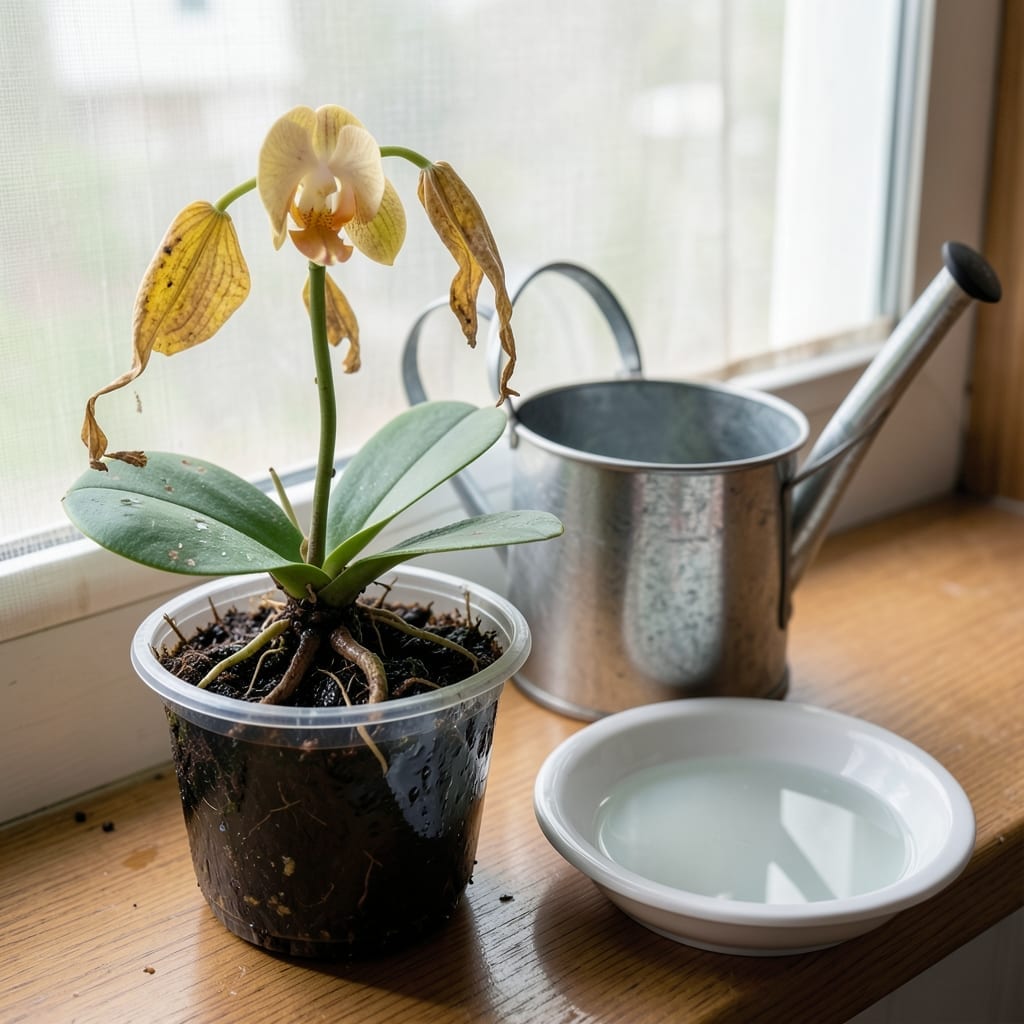
Yellow leaves and mushy roots told me my orchids were drowning. I learned the hard way that too much love—especially with water—can kill these plants faster than neglect.
The signs appear gradually: limp leaves, blackened stems, and that telltale sour smell. It’s not just about cutting back on watering—it’s understanding what your orchid actually needs to thrive.
Recovery starts with removing the plant from its soggy home and giving the roots a chance to breathe. Most bounce back within 2-3 weeks once they’re in the right conditions.
Prevention is simpler than you think: a well-draining setup and a consistent watering schedule. Here’s how to keep them happy long-term.
Overwatering is a common mistake that stems from misunderstanding orchids’ natural needs. These tropical plants thrive in well-aerated environments, not soggy soil. Below are the key reasons why overwatering happens and how it harms your orchids.
Orchids, especially Phalaenopsis and Dendrobium varieties, require pots with drainage holes to prevent waterlogging. Without them, water pools at the roots, suffocating the plant and promoting root rot. Even with holes, compact or non-porous potting mixes (like regular soil) trap moisture, mimicking a swamp rather than the airy bark or sphagnum moss orchids prefer.
Many growers assume orchids need frequent watering, but their thick, water-storing roots and leaves are adapted to drought-like conditions. Watering on a rigid schedule (e.g., weekly) ignores the plant’s actual needs, which vary by humidity, temperature, and pot size. A good rule: Water only when the top inch of the medium is dry—often every 7–10 days in average home conditions.
Orchid potting mixes (bark, coconut husk, or moss) dry out differently than soil. Bark, for instance, repels water when completely dry, leading some to overcompensate by adding more. Meanwhile, moss retains moisture for weeks, making it easy to drown roots if not monitored. Always check the medium’s moisture with your finger or a wooden skewer before watering.
Orchids in dimly lit or highly humid environments (like bathrooms) use water more slowly. Combined with frequent watering, this creates a perfect storm for edema (cell bursting) and fungal infections. Adjust your watering frequency based on the plant’s environment—less in cool, dark spaces; more in bright, dry ones.
Reviving an overwatered orchid starts with addressing the root of the issue—literally. Here’s how to tackle each common cause and prevent future damage.
If your orchid’s leaves are turning yellow, it’s likely drowning. Stop watering immediately and let the potting mix dry out completely. Use your finger to test moisture—only water when the top inch feels dry. Switch to a well-draining mix with bark or perlite to prevent waterlogging.
Prevention tip: 💡 Water orchids in the morning and always use pots with drainage holes.
Mushy, black roots are a sign of rot. Gently remove the orchid from its pot, rinse the roots under lukewarm water, and trim away any soft, discolored roots with sterilized scissors. Repot in fresh, dry mix and a clean container. Avoid watering for 5–7 days to let roots recover.
Prevention tip: 🎯 Use a clear pot to monitor root health and adjust watering if roots look soggy.
If the potting medium stays wet for days, it’s retaining too much moisture. Replace it with an orchid-specific mix (bark, sphagnum moss, and charcoal work well). Add drainage holes if your pot lacks them, or switch to a slatted basket for better airflow.
Prevention tip: ✨ Elevate pots on a tray with pebbles to avoid standing water.
Bud blast (premature flower drop) often stems from excessive moisture in the air or soil. Move your orchid to a spot with gentle airflow, like near a fan on low. Reduce misting and ensure the room has 40–70% humidity—use a hygrometer to check.
Prevention tip: 🌡️ Group orchids together to create a stable microclimate without overdoing humidity.
Water only when the top 1 inch of potting mix feels dry, typically every 7-10 days. Orchids store moisture in their roots and leaves, so they tolerate drought better than soggy conditions. Adjust based on your home’s humidity and light levels.
Look for yellowing leaves, mushy roots, or a sour smell from the pot. Limp leaves and blackened stems are also red flags. Catching these early gives your orchid the best chance to recover.
Yes! Trim all mushy, black roots with sterilized scissors, repot in fresh mix, and hold off watering for 5-7 days. Healthy roots will regrow if given proper care.
Drainage prevents water from pooling at the roots, which suffocates the plant and causes rot. Even with careful watering, standing water in a pot without holes will eventually kill the orchid.