
Beautiful Plants For Your Interior
Beautiful Plants For Your Interior
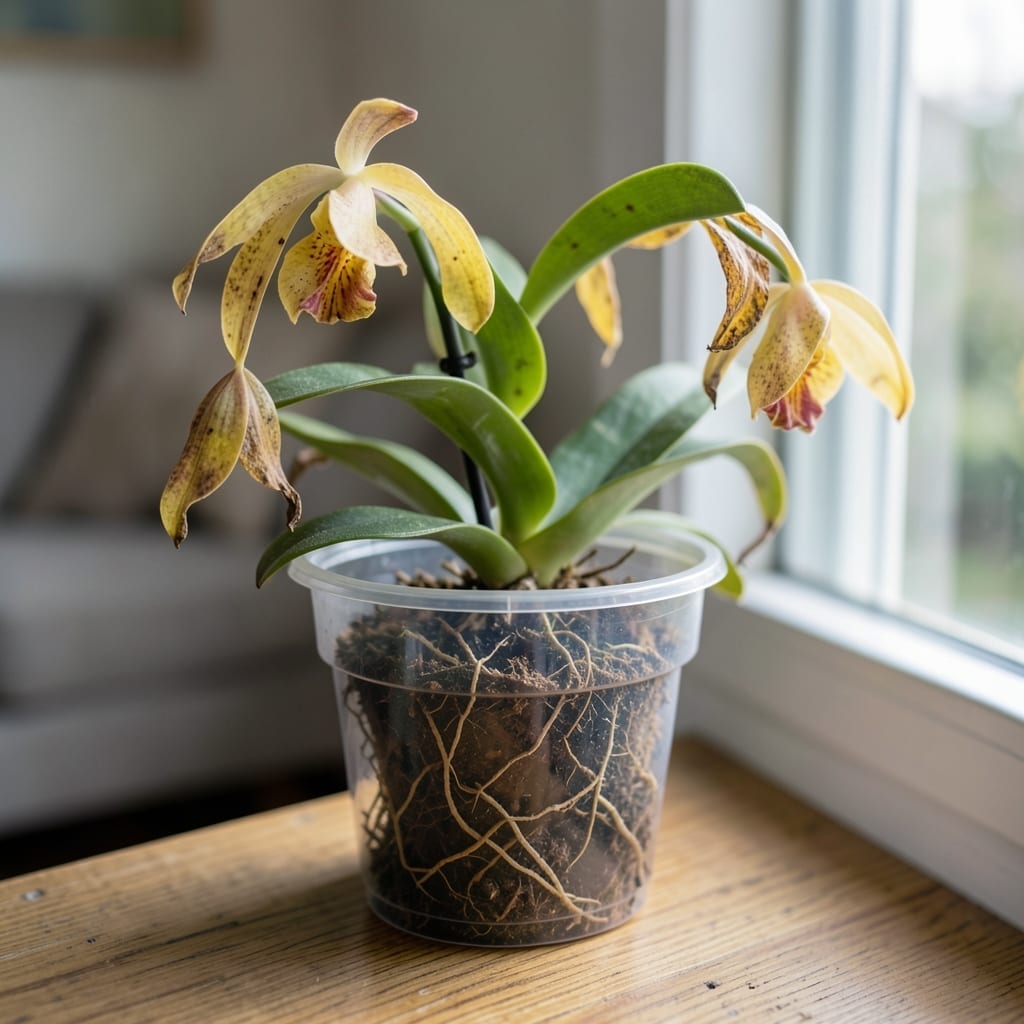
Yellowing leaves and mushy roots on your orchid are distress signals. I’ve rescued dozens from the brink by catching these signs early and adjusting my care routine immediately.
The problem usually starts with good intentions—too much water, not enough drainage. Orchids hate soggy feet, and their roots suffocate quickly in standing water. A simple repotting with fresh bark mix often revives them faster than you’d expect.
Within 2-3 weeks of proper care, you’ll see new root growth and firmer leaves. The key is mimicking their natural conditions: bright, indirect light and water only when the medium feels dry.
Works for phalaenopsis, dendrobium, and most common house orchids. The revival process is simpler than you think.
Overwatering orchids often stems from a mix of environmental missteps and cultural habits. Below are the most common causes, each with a clear explanation to help you avoid them.
Orchids, especially epiphytic varieties like Phalaenopsis, require excellent drainage. When potted in dense, water-retentive media (e.g., regular potting soil) or containers without drainage holes, excess water lingers around the roots. This suffocates the root system, blocking oxygen uptake and fostering anaerobic conditions where root rot pathogens like Phytophthora and Fusarium thrive.
Many growers water orchids on a fixed schedule (e.g., “once a week”) without considering the plant’s actual needs. Orchids prefer a dry-wet cycle: their roots should dry out slightly between waterings. Frequent watering—especially in cool, humid environments—prevents this cycle, leading to waterlogged roots and eventual decay.
Stagnant air around orchid roots exacerbates overwatering. In nature, epiphytic orchids grow exposed to air circulation, which helps evaporate excess moisture. Indoors, poor ventilation (e.g., tight plastic pots or crowded growing spaces) traps humidity, prolonging dampness and increasing rot risk.
Cool temperatures (<60°F/15°C) slow down evaporation, while high humidity (>70%) reduces transpiration. Together, these conditions keep the potting medium moist for extended periods. Orchids in such environments are highly susceptible to overwatering, even if the watering frequency seems moderate.
Reviving an overwatered orchid starts with identifying the issue and taking quick, targeted action. Below are practical fixes for common symptoms, along with tips to prevent future problems.
If the leaves are yellow but still firm, your orchid may be waterlogged. Stop watering immediately and let the potting mix dry out completely. Move the plant to a spot with indirect light and good airflow to speed up evaporation. Once the mix is dry, resume watering with a light touch—only when the top inch of the medium feels dry.
Prevention tip: 💡 Use a clear pot to monitor root health and moisture levels. Orchids thrive when their roots can dry out between waterings.
Root rot is a serious sign of overwatering. Gently remove the orchid from its pot and trim away black, mushy roots with sterilized scissors. Soak the remaining healthy roots in a diluted hydrogen peroxide solution (1 part 3% peroxide to 3 parts water) for 10 minutes to disinfect. Repot in fresh, well-draining orchid mix (bark-based) and avoid watering for 5–7 days.
Prevention tip: 🎯 Choose pots with drainage holes and avoid letting the orchid sit in a saucer of water.
A sour or rotten smell means the potting medium is staying too wet. Repot the orchid immediately in fresh mix, and discard the old, soggy medium. If the roots are heavily damaged, consider using a sphagnum moss mix temporarily, as it holds moisture but allows better airflow than dense soil.
Prevention tip: ✨ Water in the morning so excess moisture evaporates during the day, reducing the risk of fungal growth.
With these steps, your orchid can bounce back. Consistency in watering habits and proper drainage are key to keeping it healthy long-term.
Look for yellowing leaves, soft or mushy roots, and a foul smell from the potting mix. Leaves may also feel limp or appear wrinkled. These signs mean the roots are suffocating from too much moisture.
Yes, if you act quickly. Trim rotten roots, repot in fresh bark mix, and stop watering for 5–7 days. Healthy roots will bounce back with proper care.
Water only when the top 1 inch of the potting mix feels dry. This usually means watering every 7–10 days, but adjust based on your home’s humidity and temperature.
Use a chunky, bark-based orchid mix that allows air to circulate freely. Avoid dense soils that retain too much moisture. A clear pot helps monitor root health.