
Beautiful Plants For Your Interior
Beautiful Plants For Your Interior
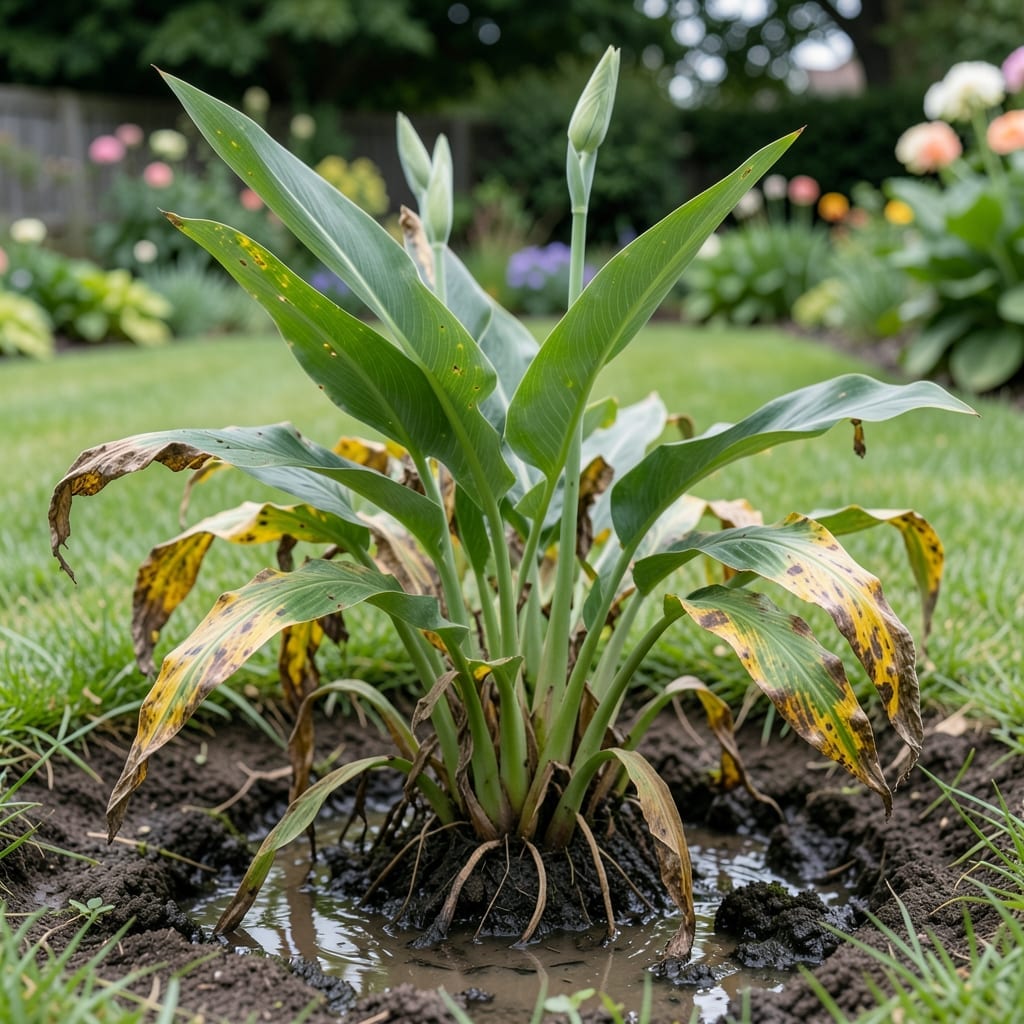
Yellow leaves on your canna lily usually mean one thing—too much water. I’ve saved countless plants from this exact issue, and the fix is simpler than you’d think.
Overwatering suffocates the roots, turning them mushy and brown. The plant can’t absorb nutrients, so the leaves turn yellow and wilt. Catching it early makes all the difference.
With a few adjustments to your watering routine and some root care, you’ll see new green growth within 2-3 weeks. The key is letting the soil dry out between waterings.
This method works for potted or in-ground cannas, and it prevents the problem from coming back. Here’s how to bring your plant back to life.
Overwatering your canna lily often stems from a few common but preventable mistakes. Understanding these causes helps you adjust your care routine and keep your plants thriving. Here’s why it happens:
Canna lilies thrive in moist but well-drained soil. When watered too often, the soil becomes waterlogged, depriving roots of oxygen. This leads to root asphyxiation, where roots can’t respire properly, causing them to weaken and rot. Stick to watering only when the top 1-2 inches of soil feel dry to the touch.
Heavy or clay-based soils retain moisture for extended periods, increasing the risk of overwatering. Additionally, pots without drainage holes trap water at the bottom, creating a stagnant environment perfect for root rot. Use well-draining soil mixes (e.g., loamy soil with perlite or sand) and ensure containers allow excess water to escape.
A pot that’s too large for your canna lily holds excess moisture the plant can’t absorb, leading to soggy soil. Similarly, compacted roots in a crowded pot struggle to access oxygen, exacerbating waterlogging. Choose a pot just 1-2 inches wider than the root ball and repot if roots appear circling or bound.
High humidity, low temperatures, or shaded areas slow down evaporation, keeping soil damp longer than expected. Canna lilies in such conditions need less frequent watering. Always adjust your watering schedule based on seasonal changes and the plant’s microclimate.
If your canna lily is showing signs of overwatering, don’t panic! With a few simple fixes, you can nurse it back to health. Here’s how to tackle the most common issues and prevent them in the future.
If the soil feels waterlogged, stop watering immediately. Let the top 1-2 inches of soil dry out before watering again. For severe cases, gently remove the plant from its pot or garden bed and check the roots. Trim any mushy, black, or foul-smelling roots with clean scissors. Repot in fresh, well-draining soil mixed with perlite or sand. Prevention tip: 💡 Always use containers with drainage holes, and consider adding a layer of gravel at the bottom.
Yellow leaves are often a cry for help. Trim away the affected foliage with sterilized pruners to redirect the plant’s energy to healthy growth. Reduce watering frequency and ensure the plant gets 6-8 hours of sunlight daily. If the canna is in a pot, move it to a sunnier spot. Prevention tip: ✨ Water only when the topsoil is dry to the touch—early morning is ideal to prevent fungal growth.
If root rot has set in, act fast. After trimming damaged roots, soak the remaining healthy roots in a copper-based fungicide or a diluted hydrogen peroxide solution (1 part 3% peroxide to 4 parts water) for 10 minutes. Repot in fresh, sterile soil. Prevention tip: 🎯 Avoid over-fertilizing, as excess nutrients can contribute to root rot. Stick to a balanced, slow-release fertilizer.
Keep your canna lily thriving by adopting these habits:
Water when the top 1-2 inches of soil feel dry. In hot weather, this may mean once a week; in cooler months, less often. Always check soil moisture first.
Yellowing leaves and wilting are early warnings. Later, you may notice mushy stems or a foul odor from the soil, indicating root rot. Act quickly for best recovery.
Yes, if caught early. Trim affected roots, treat with fungicide, and repot in fresh, well-draining soil. Reduce watering until the plant stabilizes.
A pot that’s too large holds excess moisture. Choose one just 1-2 inches wider than the root ball to prevent waterlogging.