
Beautiful Plants For Your Interior
Beautiful Plants For Your Interior
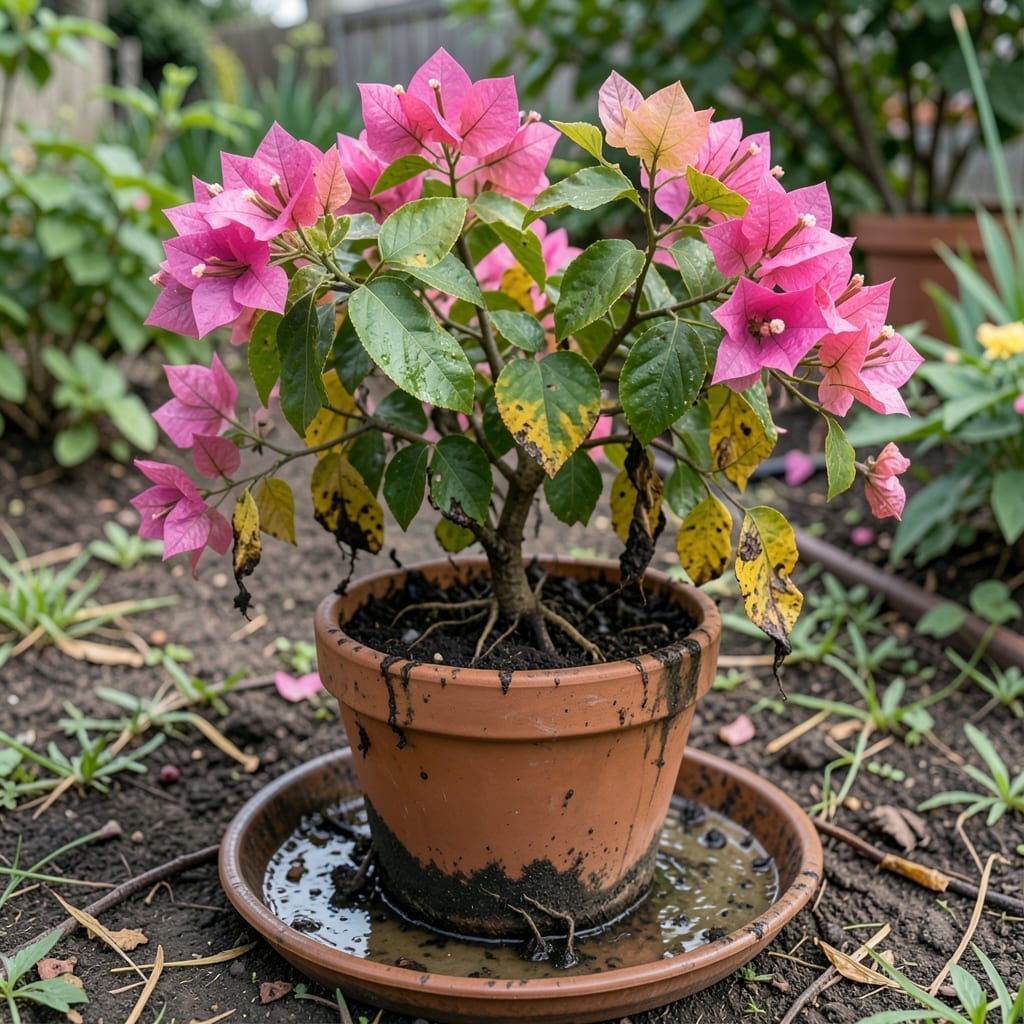
Yellow leaves on your bougainvillea aren’t just sad—they’re a red flag. I’ve watched this happen too many times, always tracing back to the same mistake: too much water, too often.
Bougainvillea thrives on neglect, not kindness. Overwatering drowns the roots, turning vibrant plants into droopy, yellow messes. The fix isn’t complicated, but it does require a shift in mindset.
You’ll start seeing recovery within 2-3 weeks once you dial back the water and let the soil dry out. New growth will emerge darker green and more resilient than before.
This works for potted plants, garden beds, or even struggling cuttings. Here’s how to nurse them back to health.
Overwatered bougainvillea often suffers due to a few key factors, each disrupting the plant’s natural balance. Understanding these causes helps prevent damage and promotes recovery.
Bougainvilleas thrive in dry conditions and are highly susceptible to root suffocation when watered too often. Their native Mediterranean and tropical environments condition them to drought tolerance, not constant moisture. When soil remains soggy, oxygen levels drop, preventing roots from respiring efficiently. This leads to root asphyxiation and, eventually, root rot.
Even moderate watering can cause problems if the potting mix or garden soil lacks drainage. Heavy clay soils or compacted containers trap water around the roots, creating a stagnant, anaerobic environment. Bougainvilleas need well-draining soil (e.g., a mix of perlite, sand, and loam) to allow excess water to escape quickly.
Watering from above—especially in humid climates—encourages foliar diseases and prolongs moisture retention in the soil. Bougainvillea leaves and bracts can develop fungal issues like powdery mildew when frequently wet. Additionally, high humidity slows evaporation, keeping the root zone damp longer than the plant can tolerate.
Planting bougainvillea in a pot that’s too large increases the risk of overwatering. Excess soil holds more moisture than the roots can absorb, leading to waterlogged conditions. Always choose containers just 1–2 inches wider than the root ball to ensure proper moisture control.
If your bougainvillea is showing signs of overwatering, act quickly to nurse it back to health. Below are targeted solutions for common issues, along with prevention tips to keep your plant thriving.
Stop watering immediately and let the soil dry out completely. Bougainvilleas prefer dry conditions—water only when the top 1-2 inches of soil are dry. Use a moisture meter or your finger to check. Prevention tip: Water deeply but infrequently (every 2-3 weeks in warm climates, less in cooler months).
Gently remove the plant from its pot and inspect the roots. Trim away mushy, black, or foul-smelling roots with sterilized shears. Repot in fresh, well-draining soil (mix in perlite or sand) and a pot with drainage holes. Avoid watering for a week post-repotting. Prevention tip: Use terracotta pots—they wick away excess moisture better than plastic.
If the soil stays soggy, amend it with coarse sand or gravel to improve drainage. Elevate the pot to ensure water runs off freely. For in-ground plants, create a small mound around the base to prevent water pooling. Prevention tip: Avoid saucers under pots or empty them after watering.
Place your bougainvillea in full sun (6+ hours daily) to help evaporate excess moisture. Hold off on fertilizing until the plant recovers—overwatered plants can’t absorb nutrients well. Prevention tip: Mulch lightly (1-2 inches) with gravel or bark to reduce soil moisture retention.
With these fixes, your bougainvillea should bounce back in 2-4 weeks. Stay patient and resist the urge to overcare!
Water only when the top 1-2 inches of soil are completely dry. In warm climates, this usually means every 2-3 weeks. In cooler months, wait even longer.
Yellowing leaves are the earliest warning, followed by wilting despite moist soil. Later, you may notice soft, mushy stems or a foul smell from the roots.
Yes, if you act fast. Remove the plant, trim all black or mushy roots, and repot in fresh, dry soil. Skip watering for at least a week.
A fast-draining mix is key. Combine regular potting soil with perlite, sand, or gravel to improve drainage. Avoid heavy clay soils.