
Beautiful Plants For Your Interior
Beautiful Plants For Your Interior
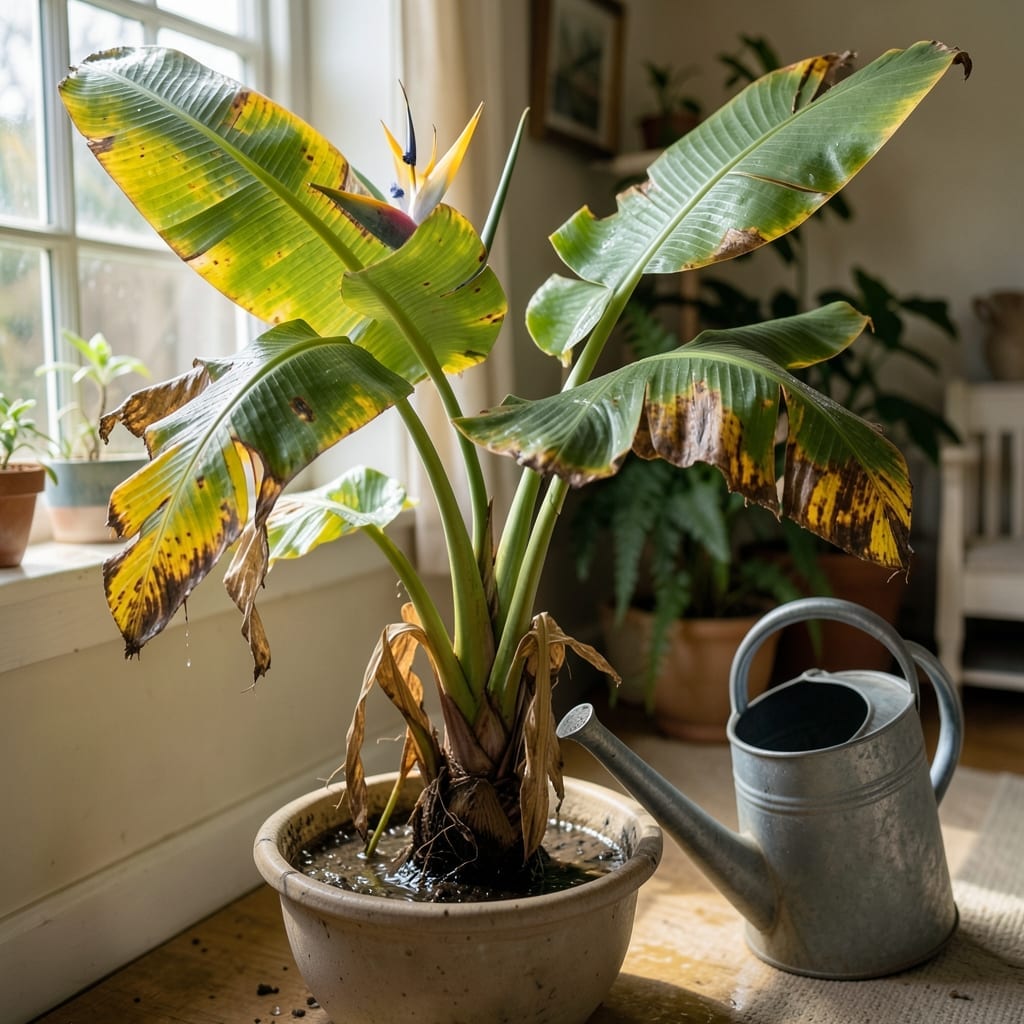
Yellow leaves on your bird of paradise aren’t a death sentence. I’ve saved countless plants from the same soggy fate with a few simple adjustments.
The culprit is almost always too much water sitting in the wrong soil. Heavy pots without drainage holes or dense potting mixes trap moisture, drowning the roots. Within 2-3 weeks of fixing this, you’ll see fresh growth pushing through.
Recovery starts with checking the roots—mushy brown ones need trimming. Then repot in fresh, well-draining mix and hold off on watering until the top 2 inches of soil are dry.
This plant is tougher than it looks. With the right care, it’ll bounce back with those dramatic, tropical leaves you fell in love with.
Overwatering your bird of paradise often stems from a few key issues, all tied to how this tropical plant interacts with its environment. Below are the most common causes, explained with science-backed clarity.
Bird of paradise plants Strelitzia spp. thrive in well-draining soil. When pots lack drainage holes or the soil mix retains too much moisture (e.g., heavy clay or peat-based blends), water pools around the roots. This suffocates the root system, preventing oxygen uptake and promoting root rot—a fungal or bacterial infection that decays roots, leading to yellowing leaves.
Many gardeners water on a fixed schedule (e.g., weekly) rather than checking soil moisture. Bird of paradise prefers the top 1-2 inches of soil to dry out between waterings. Overwatering fills the air pockets in the soil, drowning root cells and disrupting nutrient absorption. The result? Chlorosis (yellowing) as chlorophyll production halts.
Dense soil (e.g., garden soil in containers) compacts over time, reducing porosity. Organic matter like coconut coir or perlite improves aeration, but without it, water lingers. In such conditions, anaerobic bacteria multiply, releasing toxins that damage roots. Always use a chunky, fast-draining mix (e.g., 50% potting soil + 50% perlite/orchid bark).
In dim light or humid climates, the plant’s transpiration rate slows, meaning it uses less water. If you don’t adjust watering frequency, the soil stays soggy. Pair this with poor airflow (e.g., no fan or stagnant air), and fungal spores (like Phytophthora) thrive, accelerating root rot.
Actionable fix: Move the plant to brighter, indirect light and increase airflow with a gentle fan.
If your bird of paradise is suffering from overwatering, don’t panic—it’s often fixable! Here’s how to nurse it back to health, step by step. Act quickly to prevent root rot and further damage.
First, halt all watering to let the soil dry out. Stick your finger 2–3 inches into the soil; if it feels damp, wait. Only resume watering when the top 2–3 inches are dry. This gives the roots a chance to recover from suffocation.
Prevention tip: 💡 Always check soil moisture before watering—use a moisture meter or the finger test.
If the roots are mushy or black, it’s time to repot. Gently remove the plant from its pot, trim away any rotten roots with sterile scissors, and repot in fresh, well-draining soil (mix in perlite or sand for better drainage). Choose a pot with drainage holes to prevent future waterlogging.
Prevention tip: 🎯 Opt for terracotta pots—they dry out faster than plastic.
Move your plant to a spot with bright, indirect light to help it recover. Avoid direct sunlight, which can stress an already weakened plant. Adequate light boosts photosynthesis and helps the plant bounce back.
Prevention tip: ✨ Rotate the pot occasionally for even light exposure.
Yellow or brown leaves won’t turn green again, so prune them with clean scissors to redirect energy to healthy growth. Sterilize your tools with rubbing alcohol to avoid spreading disease.
Prevention tip: 🌡️ Monitor humidity—bird of paradise thrives in 50–70% humidity.
With these steps, your plant should start showing new, healthy growth in a few weeks. Patience and consistency are key!
Water when the top 2-3 inches of soil are dry. In warm weather, this might be every 7-10 days, but always check first. Overwatering is more dangerous than underwatering for this plant.
Yellowing leaves, especially lower ones, are the first warning. You might also notice drooping, mushy stems, or a foul smell from the soil. Catching it early makes recovery much easier.
Yes, if you act quickly. Trim away all mushy brown roots and repot in fresh, dry soil. Skip watering for a few days to let the roots recover before resuming a proper watering routine.