
Beautiful Plants For Your Interior
Beautiful Plants For Your Interior
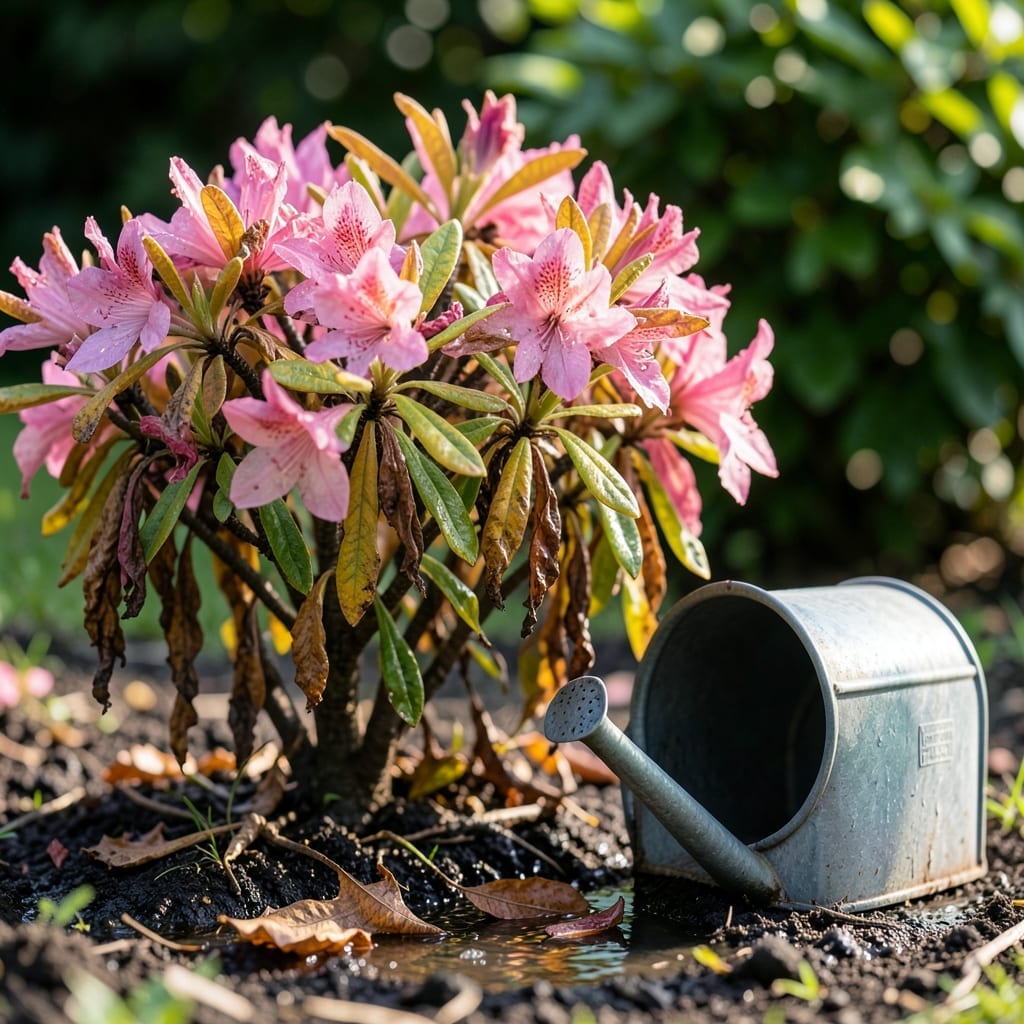
Drooping leaves and yellowing foliage on your azalea often signal too much love. I’ve rescued more than a few by catching the early warning signs before root rot sets in.
The problem usually starts with good intentions—daily watering, heavy soil, or poor drainage. Azaleas hate wet feet, and their delicate roots suffocate quickly when conditions stay soggy for 24-48 hours.
Here’s the thing—most overwatered azaleas can bounce back with the right intervention. The key is acting fast, adjusting your watering routine, and improving soil conditions to prevent future issues.
Within 2-3 weeks of proper care, you’ll see new growth and perked-up leaves. The plant tells you exactly what it needs if you know how to listen.
Overwatering azaleas often stems from a few common but preventable mistakes. Understanding these causes helps you adjust your care routine and keep your plant thriving. Here’s why it happens:
Azaleas thrive in well-draining soil. When planted in heavy, clay-rich soil or containers without drainage holes, water pools around the roots, suffocating them. Root asphyxiation occurs because the roots can’t access oxygen, leading to rot and nutrient uptake failure. Always use acidic, loose soil mixes and ensure pots have drainage holes.
Many gardeners assume azaleas need frequent watering, but these plants prefer consistent moisture, not soggy conditions. Watering too often—especially in cool or humid weather—creates waterlogged soil. Azaleas’ shallow roots are particularly vulnerable, as they can’t escape excess moisture. Stick to a finger-test rule: water only when the top inch of soil feels dry.
Weather and placement play a huge role. Azaleas in shaded, poorly ventilated areas or regions with high rainfall retain moisture longer. Additionally, overhead watering (e.g., sprinklers) can keep foliage wet, promoting fungal diseases like Phytophthora root rot. Adjust watering based on seasonal changes and avoid wetting the leaves.
Potted azaleas are especially prone to overwatering because their roots are confined. Without proper airflow, water evaporates slowly. Use terracotta pots (which breathe better than plastic) and elevate containers to prevent water from pooling at the base. Repot every 2–3 years to refresh the soil.
Azaleas hate soggy roots, but don’t worry—your plant can bounce back with the right care. Below are targeted fixes for each symptom, plus tips to keep it from happening again.
If leaves are turning yellow, your azalea is drowning. Pause all watering and let the soil dry out to the touch (about 1–2 inches deep). Move the pot to a shaded, well-ventilated spot to speed up evaporation. For in-ground plants, improve drainage by mixing in compost or pine bark to loosen heavy soil.
Wilting often means root rot has set in. Gently remove the plant from its pot and trim away black, mushy roots with clean shears. Repot in fresh, acidic, well-draining potting mix (azalea-specific blends work best). Use a container with drainage holes—no exceptions!
If leaves are falling off, your azalea is stressed from inconsistent moisture. Switch to watering only when the top inch of soil is dry. Use the finger test: stick your finger in the soil—if it’s damp, wait. Morning watering is ideal to prevent evening dampness, which invites fungus.
With these steps, your azalea will recover its vibrant blooms in no time! ✨
Water only when the top 1-2 inches of soil feel dry. In hot weather, this might be every 3-4 days, but in cooler months, it could stretch to 7-10 days. Always check soil moisture first.
Yellowing leaves and drooping foliage appear first. Later, you may see leaf drop or black, mushy stems. Early intervention can prevent root rot.
Yes! Stop watering, improve drainage, and trim rotten roots. With proper care, most bounce back within 2-3 weeks.
A moisture meter removes guesswork. Insert it 2-3 inches deep—water only when it reads dry. This simple tool prevents overwatering.