
Beautiful Plants For Your Interior
Beautiful Plants For Your Interior
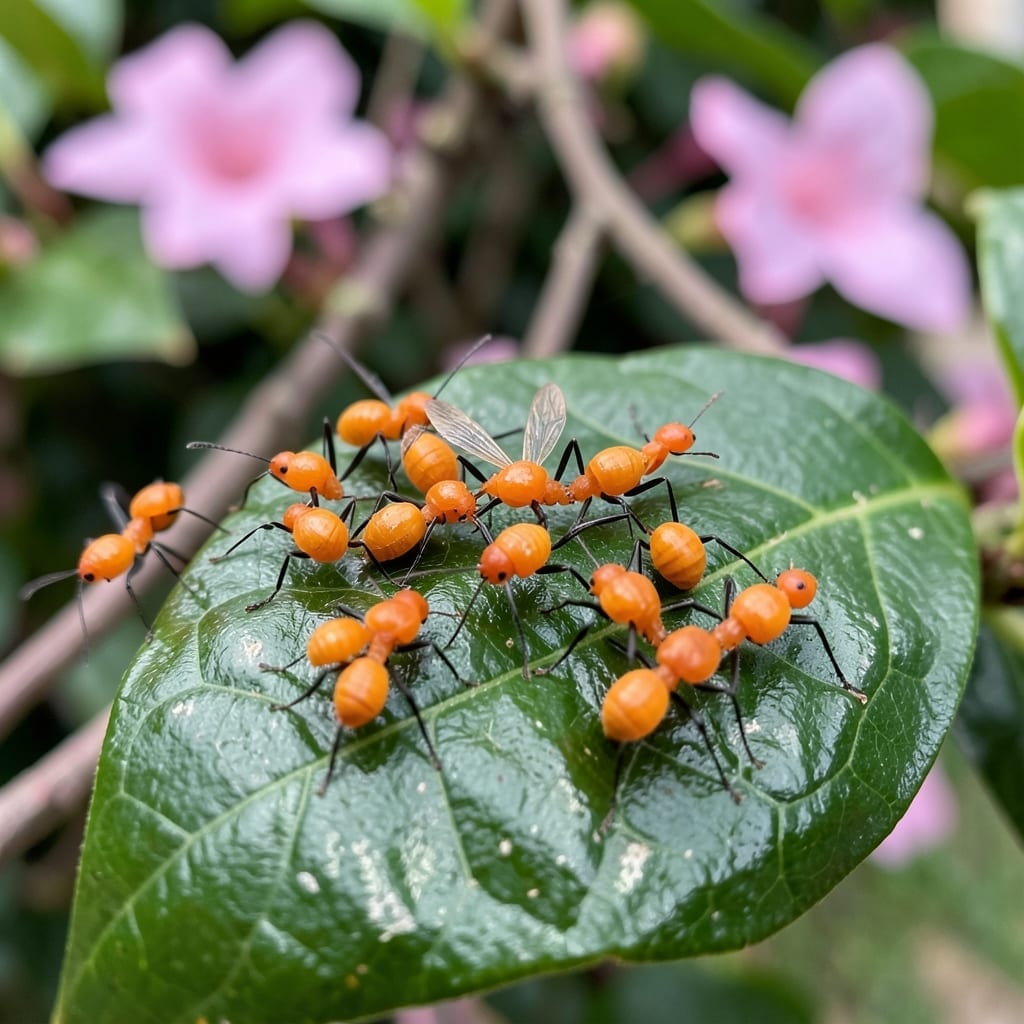
Orange aphids on your mandevilla can turn a thriving vine into a sad, sticky mess overnight. I’ve lost count of how many times I’ve spotted that telltale curling leaf and known trouble was brewing.
These tiny pests multiply fast, draining plant sap and leaving behind a honeydew residue that attracts ants. Left untreated, they’ll stunt growth and weaken your mandevilla’s blooms. The good news? You can fight back effectively.
Neem oil works wonders as a natural treatment, disrupting their life cycle without harsh chemicals. A few consistent applications and you’ll see your plant bounce back with vibrant green leaves and strong new growth.
Prevention is simpler than you think—regular inspections and proper watering habits keep these invaders from taking hold in the first place.
Orange aphids thrive on mandevilla plants due to a combination of environmental, biological, and cultural factors. Understanding these triggers helps you prevent and manage infestations effectively.
Excess nitrogen in soil promotes lush, soft growth—aphids’ favorite food. Mandevillas fertilized heavily with high-nitrogen blends (e.g., 10-5-5) produce tender new shoots rich in amino acids, which attract Aphis nerii (orange oleander aphids). Action: Switch to a balanced, slow-release fertilizer (e.g., 10-10-10) and reduce frequency during active growth phases.
Both drought and waterlogged roots stress mandevilla, weakening its natural defenses. Stressed plants emit volatile organic compounds (VOCs) that signal vulnerability to aphids. Action: Maintain consistent moisture—water when the top 1–2 inches of soil are dry, and ensure pots have drainage holes.
Aphids reproduce rapidly in temperatures between 70–80°F (21–27°C) with low humidity. Mandevilla’s tropical origin makes it a prime host in such climates. Action: Use misting or a humidifier to raise humidity to 40–60%, or provide afternoon shade in peak summer.
In gardens without ladybugs, lacewings, or parasitic wasps, aphid populations explode unchecked. Urban or indoor settings often lack these beneficial insects. Action: Introduce predatory insects or plant companion species like dill or fennel to attract them.
Dense foliage and crowded plantings create stagnant air, ideal for aphid colonization. Mandevilla’s vigorous vines can trap humidity and warmth around new growth. Action: Prune regularly to improve airflow and space plants at least 18–24 inches apart.
Dealing with orange aphids on your mandevilla doesn’t have to be a losing battle. Here’s how to tackle the problem head-on, with simple, effective fixes for each cause.
If soggy soil is attracting aphids, let the top 1-2 inches of soil dry out between waterings. Use a well-draining potting mix with perlite or sand, and ensure your container has drainage holes. Water at the base of the plant to avoid wetting the leaves, which can encourage aphid growth.
Encourage aphid predators like ladybugs, lacewings, or parasitic wasps by planting companion flowers such as marigolds or alyssum nearby. You can also purchase ladybugs from garden centers and release them onto your mandevilla at dusk for the best results.
Mix 1-2 tablespoons of neem oil or insecticidal soap with a gallon of water and spray it directly onto the aphids, focusing on the undersides of leaves. Reapply every 5-7 days until the infestation clears. Pro tip 💡: Test the spray on a small area first to ensure it doesn’t harm your plant.
Boost your mandevilla’s resilience with balanced fertilizer (10-10-10 or 20-20-20) applied every 2-4 weeks during the growing season. Prune damaged or heavily infested leaves to redirect energy to healthy growth. Ensure the plant gets 6-8 hours of sunlight daily for optimal vigor.
Prevention Tips:
Warm, dry weather and over-fertilizing with nitrogen create perfect conditions. Stress from inconsistent watering also makes mandevillas more vulnerable to infestations.
Spray every 5-7 days until the problem clears, focusing on leaf undersides. Always apply in the evening to avoid burning the leaves.
Yes, they can spread quickly to other garden plants. Isolate infested mandevillas and treat immediately to prevent further damage.
No, regular soap may harm your plant. Only use horticultural or insecticidal soap diluted properly. Test on a small area first.