
Beautiful Plants For Your Interior
Beautiful Plants For Your Interior
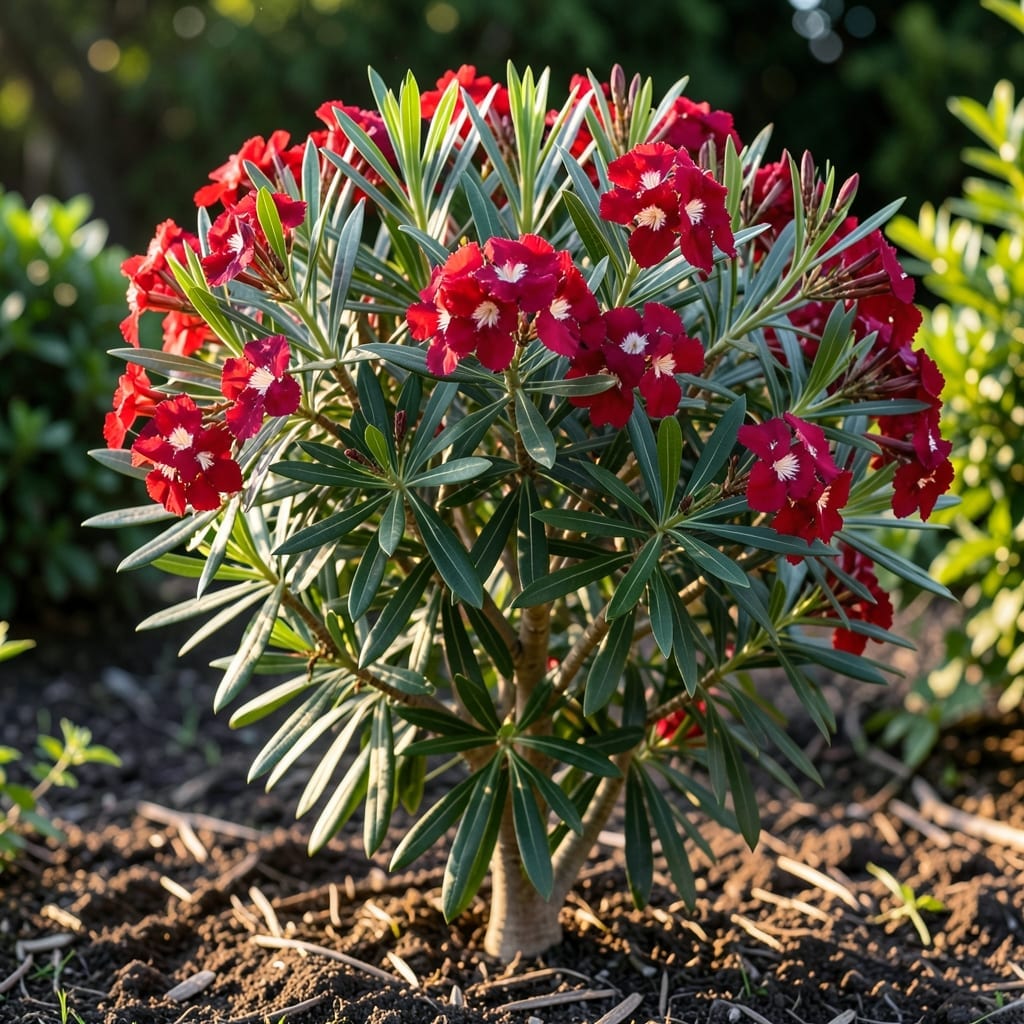
Calypso oleanders bring bold tropical color to any landscape. I fell in love with their vibrant blooms and glossy foliage after seeing them thrive in a neighbor’s yard despite our hot, dry summers.
This resilient shrub handles drought and poor soil once established, but needs full sun and good drainage to reach its 12-foot potential. The fragrance alone makes it worth the minimal effort.
📚 In This Guide
Here’s the method I rely on for establishing these striking tropical shrubs with minimal stress.
Choose a location with full sun exposure—at least 6-8 hours of direct sunlight daily. Calypso oleanders thrive in bright, open spaces but can tolerate partial shade in extremely hot climates. Avoid low-lying areas where cold air or excess moisture might settle.
Test your soil’s drainage before planting. Dig a 12-inch deep hole and fill it with water. If it drains within 1-2 hours, the site is suitable. If water lingers, amends or a raised bed will prevent root rot, which these plants despise.
Dig a hole twice as wide and just as deep as the root ball of your Calypso oleander. Loosen the soil at the sides and bottom to encourage root penetration. If your soil is heavy clay or compacted, mix in compost or sand to improve drainage.
Remove the plant from its container and gently tease apart any circling roots. This step prevents girdling, which can strangle the plant as it matures. Position the oleander in the hole so the top of the root ball sits 1-2 inches above the surrounding soil level to allow for settling.
Backfill the hole with the amended soil, pressing lightly to remove air pockets but avoiding excessive compaction. Create a 3-4 inch tall water ring around the plant’s base to help direct moisture to the roots during the first few weeks.
Water deeply immediately after planting, ensuring the soil is saturated to a depth of 12-18 inches. This encourages deep root establishment. Keep the soil consistently moist but not waterlogged for the first 2-3 weeks as the plant adjusts to its new home.
Apply a 2-3 inch layer of organic mulch such as wood chips or pine bark around the base of the plant. Keep the mulch 3-4 inches away from the stem to prevent rot. Mulching helps retain moisture, suppress weeds, and regulate soil temperature.
Monitor the plant closely for the first 4-6 weeks. Look for signs of stress, such as wilting or yellowing leaves, which may indicate under or overwatering. Calypso oleanders are drought-tolerant once established, but consistent care is critical during this early phase.
Once established, reduce watering frequency but increase the amount per session to encourage deep root growth. Fertilize lightly with a balanced, slow-release product in early spring and mid-summer, following label instructions for dosage.
Prune only as needed to shape the plant or remove dead or damaged growth. Always wear gloves when handling oleanders, as all parts of the plant are toxic if ingested. With proper care, your Calypso will reward you with vibrant blooms and lush foliage throughout the growing season.
Small adjustments in planting and care make the difference between struggling shrubs and thriving tropical elegance.
Sunlight Strategy: The 6-8 hours of full sun mentioned in Step 1 isn’t just a suggestion—it’s critical for those vibrant Calypso blooms. In scorching climates, afternoon shade prevents leaf scorch while still meeting the minimum requirement. I’ve seen plants in partial shade produce sparse, pale flowers that barely resemble the striking tropical display this variety promises.
Drainage Test Insight: That 12-inch deep hole test in Step 1 reveals more than drainage speed. If water disappears within 1-2 hours, you’re golden. But if it lingers, don’t just amend—consider the entire area’s topography. Low spots collect cold air that can damage oleanders, even in warm climates.
Planting Height Hack: Positioning the root ball 1-2 inches above surrounding soil in Step 2 isn’t just about settling. This slight elevation prevents water from pooling around the stem, which is the number one cause of root rot in newly planted oleanders. I learned this after losing two plants to overly enthusiastic watering.
Monitoring Window: The 4-6 weeks of close observation in Step 4 is when most new oleander owners either succeed or fail. Yellowing leaves often mean overwatering, while wilting (especially in late afternoon) signals thirst. Calypso oleanders would rather be slightly dry than soggy during this critical establishment period.
Yes, all parts of Nerium Oleander Calypso are highly toxic if ingested, causing severe symptoms or even death. Keep it away from children and pets, and wear gloves when pruning.
Water deeply once or twice a week, allowing the soil to dry slightly between waterings. Overwatering can lead to root rot, so ensure good drainage.
Watch for aphids, scale insects, and oleander caterpillars. Diseases like leaf spot or root rot may occur in poor conditions. Regular inspection and neem oil can help.
It thrives in USDA zones 8-11. In colder areas, grow it in containers and bring indoors during winter. Frost can damage or kill the plant.
Consider non-toxic plants like hibiscus, pentas, or lantana for similar tropical beauty without the toxicity risks. Always research before planting.