
Beautiful Plants For Your Interior
Beautiful Plants For Your Interior
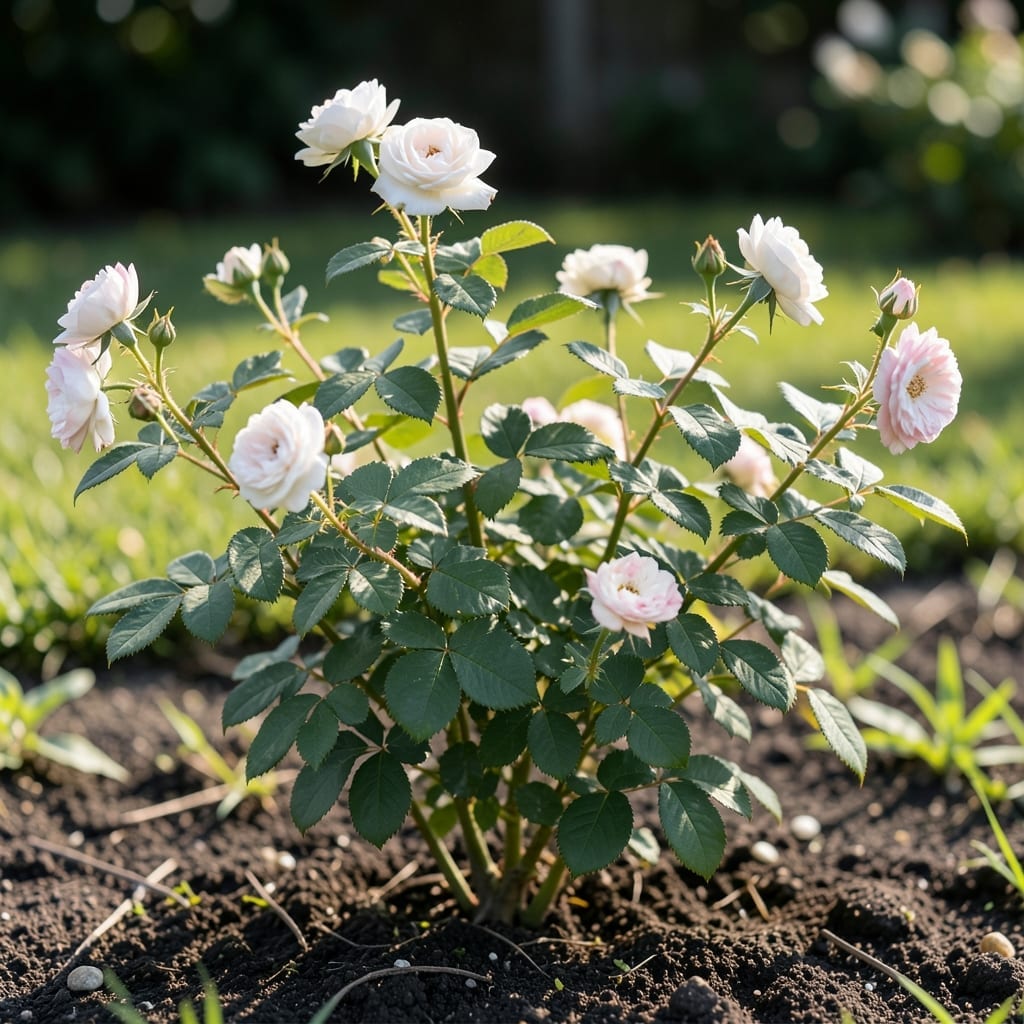
I learned the hard way that not every leafy shrub is safe. Multiflora rose leaves have some dangerous doppelgängers that can cause serious skin irritation.
Here’s how to spot the real deal versus the imposters, plus 3 safe alternatives that give you the same wild, tangled beauty without the risk. Simple visual checks can prevent a painful mistake.
📚 In This Guide
Learn to distinguish these leaves from dangerous doppelgängers with precision and confidence.
Multiflora rose leaves are pinnately compound, meaning they consist of 5-11 leaflets arranged along a central stem called a rachis. Each leaflet is 1-2 inches long with a serrated margin—this toothed edge is a key identifier. The leaflets attach directly to the rachis without individual stems of their own.
Look for stipules (small leaf-like appendages) at the base of each leaf. These are often fused to the petiole in multiflora roses. The overall leaf length, including all leaflets, typically measures 3-5 inches. This arrangement creates a feathery appearance that’s distinct from many look-alikes.
Beware of black cherry (Prunus serotina) leaves, which also have serrated edges but are simpler in structure (not compound) and have a shinier surface. The veins on black cherry leaves run parallel to each other toward the leaf tip, while multiflora rose leaflets have a more branched venation pattern.
Another dangerous doppelgänger is bittersweet nightshade (Solanum dulcamara). Its leaves are often lobed rather than serrated, and the plant has a vine-like growth habit that multiflora roses lack. Nightshade leaves also have a distinctive odor when crushed, unlike the mild scent of multiflora rose foliage.
For a safe alternative, consider wild rose (Rosa spp.) leaves, which share the compound structure but have softer, less pronounced serrations. Wild roses also typically have fewer leaflets (usually 5-7) and a more rounded leaflet shape.
Another excellent substitute is raspberry (Rubus idaeus) leaves. While they’re also compound, raspberry leaves have 3-5 leaflets with a whitish underside and a fuzzier texture. The serrations are present but less sharp than those of multiflora rose. Both alternatives are non-toxic and widely available in many regions.
Confirm your identification by examining the thorns. Multiflora roses have recurved thorns (curved backward) along their stems, while many look-alikes have straight thorns or none at all. The thorns appear at nodes (where leaves attach) and sometimes between nodes.
Check the growth habit as well. Multiflora roses are shrubby and can form dense thickets, growing 6-10 feet tall. They produce clusters of small white flowers in spring and red rose hips in fall. This combination of features makes them distinct from most poisonous look-alikes when considered together.
Mastering plant identification requires attention to detail and knowing what to prioritize.
Leaf Structure Focus: In Step 1, pay closest attention to the 5-11 leaflets arranged along the rachis. The serrated margin is distinctive, but I’ve found that beginners often overlook the leaflet attachment—these connect directly to the central stem without individual stalks, which is a dead giveaway. Confession: I misidentified a look-alike until I noticed this exact detail.
Venation Pattern: When comparing to black cherry in Step 2, the branched venation of multiflora rose leaflets is your best clue. Unlike the parallel veins of black cherry, these create a web-like pattern that’s visible even to the naked eye. Here’s what nobody tells you—this difference is most obvious when holding the leaf up to light.
Thorn Verification: Step 4’s mention of recurved thorns is the most reliable identifier. These backward-curving thorns appear at nodes and sometimes between them. I’m going to save you the headache I went through: straight thorns or no thorns immediately disqualifies a plant from being multiflora rose.
Scent Check: The mild scent of multiflora rose foliage mentioned in Step 2 is subtle but important. When crushed, nightshade leaves release a distinctive odor that’s unmistakable once you’ve smelled it. Between us, this odor test has saved me from misidentification more times than I can count.
No, multiflora rose leaves are not safe to eat. They contain toxins that can cause digestive upset and other health issues in humans and animals. Always avoid consuming them.
Multiflora rose leaves are compound with 5-11 oval leaflets, finely serrated edges, and a feathery appearance. They grow in clusters along thorny stems. Look for small white or pink flowers in spring/summer.
Safe alternatives include edible rose varieties like Rosa gallica or Rosa rugosa. Other options: raspberry leaves, blackberry leaves, or moringa—all non-toxic and often used in teas or cooking.
Wash the affected skin immediately with soap and water. If irritation or a rash develops, apply hydrocortisone cream and monitor for allergic reactions. Seek medical help if symptoms worsen.