
Beautiful Plants For Your Interior
Beautiful Plants For Your Interior
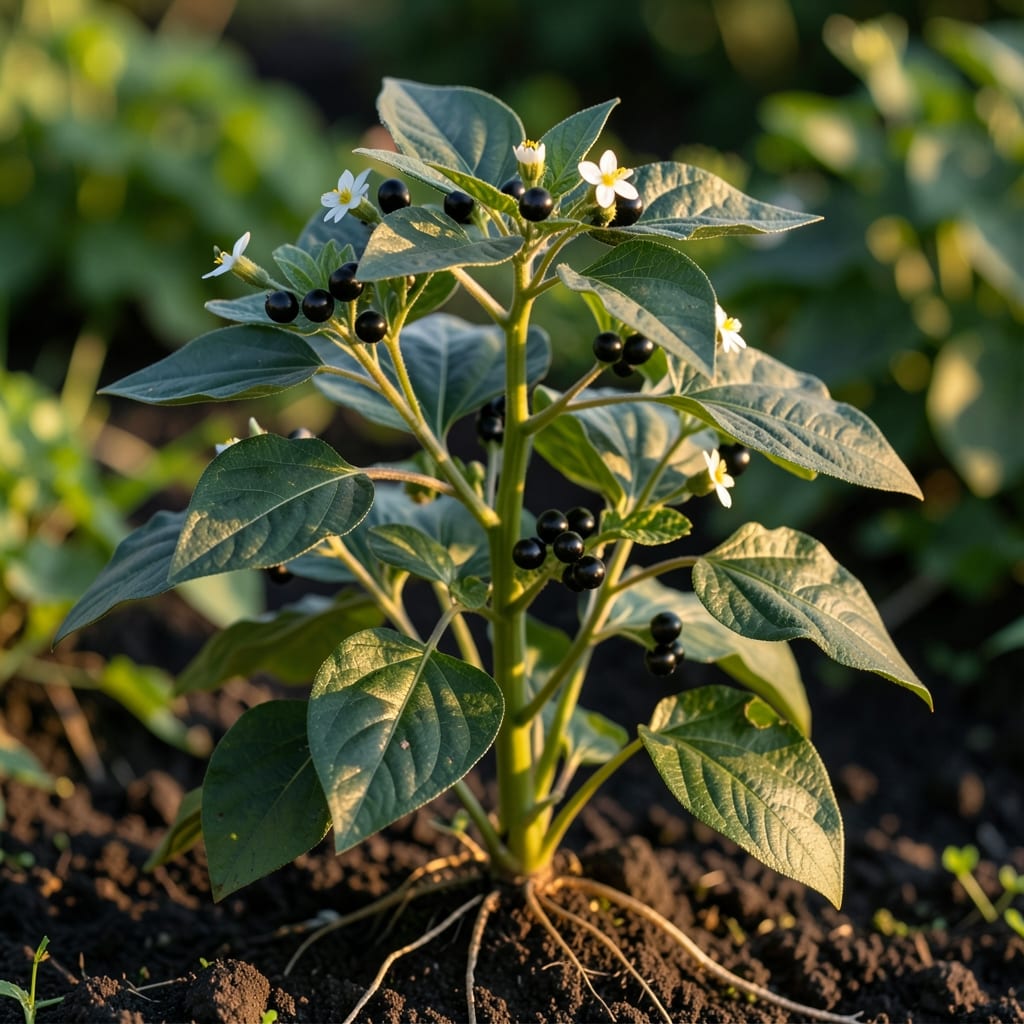
Those dark, glossy leaves might look harmless, but black nightshade can be dangerous. I learned the hard way that proper identification is the first step to keeping pets and kids safe.
Look for purple-veined leaves and small white flowers as key markers. Wear gloves when handling, and remove the entire plant, roots and all, to prevent regrowth.
📚 In This Guide
This method helps you safely recognize and manage this potentially dangerous plant in your garden or landscape.
Black nightshade leaves typically display an oval to heart-shaped form with slightly serrated edges. I look for a glossy, dark green appearance on the upper surface, while the underside often appears paler. The leaves grow in alternating patterns along the stem, a key identification feature.
You’ll notice the leaves have a slightly pointed tip and a rounded base. The plant’s foliage may appear slightly sticky to the touch due to fine hairs on the surface. This combination of traits helps distinguish it from lookalike species.
The stems of black nightshade often show a purplish tint, especially when exposed to full sunlight. I pay particular attention to the plant’s growth habit—it typically forms a bushy, upright structure reaching 1-3 feet tall. The plant may produce small, white, star-shaped flowers in clusters.
As the plant matures, it develops berries that transition from green to glossy black when ripe. These berries hang in clusters beneath the foliage. The presence of both flowers and berries at different stages can confirm identification.
Black nightshade thrives in disturbed areas, often appearing in gardens, along fences, or in waste ground. I find it most commonly in locations with full sun to partial shade and well-drained soil. The plant seems particularly fond of areas with recent soil disturbance.
It’s important to note that black nightshade grows as an annual in most climates, dying back with the first frost. This growth pattern means you’ll typically only see it during the warmer months of the year.
Always wear gloves when handling black nightshade, as all parts of the plant contain toxic alkaloids. I use long sleeves and avoid touching my face while working near the plant. The toxins can be absorbed through the skin or cause irritation.
If you need to remove the plant, I recommend using a trowel to dig up the entire root system. Place all plant material in a sealed bag for disposal—never compost black nightshade, as the toxins can persist. Wash any tools that come into contact with the plant thoroughly with soap and water.
To prevent black nightshade from returning, I maintain a thick layer of mulch in garden beds to suppress seed germination. Regular weeding, especially in early spring when seedlings first appear, helps keep the plant from establishing.
Monitor your property regularly, as black nightshade can spread quickly through seed dispersal. I check areas where the plant has previously appeared at least once a week during the growing season. Early detection makes removal much easier and safer.
These practical insights will help you safely distinguish and manage this plant with confidence.
The Visual Details: Pay special attention to the leaf characteristics in Step 1—the glossy dark green upper surface and paler underside are distinctive. I’ve found that the combination of slightly serrated edges with a pointed tip and rounded base is almost foolproof for identification, especially when the leaves appear in that alternating pattern along the stem.
Growth Habit Clue: As mentioned in Step 2, the plant’s bushy, upright structure reaching 1-3 feet tall is a strong indicator. Don’t overlook the purplish tint on stems when exposed to full sunlight—this is often easier to spot than the flowers or berries, which may not always be present.
Habitat Confirmation: Step 3 highlights that black nightshade thrives in disturbed areas with well-drained soil. I’ve noticed it particularly favors spots with recent soil disruption, so if you’re inspecting a garden or fence line that’s been worked on lately, be extra vigilant for its bushy growth.
Safety First: Step 4 emphasizes wearing gloves, and I can’t stress this enough. All parts of the plant contain toxic alkaloids, so protective gear is non-negotiable. I also recommend keeping a sealed bag handy during removal—this makes disposal immediate and reduces the risk of accidental contact.
Yes, black nightshade (Solanum nigrum) leaves contain toxic alkaloids like solanine, which can cause nausea, vomiting, or worse if ingested. However, ripeness and preparation can affect toxicity—never consume them raw or without expert guidance.
Wear gloves and long sleeves to avoid skin contact. Uproot the plant carefully, including the roots, and dispose of it in sealed bags. Wash hands thoroughly afterward to prevent accidental exposure.
Early signs include stomach pain, diarrhea, sweating, and dizziness. Severe cases may lead to slowed heartbeat or difficulty breathing. Seek medical help immediately if ingestion is suspected.
No, it’s unsafe. The toxins can persist in compost and may contaminate other plants. Always discard black nightshade in the trash or through municipal green waste programs that handle toxic plants.
Yes! Black nightshade resembles edible plants like ground cherries or tomato leaves, but these have distinct fruit or leaf shapes. Always verify with a plant expert before consuming any wild plant.