
Beautiful Plants For Your Interior
Beautiful Plants For Your Interior
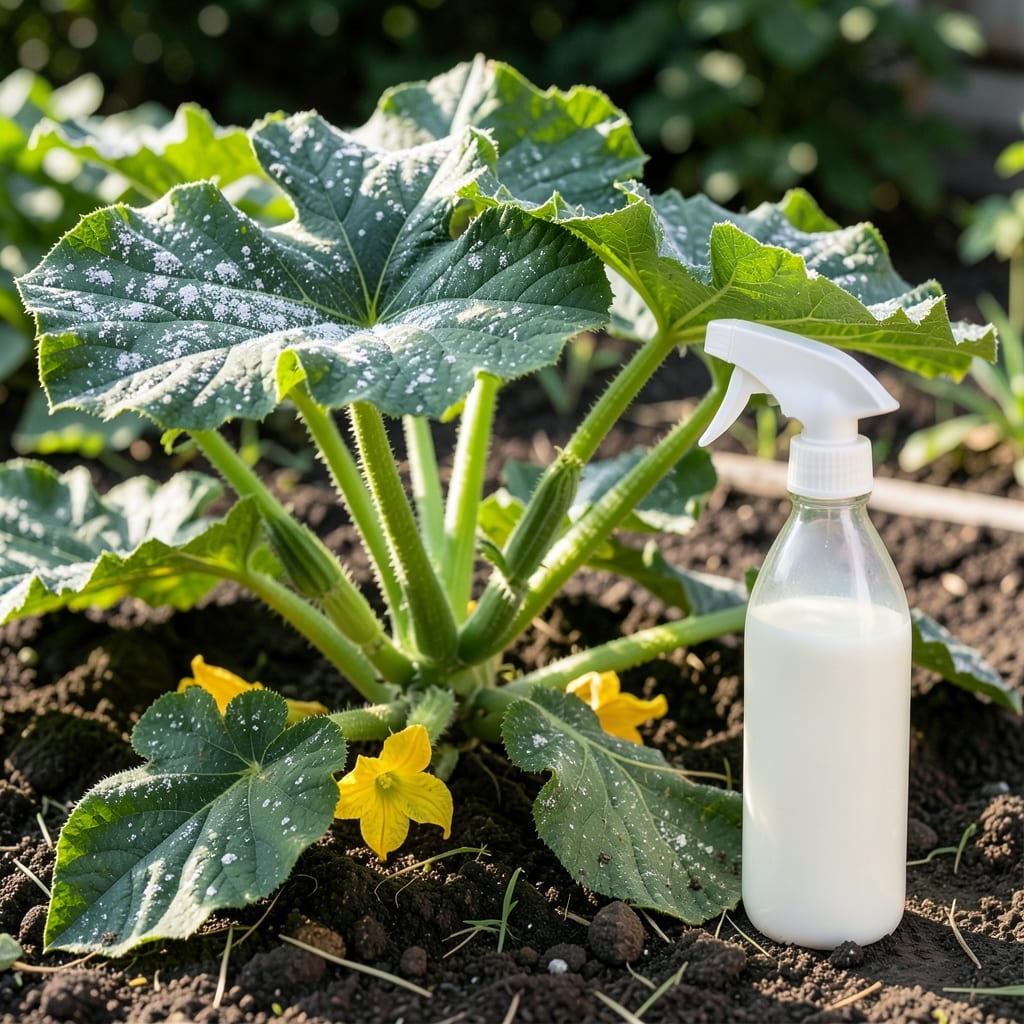
A diluted milk spray (1 part milk to 9 parts water) effectively controls powdery mildew due to natural compounds that disrupt fungal growth without harming plants.
I discovered this method works because milk proteins like lactoferrin directly inhibit fungal spores on contact. What’s particularly useful is that it’s safe for edible crops and won’t damage plants. 🌟
For best results, I apply it in early morning or evening to prevent leaf burn. Consistency matters most—reapplying every 7-10 days keeps mildew at bay.
💡 In This Article
Milk contains proteins like lactoferrin and lactoperoxidase that directly attack fungal spores. These compounds disrupt the cellular structure of powdery mildew, preventing it from spreading. The solution works on contact, creating an inhospitable environment for spores to germinate while being harmless to plant tissues.
Studies show a 1:9 milk-to-water ratio achieves over 90% effectiveness against powdery mildew. The proteins bind to fungal cell walls, causing them to break down. This is why it works so well against powdery mildew specifically—it targets the unique structure of this type of fungus. 🔥
The fatty acids in milk also play a role. Capric and caprylic acids act as natural fungicides, weakening the mildew’s ability to cling to leaves. Unlike chemical treatments, these components leave no toxic residue, making it safe for organic gardening.
What’s fascinating is how the milk solution forms a protective barrier. When sprayed, it coats the plant surface, creating a microscopic layer that inhibits new spore growth. This barrier remains effective for 7-10 days before needing reapplication, depending on rainfall and plant growth.
This method is particularly effective on plants like cucumbers, squash, and roses, which are highly susceptible to powdery mildew. The proteins in milk are heat-sensitive, so using room-temperature milk ensures maximum potency when mixed with water. ✨
Skim milk is just as effective as whole milk for treating powdery mildew. The active compounds like lactoferrin and lactoperoxidase are present in both types. In fact, skim milk may be preferable as it won’t leave a residue on leaves.
For prevention, spray every 7-10 days. If you’re treating an active infection, increase frequency to every 5-7 days until the mildew is gone. Always reapply after rain, as water can wash away the protective coating.
This works best on plants prone to powdery mildew like cucumbers, squash, roses, and phlox. It’s safe for edible crops too. However, test on a small area first if you’re unsure about a particular plant’s sensitivity.
Apply in the early morning or late evening to avoid leaf burn from the sun. These cooler times allow the solution to adhere properly without evaporating too quickly.