
Beautiful Plants For Your Interior
Beautiful Plants For Your Interior
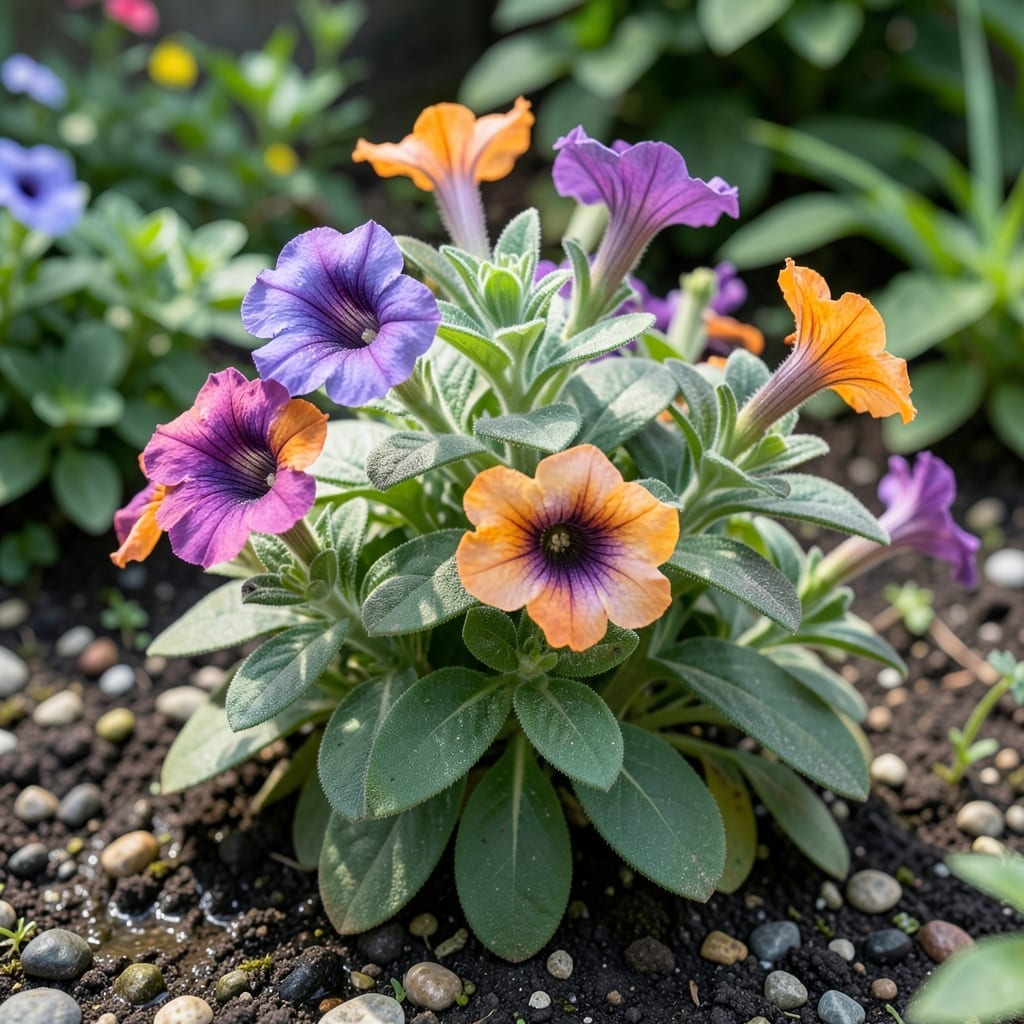
Mayan Sunset petunias stopped me in my tracks at the garden center last spring. The vibrant orange blooms with those deeper red veins looked like a sunset captured in a flower.
They thrive in full sun with minimal fuss, blooming nonstop from spring until frost. I’ve found they bounce back from heat waves better than most petunias, and the color stays bold even in intense sunlight.
📚 In This Guide
Here’s the method I use to keep these beauties thriving from spring through fall and beyond.
Find a spot with full sun exposure, meaning at least 6-8 hours of direct sunlight daily. These petunias love heat and will reward you with more vibrant blooms the more sun they receive. I’ve found that morning sun combined with afternoon shade works, but they truly flourish in all-day brightness.
Check your chosen location’s soil drainage by digging a 1-foot deep hole and filling it with water. If it drains within 30 minutes, you’re good to go. If water pools for hours, consider raised beds or containers instead. Petunias hate wet feet and will quickly rot in soggy conditions.
Work the soil to a depth of 12-18 inches, removing any weeds, rocks, or debris. Mix in 2-3 inches of organic compost to improve fertility and drainage. This gives the roots room to spread while ensuring they have access to nutrients.
If you’re planting in containers, use a well-draining potting mix and ensure pots have drainage holes. I prefer containers that are at least 12 inches in diameter to give each plant enough space to grow without competition.
Space plants 12-18 inches apart to allow for proper air circulation and growth. Dig a hole slightly larger than the root ball, place the plant in, and gently firm the soil around the base. Water thoroughly after planting to help settle the soil and eliminate air pockets.
If you’re using transplants from a nursery, check the root system before planting. If roots are circling the container, gently tease them apart to encourage outward growth. This prevents girdling, which can stunt the plant’s development over time.
Water deeply once or twice weekly, depending on your climate, rather than shallow daily watering. You want to encourage deep root growth. The rule of thumb is to water when the top inch of soil feels dry to the touch.
Fertilize every 2-3 weeks during the growing season with a balanced, water-soluble fertilizer. I’ve found that a 10-10-10 or 20-20-20 formula works well. Over-fertilizing leads to lush foliage but fewer blooms, so stick to the recommended dosage on the package.
Pinch back the tips of new plants to encourage bushier growth. Once flowers start to fade, deadhead them by removing the spent blooms down to the next set of leaves. This prevents seed formation and directs the plant’s energy into producing more flowers.
If your petunias start looking leggy mid-season, don’t hesitate to give them a good trim. Cut back by about one-third of their length. They’ll bounce back quickly with fresh growth and renewed flowering. I do this every 4-6 weeks during peak growing season.
Here are the key details that will keep your petunias thriving with vibrant color.
The Light Requirement: Those 6-8 hours of full sun daily in Step 1 aren’t just a suggestion—they’re critical for maintaining the bold hues that make Mayan Sunset petunias so striking. If your garden doesn’t get that much direct light, consider using containers you can move to follow the sun throughout the day.
Planting Depth Matters: In Step 2, placing the root ball ½ inch above the soil line might seem counterintuitive, but it prevents stem rot. I learned this the hard way after losing several plants to water pooling at the base. Trust the process—it works.
Watering Wisdom: The 1-2 inches of water per week mentioned in Step 3 is a guideline, not a rule. Check your soil daily in extreme heat, especially for container plants. If the top inch feels dry, it’s time to water—even if you watered yesterday.
Winter Preparation: For Step 5, don’t wait until the first frost to bring potted petunias indoors. Start the transition when nighttime temperatures consistently drop below 50°F. This gives your plants time to acclimate before the real cold hits.
Keep them in full sun (6+ hours daily) and water when the top inch of soil feels dry. Fertilize weekly with a balanced liquid feed for vibrant blooms all season.
Plant after the last frost in spring when soil temps reach 60°F. They thrive in warm weather and can bloom until the first fall frost.
Watch for aphids, spider mites, or powdery mildew. Treat with neem oil or insecticidal soap, and ensure good airflow to prevent fungal issues.
Yes! Use well-draining pots (12+ inches deep) and water frequently, as containers dry out faster. Ideal for patios or balconies.
Lack of sunlight, over-fertilizing (too much nitrogen), or deadheading neglect can cause this. Prune spent blooms and adjust care to encourage flowers.