
Beautiful Plants For Your Interior
Beautiful Plants For Your Interior
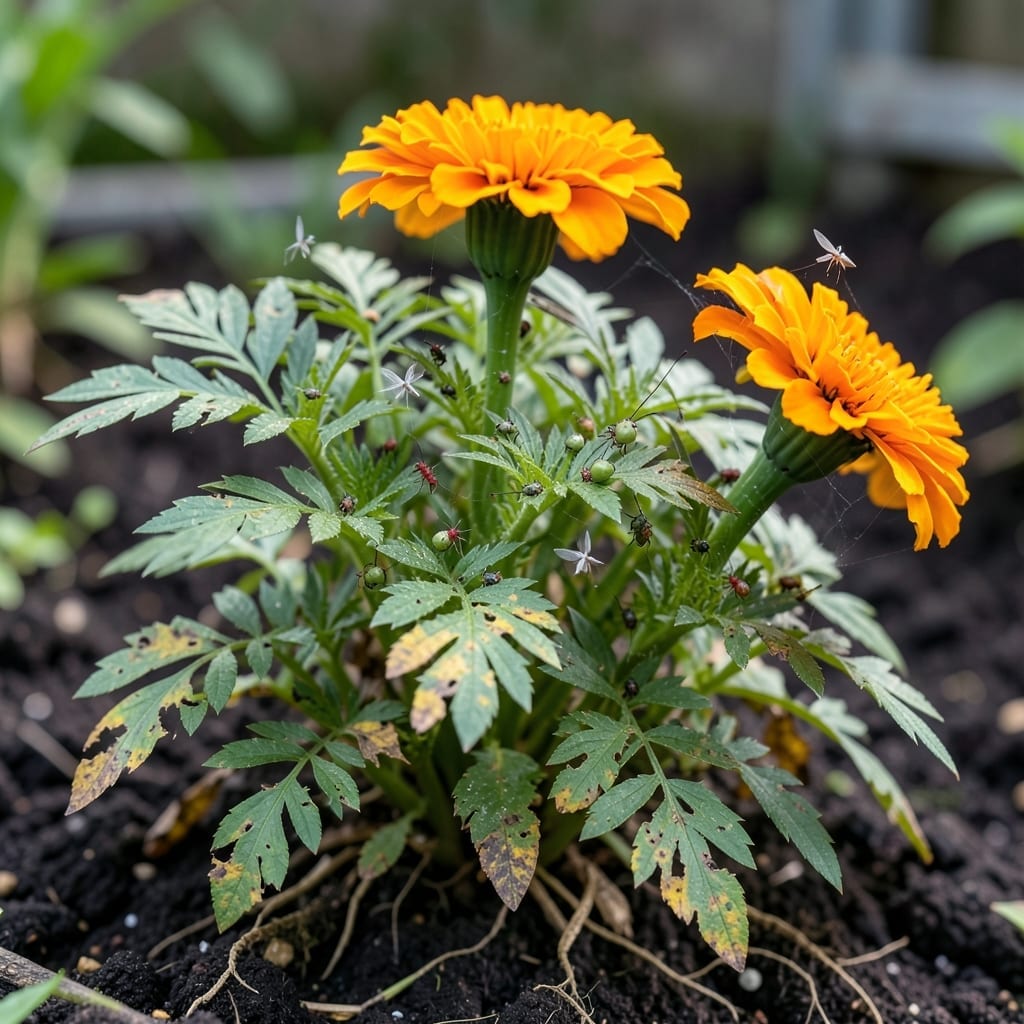
Marigolds bring color and pest protection to any garden. But even these hardy flowers can fall victim to sneaky invaders that turn vibrant blooms into lunch.
I’ve lost count of how many times aphids, spider mites, or whiteflies have tried to take over my marigold patches. The key is catching them early—before they multiply and damage spreads to neighboring plants.
With the right approach, you can spot trouble before it starts and stop infestations in their tracks. Healthy marigolds bounce back fast when you act quickly and use the right methods.
This works for container gardens, flower beds, or anywhere you grow these cheerful plants. Let’s keep them thriving.
Marigolds are hardy, but certain conditions make them vulnerable to pests. Understanding the root causes helps prevent infestations before they start. Here’s why these invaders target your plants:
Stressed or weakened marigolds are prime targets. Poor soil quality, overwatering, or nutrient deficiencies (especially nitrogen or potassium) reduce the plant’s natural defenses. Pests like aphids and spider mites exploit this, feeding on sap and spreading disease. Action: Test soil pH (6.0–7.0 is ideal) and amend with compost for resilience.
Extreme weather—drought, heatwaves, or excess humidity—stresses marigolds, making them susceptible. Whiteflies thrive in hot, dry conditions, while slugs and snails prefer damp, shaded areas. Action: Mulch to retain moisture and use shade cloth during heat spikes.
Monoculture gardens (growing only marigolds) create a buffet for pests. Without predatory insects (like ladybugs or lacewings) to keep populations in check, pests multiply unchecked. Action: Plant companion species like basil or nasturtiums to attract beneficial predators.
Dead leaves, fallen petals, or weeds harbor pests and their eggs. Fungus gnats and thrips breed in decaying organic matter. Action: Remove debris regularly and rotate crops yearly to disrupt pest life cycles.
Dealing with pests on your marigolds doesn’t have to be a losing battle. Here’s how to tackle common invaders with simple, effective fixes—plus ways to keep them from coming back.
Use a strong spray of water from your garden hose to dislodge aphids from leaves and stems. For stubborn infestations, apply insecticidal soap or neem oil every 5–7 days until they’re gone. Prevention tip: 💡 Encourage ladybugs and lacewings—natural aphid predators—by planting pollinator-friendly flowers nearby.
Spider mites thrive in dry conditions. Fight them by misting your marigolds regularly or placing a tray of water near the plants to boost humidity. Wipe leaves with a damp cloth to remove webs and mites. For severe cases, use horticultural oil. Prevention tip: 🌡️ Keep plants well-watered (but not soggy) to deter mites from settling in.
Create a protective ring around your marigolds with copper tape or crushed eggshells—these pests dislike crawling over sharp or metallic surfaces. You can also use beer traps (bury a shallow dish filled with beer; they’ll drown in it). Prevention tip: ✨ Remove hiding spots like debris and mulch where slugs and snails love to lurk.
Hang yellow sticky traps near your marigolds to catch adult whiteflies. For a direct approach, spray plants with a mix of water and dish soap to suffocate them. Prevention tip: 🎯 Rotate crops yearly and avoid over-fertilizing with nitrogen, which attracts whiteflies.
With these targeted solutions, your marigolds can bounce back—and stay pest-free with a little proactive care!
Look for yellowing leaves, sticky residue, or tiny webs on stems. These often signal aphids or spider mites. Catching them early prevents widespread damage.
Encourage beneficial insects like ladybugs by planting companion flowers. Also, remove garden debris where pests hide and multiply.
Act at the first sign of pests, especially with fast-breeding ones like aphids. Evening treatments work best to avoid harming pollinators.
Yes, soggy soil attracts fungus gnats and weakens plants. Always water at the base in the morning to keep foliage dry.