
Beautiful Plants For Your Interior
Beautiful Plants For Your Interior
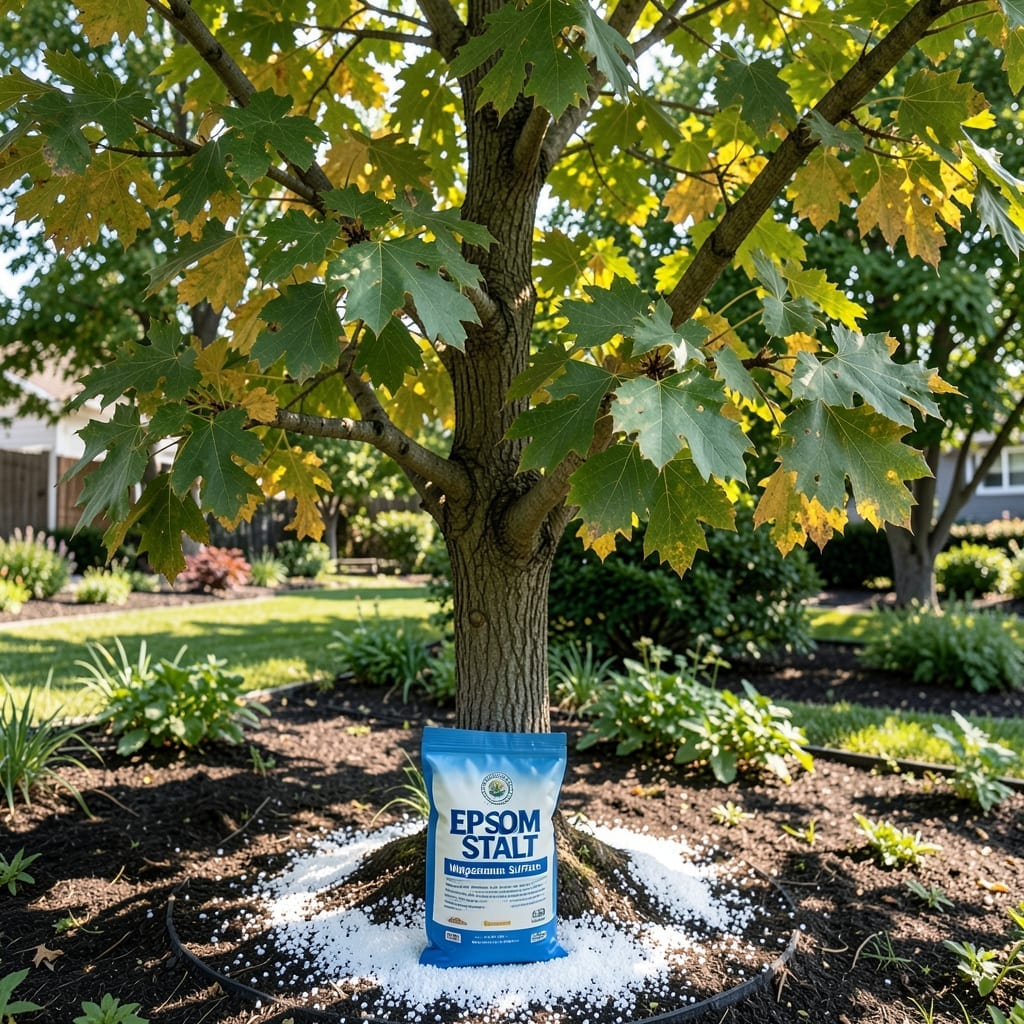
Yellowing leaves between dark green veins caught my eye last summer. Between you and me, it’s the classic sign of magnesium deficiency in trees—often mistaken for other issues.
This usually hits older leaves first as magnesium moves to new growth. Sandy or acidic soils are the main culprits, but heavy rainfall can also wash it away. I’ve seen it in maples, oaks, and fruit trees most often.
Here’s the thing—Epsom salt or magnesium sulfate can fix it fast. A soil test confirms the problem, and a foliar spray or soil application works wonders. Results show in 2-3 weeks.
Prevention comes down to regular soil testing and amending with compost or magnesium-rich fertilizers. Simple, but it saves trees from slow decline.
Magnesium deficiency in trees often stems from a mix of environmental and soil-related factors. Below are the primary causes, each with actionable insights to address them.
Magnesium is a mobile nutrient, meaning it moves through soil water to reach tree roots. Sandy or leached soils (common in high-rainfall areas) often lack sufficient magnesium because water washes it away. Similarly, acidic soils (pH < 6.0) reduce magnesium availability, as low pH increases competition from aluminum and hydrogen ions. Testing soil pH and amending with lime (calcium carbonate) or magnesium sulfate (Epsom salt) can restore balance.
Both extremes disrupt magnesium uptake. Overwatering leaches magnesium deeper into the soil, beyond root reach, while drought limits water movement, preventing roots from absorbing the nutrient. Mulching and drip irrigation help maintain consistent moisture without flushing out essential minerals.
High levels of potassium, calcium, or nitrogen can block magnesium absorption. For example, excessive potassium (common in banana or citrus groves) competes with magnesium for root uptake. A balanced fertilizer (e.g., 10-10-10 with added magnesium) or organic matter like compost can prevent imbalances.
Physical barriers like compacted soil or mechanical root injury (from construction or heavy machinery) restrict root growth, limiting access to magnesium. Aerating the soil and avoiding root zone disturbances can improve nutrient uptake.
Magnesium deficiency in trees is fixable with the right approach. Here’s how to address the most common causes and restore your tree’s health.
If your soil lacks magnesium, Epsom salt (magnesium sulfate) is a quick fix. Dissolve 2 tablespoons per gallon of water and apply as a foliar spray or soil drench every 2–4 weeks. For long-term improvement, mix compost or organic matter into the soil to boost nutrient retention. Test your soil first to confirm the deficiency—kits are affordable and easy to use!
Too much or too little water can block magnesium uptake. Improve drainage in soggy soil by adding sand or perlite. For dry conditions, mulch around the base (but not touching the trunk) to retain moisture. Water deeply but less frequently—1–2 inches per week is ideal for most trees. A moisture meter can help you stay on track.
Magnesium becomes less available in highly acidic soil (pH below 6.0). Lime (calcium carbonate) can raise pH—apply as directed on the package, then retest after a few months. For a gentler option, wood ash (sparingly) or dolomitic lime (which also adds magnesium) works well. Avoid over-correcting; aim for a pH of 6.0–7.0.
With these steps, your trees will regain their vibrant green leaves and thrive! ✨
Maples, oaks, and fruit trees like apples and citrus often show signs first. Older leaves develop yellowing between veins while new growth stays green.
With Epsom salt application, expect visible recovery in 2-3 weeks. Foliar sprays work faster than soil treatments. Consistent care prevents recurrence.
Yes, excessive magnesium can block calcium uptake. Always follow recommended rates: 2 tablespoons per gallon of water for foliar sprays. A soil test ensures proper balance.