
Beautiful Plants For Your Interior
Beautiful Plants For Your Interior
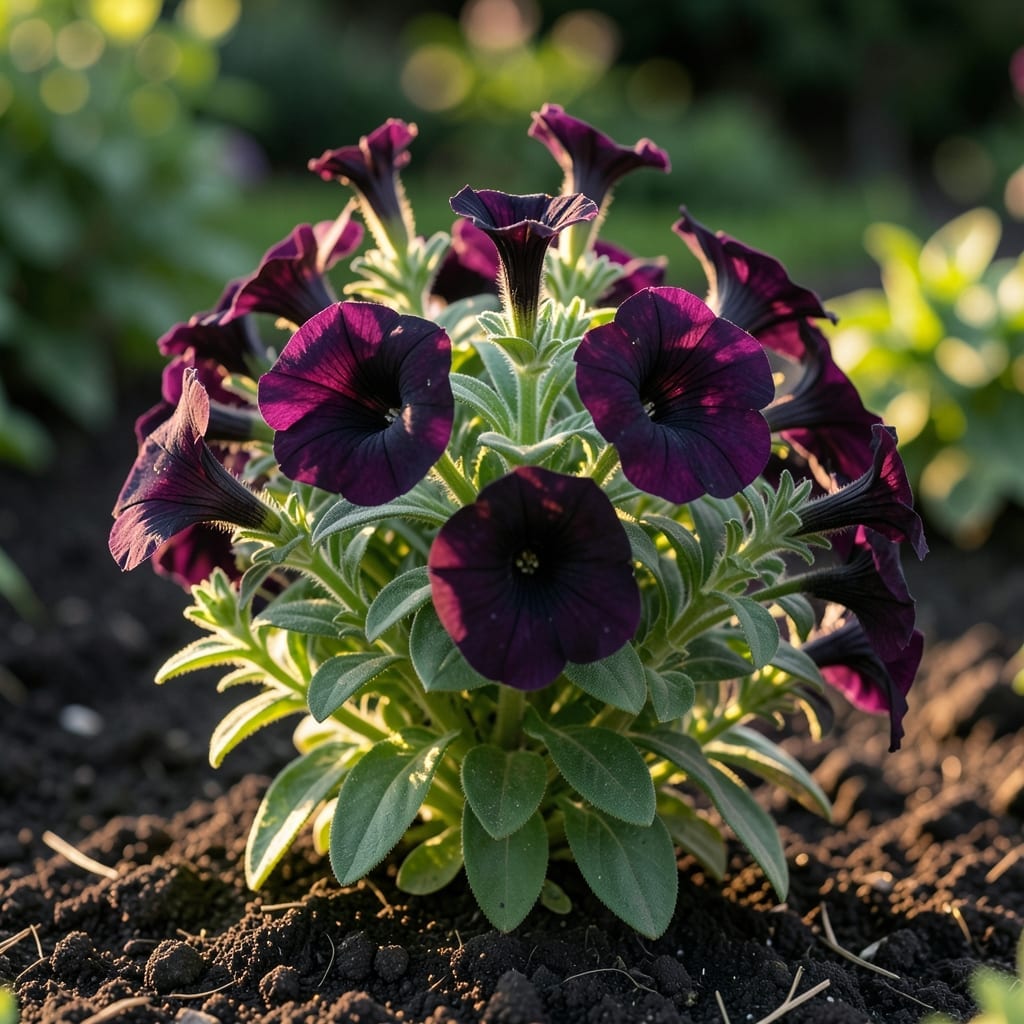
Dark, velvety blooms that glow under moonlight. These petunias transform gardens with their deep purple hue, and I’ve found they thrive with just a little know-how.
Plant in well-draining soil with full sun to partial shade, water when the top inch feels dry, and deadhead spent flowers. They’ll reward you with nonstop color from spring to frost.
📚 In This Guide
Here’s my proven method for cultivating these deep purple blooms that thrive even under moonlight.
Choose a site with well-draining soil and full sun to partial shade. Madness Midnight petunias tolerate lower light better than most varieties, but they’ll produce the most vibrant blooms with at least 4-6 hours of sunlight daily. I’ve found they actually seem to glow under moonlight when planted in areas that get that evening illumination.
The soil pH should be between 6.0-7.0. Test your soil if you’re unsure – these petunias aren’t particularly fussy, but they’ll reward you with more abundant flowers when the conditions are right. Avoid low spots where water might pool after rain.
Loosen the soil to a depth of 12-15 inches and mix in 2-3 inches of compost or well-rotted manure. This improves drainage while providing the organic matter these heavy feeders appreciate. I always add a handful of slow-release fertilizer at this stage to give them a good start.
Space plants 12-18 inches apart – they’ll spread to form a lush carpet. If you’re planting in containers, choose ones that are at least 12 inches in diameter with good drainage holes. The deep purple blooms look stunning cascading over the edges of hanging baskets.
Dig a hole slightly larger than the root ball and plant at the same depth as it was in its container. Water thoroughly after planting to settle the soil around the roots. For the first week, keep the soil consistently moist but not waterlogged – you want to encourage deep root growth.
Once established, water when the top 1-2 inches of soil feel dry. These petunias are surprisingly drought-tolerant, but they bloom best with regular moisture. I’ve noticed they seem to drink more on particularly hot days, so check them in the evening if the weather’s been warm.
Feed weekly with a balanced liquid fertilizer during the growing season. I switch to a bloom booster formula once the first flowers appear to encourage more abundant blooming. Deadhead spent flowers regularly to promote continuous blooming throughout the season.
Pinch back the stems by 1-2 inches every few weeks to encourage bushier growth. This is especially important for the first few weeks after planting. The Madness Midnight variety responds well to this pruning, becoming denser and producing more of those stunning deep purple flowers.
In cooler climates, these petunias will die back with the first frost. However, in zones 9-11, they can bloom year-round with proper care. I’ve had success overwintering them indoors in bright windows or under grow lights.
If you’re growing them as annuals, collect seeds from spent blooms in late summer if you want to try growing them again next year. The Madness Midnight variety produces viable seeds, though the resulting plants might not be exactly identical to the parent. Cut back established plants by about one-third in early fall to encourage fresh growth.
These insights will help you get the most vibrant blooms from your plants.
Sunlight Optimization: While these petunias tolerate partial shade, the 4-6 hours of sunlight specified in Step 1 is ideal for maximum flower production. I’ve noticed the deep purple blooms appear almost luminous when they receive that evening sunlight, as if they’re absorbing the last rays of the day. Position them where they’ll get morning sun if afternoon heat is intense in your area.
Soil Preparation Insight: The 12-15 inch soil depth mentioned in Step 2 isn’t arbitrary—these are heavy feeders with extensive root systems. When mixing in the 2-3 inches of compost, ensure it’s well-distributed throughout the loosened soil. I add a bit extra around the planting hole to give the roots immediate access to nutrients.
Watering Wisdom: That 1-2 inch soil dryness check from Step 3 is your best indicator for watering. In extreme heat, you might need to water daily, but remember these are surprisingly drought-tolerant. The key is consistency during that first critical week after planting when roots are establishing themselves.
Seasonal Transition Tip: For those in zones 9-11, the year-round blooming mentioned in Step 5 is achievable with protection from extreme cold. I’ve found that a light mulch around the base helps maintain soil temperature during unexpected cold snaps in these warmer zones.
Overwatering or poor drainage can cause wilting. Ensure the soil is moist but not soggy, and check for root rot. These petunias thrive in well-draining soil.
Plant after the last frost in spring when temperatures stay above 50°F (10°C). They love warm weather and will bloom until the first frost.
Yes! Try Night-Scented Stock or Moonflower (Ipomoea alba) for fragrant, evening blooms. Both are low-maintenance and attract pollinators.
Yellow leaves often signal nutrient deficiencies or pest issues. Test soil pH (aim for 6.0–7.0) and inspect for aphids or spider mites.