
Beautiful Plants For Your Interior
Beautiful Plants For Your Interior
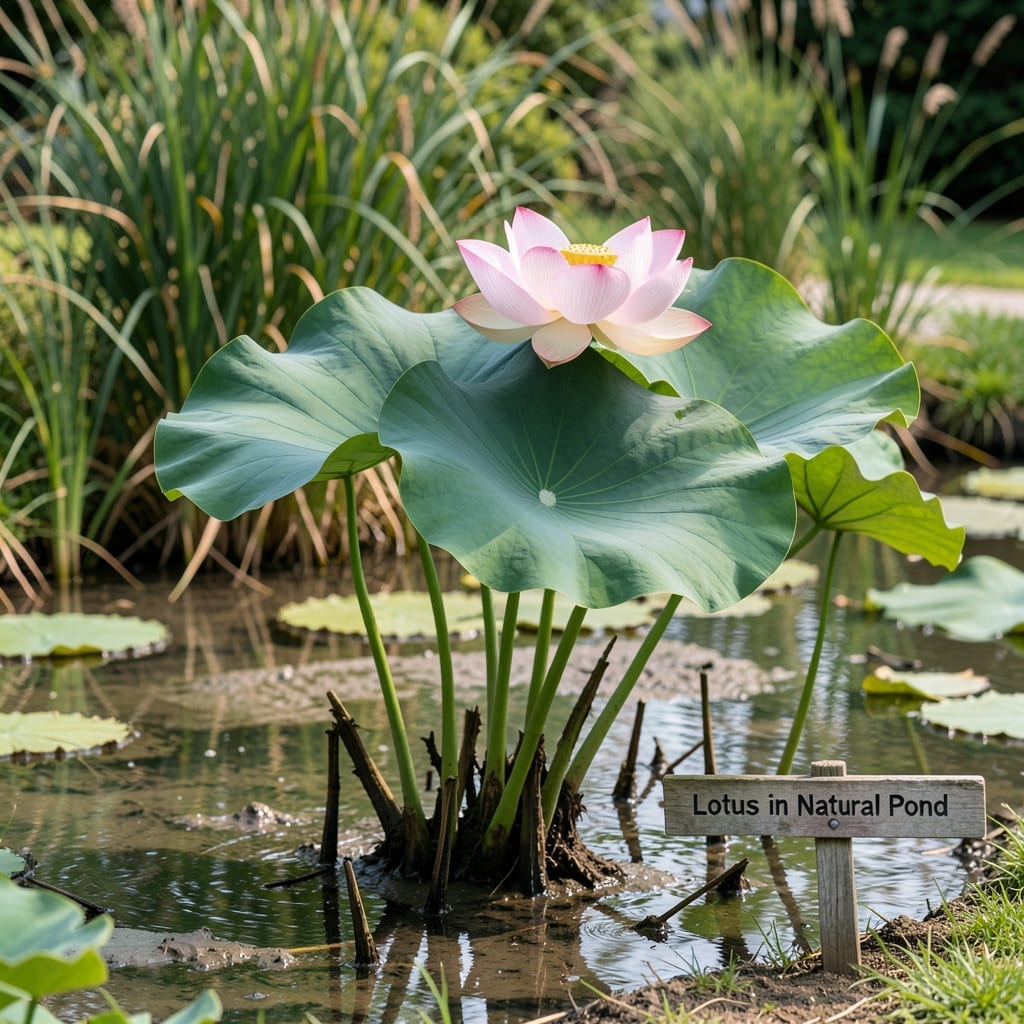
There’s nothing like watching lotus leaves unfold across a pond at dawn. I’ve raised these plants for years, and their floating elegance transforms any water feature into a living work of art.
The leaves aren’t just beautiful—they’re the plant’s powerhouse, shading roots and fueling those iconic blooms. With the right setup, you’ll get dramatic foliage and flowers that stop visitors in their tracks.
📚 In This Guide
Here’s the straightforward method I use to cultivate stunning lotus with lush foliage in water gardens.
Choose a wide, shallow container without drainage holes—this plant thrives in water. I use a 12-18 inch diameter plastic or ceramic tub that’s at least 6 inches deep. The wider surface area allows leaves to spread naturally while giving roots room to establish.
Fill the container with 2-3 inches of heavy clay soil or a specialized aquatic planting medium. Avoid regular potting mix as it floats away and clouds the water. Gently firm the soil to create a stable base for the tuber.
Place the lotus tuber horizontally on the soil surface, ensuring the growing tips (they look like small bumps) face upward. Never bury the entire tuber—just press it lightly into the soil so it’s half-exposed. This prevents rot while allowing new growth to emerge properly.
Add a 1 inch layer of sand or small pebbles over the soil to weigh it down and keep the tuber in place. The additional weight prevents the soil from floating when you add water. I’ve found this simple step saves hours of readjustment later.
Slowly fill the container with 4-6 inches of water above the soil level. Use dechlorinated water or rainwater if possible—chlorine can damage the emerging leaves. The water should be at room temperature to avoid shocking the tuber.
Place the container in a location receiving 6+ hours of direct sunlight daily. Lotus needs full sun to produce its characteristic large leaves and eventually flowers. If you’re starting indoors, use a full-spectrum grow light positioned 12-18 inches above the water surface.
As the plant grows, gradually increase the water depth to 12-18 inches by adding more water weekly. The leaves will follow the water level upward, creating that elegant floating effect. Keep the water level consistent—fluctuations can stress the plant.
Begin fertilizing when you see the first floating leaves appear, typically after 3-4 weeks. I use aquatic plant tablets pressed into the soil monthly during the growing season. You’ll notice rapid leaf production once the plant establishes its root system.
In hot climates, you may need to add water daily to compensate for evaporation. The water should always remain at the level where leaves float freely. If leaves begin yellowing, check for insufficient sunlight or nutrient deficiencies.
As autumn approaches, reduce water depth to 6 inches and move the container to a cooler location. When foliage dies back completely, the tuber enters dormancy. Store it in 4-6 inches of water in a cool, dark place until spring.
After years of trial and error, I’ve learned these small details make all the difference with water lotus.
Container Selection: The 12-18 inch diameter and 6 inch depth mentioned in Step 1 isn’t arbitrary. A wider, shallower container allows the leaves to spread naturally while giving roots enough room. I learned this the hard way when my first attempt in a narrow pot resulted in stunted growth.
Soil Stability: In Step 2, that 1 inch layer of sand or pebbles over the soil isn’t just for aesthetics. Without it, the 2-3 inches of aquatic planting medium will float when you add water, making a mess and potentially exposing the tuber. This simple step saves hours of frustration.
Light Requirements: The 6+ hours of direct sunlight in Step 3 is non-negotiable. Lotus plants are sun-worshippers. If you’re starting indoors, that 12-18 inch distance for your grow light is critical—too close and it’ll burn the leaves, too far and you’ll get leggy, weak growth.
Water Depth Progression: Step 4’s gradual increase to 12-18 inches of water depth mimics natural pond conditions. The leaves will follow the water level upward, creating that beautiful floating effect. Don’t rush this process—adding too much water too soon can stress the plant.
Keep the water clean and ensure 6+ hours of sunlight daily. Fertilize monthly with aquatic plant tablets, and trim dead leaves to promote healthy growth.
Spring or early summer is ideal, once water temperatures reach 50°F (10°C). This allows roots to establish before winter dormancy.
Yes! Use a large container (20+ gallons) with heavy loam soil. Dwarf varieties like ‘Bowls of Beauty’ work best for smaller spaces.
Yellowing often signals nutrient deficiency or poor water quality. Test pH levels (ideal: 6.2–8.5) and add aquatic fertilizer if needed.
Try water lilies or water poppies—they offer similar beauty with less maintenance. Both tolerate cooler temperatures better than lotus.