
Beautiful Plants For Your Interior
Beautiful Plants For Your Interior
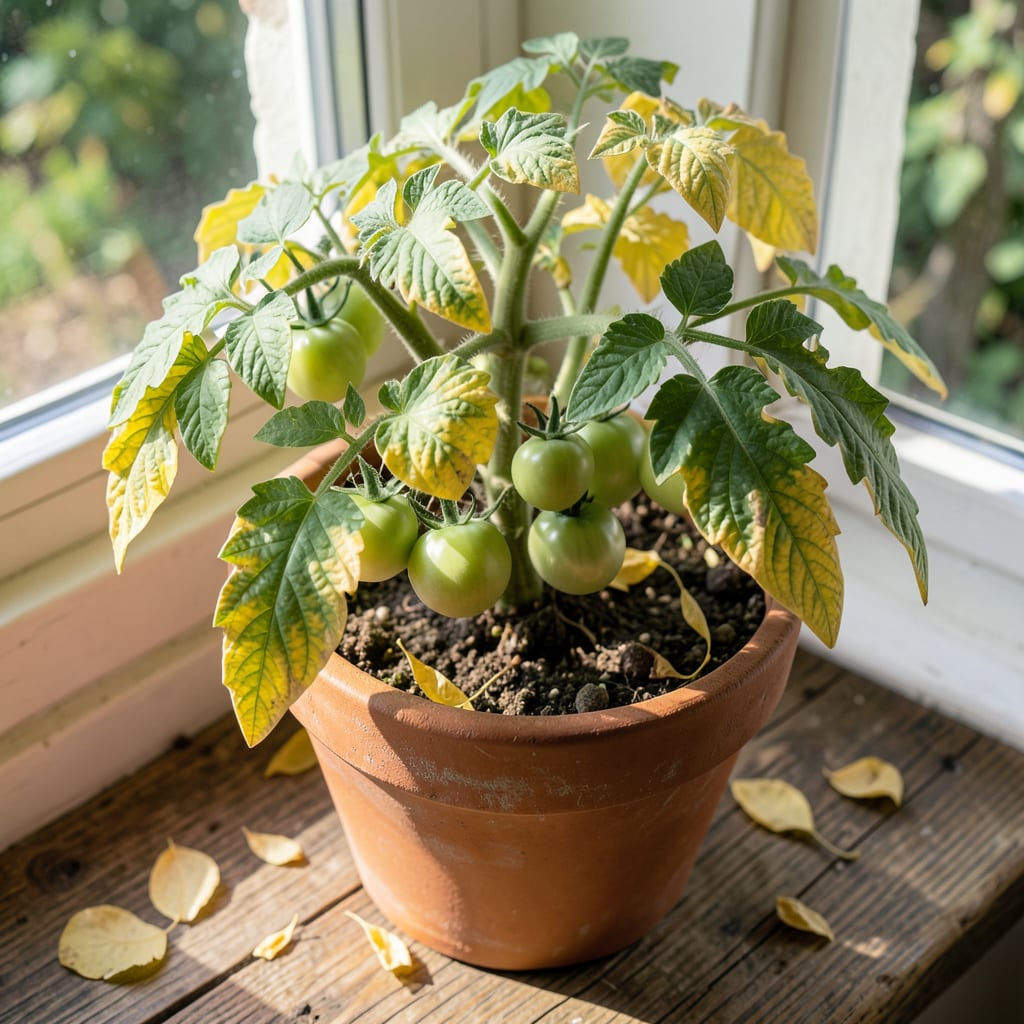
Yellow tomato leaves aren’t always a death sentence. I’ve seen plants bounce back from near-total leaf discoloration with the right adjustments.
Most cases come down to three culprits: too much water, not enough nutrients, or environmental stress. The pattern of yellowing tells you which one you’re dealing with—lower leaves often mean nitrogen deficiency, while upper leaves might signal water issues.
You can fix this in 24-48 hours once you identify the cause. My tomatoes went from sickly yellow to deep green after correcting my watering schedule and adding a balanced fertilizer.
Early action saves the season. Here’s how to diagnose and treat it before the problem spreads to your fruit production.
Yellowing leaves on your tomato plants, known as chlorosis, are a distress signal. 🌱 The discoloration occurs when chlorophyll breaks down, and the underlying causes are often tied to environmental or care-related stressors. Below are the most common culprits:
Tomatoes hate soggy roots. Overwatering or compacted soil suffocates the roots, reducing oxygen uptake and nutrient absorption. This stress triggers leaf yellowing, often starting with the lower leaves. Fix: Ensure well-draining soil and water only when the top inch of soil feels dry.
Nitrogen, magnesium, or iron shortages can lead to yellowing. Nitrogen deficiency causes uniform yellowing (starting with older leaves), while magnesium deficiency appears as interveinal yellowing (green veins with yellow tissue). Iron deficiency affects younger leaves first. Fix: Test soil and amend with balanced fertilizers or Epsom salt (for magnesium).
Extreme heat, cold snaps, or excessive sunlight can scorch leaves, turning them yellow. Tomatoes thrive in 70–85°F (21–29°C). Fix: Use shade cloth during heatwaves or row covers for cold protection.
Sap-sucking pests (like aphids) or fungal diseases (e.g., Fusarium wilt) disrupt nutrient flow, causing yellowing. Fix: Inspect leaves for pests or spots; treat with neem oil or fungicides as needed.
Tackle yellowing tomato leaves with these targeted solutions, each matched to its root cause. Act fast to restore your plant’s health! 🌱
Let the soil dry slightly between waterings—stick your finger 1-2 inches deep to check moisture. Repot tomatoes in well-draining soil if they’re in heavy or compacted mixes. Raise containers off the ground to prevent waterlogging. Prevention tip: Use pots with drainage holes and a saucer to catch excess water.
For nitrogen shortages (uniform yellowing), apply a balanced fertilizer (10-10-10) or compost tea. If magnesium is lacking (yellow patches between veins), spray leaves with 1 tbsp Epsom salt per gallon of water. Test soil pH—aim for 6.0–6.8—and amend with lime (to raise pH) or sulfur (to lower it). Prevention tip: Mix compost into soil at planting for slow-release nutrients.
Check leaf undersides for aphids, whiteflies, or spider mites. Blast them off with water or apply neem oil (1 tbsp per gallon of water + a few drops of dish soap). For severe cases, introduce beneficial insects like ladybugs. Prevention tip: Rotate crops yearly and remove plant debris to deter pests.
Prune affected leaves immediately and dispose of them in the trash (not compost). Improve airflow by spacing plants 2–3 feet apart and staking vines. Apply copper fungicide for fungal issues (like early blight) or baking soda spray (1 tsp baking soda + 1 quart water + a drop of soap) for mild cases. Prevention tip: Water at the base (not leaves) and avoid overhead sprinkling.
Shield plants from extreme heat with shade cloth or move pots to cooler spots. If cold is the issue, use row covers or cloches. Ensure consistent moisture—mulch with straw to retain soil temperature and hydration. Prevention tip: Harden off seedlings before transplanting to reduce shock.
Yes, soggy soil suffocates roots and prevents nutrient uptake. Yellowing often starts at the base of the plant. Water only when the top 1-2 inches of soil feel dry.
Uniform yellowing on older leaves suggests nitrogen lack. Yellow patches between veins indicate magnesium deficiency. Test soil and amend with compost or Epsom salt.
No, damaged leaves won’t recover, but new growth will if you fix the cause. Remove severely yellowed leaves to redirect energy to healthy foliage.
Yes, aphids and whiteflies suck sap, starving leaves of nutrients. Check undersides and treat with neem oil or insecticidal soap.
