
Beautiful Plants For Your Interior
Beautiful Plants For Your Interior
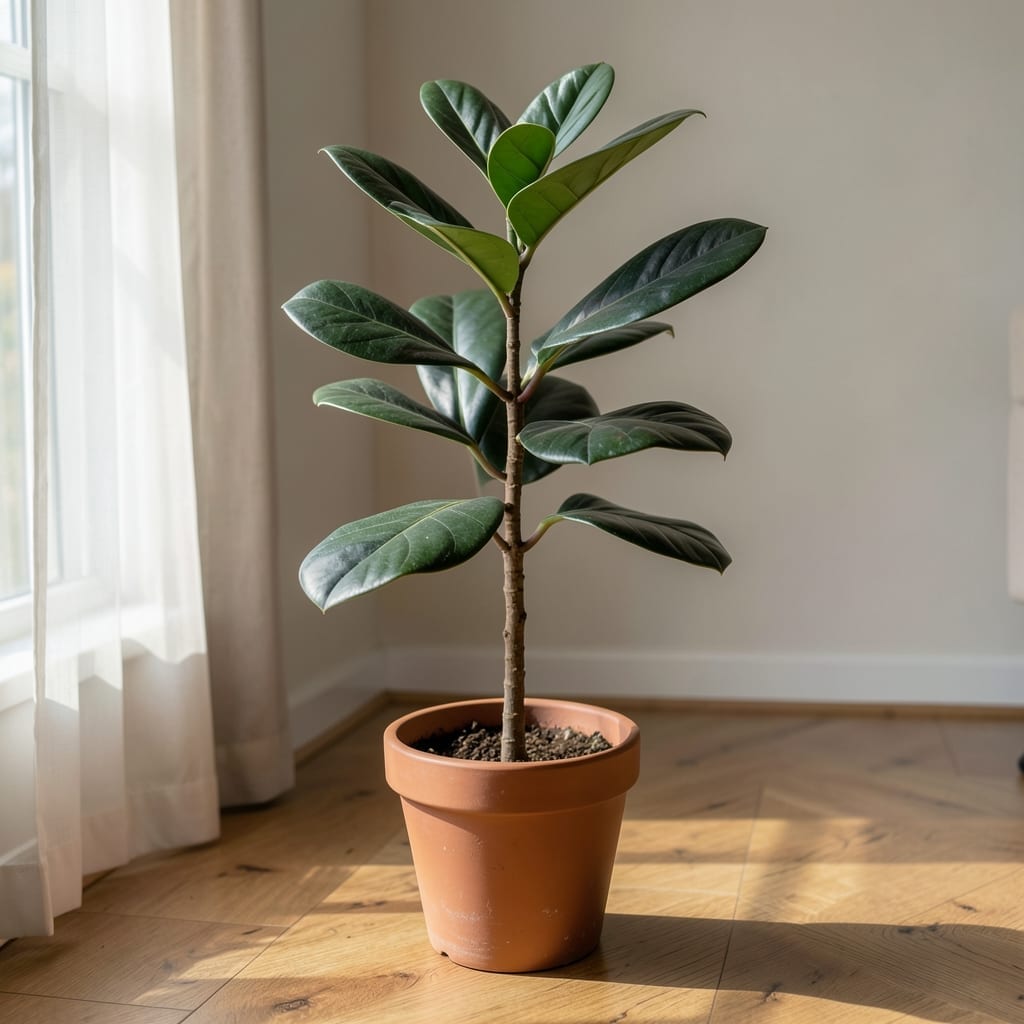
My rubber plant looked like a sad, stretching string bean before I fixed it. That tall, sparse look happens when they’re reaching for light they can’t quite find.
I learned the hard way that even a bright room isn’t enough—these plants need direct, consistent light to stay compact. Another culprit? Skipping rotations, which makes them grow lopsided toward the window.
Pruning the leggy stems back to a leaf node forces new growth from the base. Within 2-3 weeks, you’ll see bushier branches filling in those awkward gaps.
Works for any rubber plant variety, and the cuttings root easily in water for more plants. Let’s get yours back to its full, lush self.
When your rubber plant starts looking more like a lanky teenager than a lush, compact beauty, it’s usually a cry for better light. Here’s why it happens:
Rubber plants (Ficus elastica) stretch toward light sources in a process called etiolation. In low-light conditions, the plant elongates its stems and spaces out its leaves to maximize light absorption. This survival tactic weakens the plant over time, as energy is diverted from leaf growth to stem elongation. Actionable fix: Move your plant to a bright, indirect light spot—east or north-facing windows are ideal.
If light only hits one side of the plant, it will grow lopsidedly, stretching toward the light. This is due to phototropism, where auxin (a growth hormone) redistributes to the shaded side, causing cells to elongate. Actionable fix: Rotate your plant 90 degrees every 1-2 weeks to ensure even growth.
When rubber plants are packed too closely together, they compete for light, leading to spindly, weak growth. This is common in group plantings or dense indoor jungles. Actionable fix: Thin out nearby plants or give your rubber plant its own space to thrive.
Leggy growth in rubber plants is often reversible with the right adjustments. Below are targeted fixes for each common cause, plus prevention tips to keep your plant full and compact.
Relocate your rubber plant to a spot with bright, indirect light. South- or west-facing windows are ideal, but avoid harsh direct sun, which can scorch leaves. If natural light is limited, supplement with a grow light for 10–12 hours daily.
Prevention tip: 💡 Rotate the plant weekly to ensure even light exposure and balanced growth.
If roots are circling the pot or poking out of drainage holes, it’s time to upgrade to a larger container (2–3 inches wider). Use well-draining soil and water thoroughly after repotting. For severely root-bound plants, trim back up to a third of the roots to encourage fresh, compact growth.
Prevention tip: ✨ Repot every 1–2 years or when roots outgrow their space.
Erratic watering or fertilizing can stress the plant, leading to legginess. Water when the top 1–2 inches of soil are dry, and fertilize monthly in spring/summer with a balanced liquid fertilizer. Reduce watering and stop fertilizing in fall/winter.
Prevention tip: 🎯 Set a calendar reminder for watering and feeding to stay consistent.
Prune leggy stems just above a leaf node to encourage bushier growth. Use clean, sharp shears and propagate the cuttings in water or soil to grow new plants. Pruning redirects energy to lower leaves, creating a fuller appearance.
Prevention tip: 🌡️ Trim back overgrown stems every 6–12 months to maintain shape.
Rotate it 90 degrees every 1-2 weeks to ensure even light exposure. This prevents lopsided growth and keeps the plant compact.
Yes! Move it to brighter light and rotate regularly. While pruning speeds up the process, better light alone can gradually improve its appearance over 2-3 months.
Bright, indirect light from an east or north-facing window is ideal. Avoid harsh direct sun, which can scorch leaves, but ensure it gets enough light to stay compact.
Fertilizer supports growth but won’t fix legginess alone. Focus on light first, then fertilize monthly in spring/summer with a balanced liquid fertilizer for best results.