
Beautiful Plants For Your Interior
Beautiful Plants For Your Interior
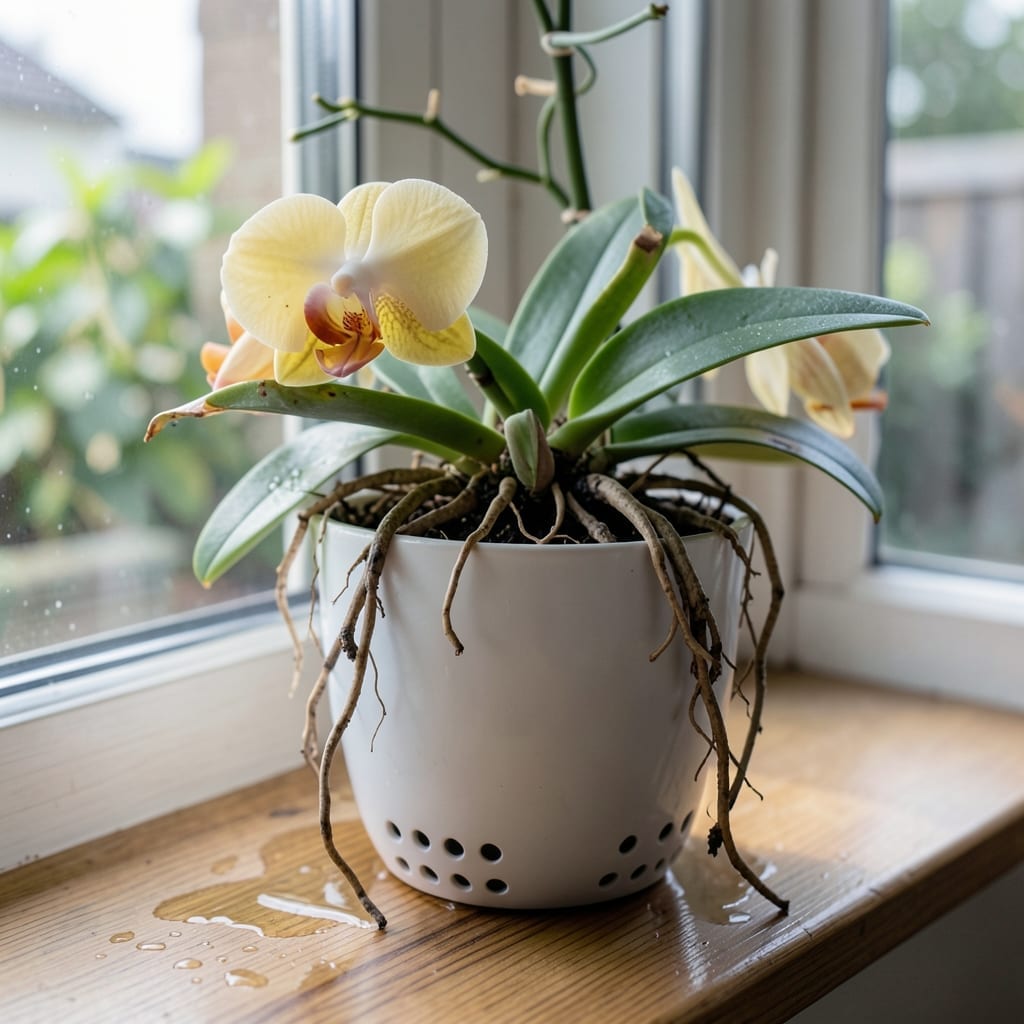
Yellowing leaves and mushy roots mean trouble for orchids. I’ve saved more than a few by catching the signs early—soggy medium, blackened roots, that telltale sour smell.
Overwatering suffocates roots, cutting off their air supply. Most orchids need water only when the medium is nearly dry, not on a rigid schedule. The fix starts with removing the plant from its pot immediately.
You’ll trim away the rot, disinfect what’s left, and repot in fresh mix. Within 2-3 weeks, new root growth appears if the crown stays healthy.
Prevention is simpler than recovery: water less, use bark-based medium, and ensure drainage holes. No more guesswork.
Orchids thrive in specific conditions, and overwatering disrupts their delicate balance. Here’s why leaves overwatered orchid roots become a problem, with science-backed explanations:
Most orchids (like Phalaenopsis) are epiphytes, meaning they grow on trees in nature, not in soil. Their roots need air circulation to absorb oxygen. When potted in dense, water-retentive mixes (e.g., regular potting soil), water logs the roots, suffocating them and blocking nutrient uptake. Action: Use a chunky, airy mix like bark, sphagnum moss, or perlite.
Orchid roots rot when they’re constantly wet. Unlike houseplants, orchids prefer a “dry-out” period between waterings. Frequent watering—especially without checking moisture levels—prevents roots from respiring. Science: Stagnant water fosters anaerobic bacteria and fungi (e.g., Phytophthora), which attack root tissues.
Non-draining pots (or those without drainage holes) trap water at the bottom, creating a swampy environment. Even clear plastic pots (ideal for monitoring roots) can cause issues if water pools. Fix: Opt for slotted or mesh pots to ensure rapid drainage and airflow.
Orchids in dim light (e.g., north-facing windows) use water slower, while high humidity (common in terrariums) reduces evaporation. Together, these factors prolong root wetness. Tip: Adjust watering frequency based on light conditions—less in low light, more in bright, indirect light.
Overwatered orchid roots can often be saved with quick, targeted action. Here’s how to address each issue and prevent future problems.
Fix: Gently remove the orchid from its pot and rinse the roots under lukewarm water. Trim away any black, mushy roots with sterilized scissors. Soak the remaining healthy roots in a 1:10 hydrogen peroxide-to-water solution for 10 minutes to disinfect. Repot in fresh, well-draining orchid mix (bark-based works best).
Prevention: Water only when the top inch of mix is dry—stick your finger in to check! Use pots with drainage holes and avoid letting orchids sit in saucers of water. 💡 Pro tip: Clear pots help you monitor root health without disturbing the plant.
Fix: Stop watering immediately and move the orchid to a spot with indirect light and good airflow. If the leaves are soft or wrinkled, check the roots for rot (see above). Remove severely damaged leaves to redirect energy to recovery.
Prevention: Use the “ice cube method” for watering—place 2-3 ice cubes on the mix weekly (for standard Phalaenopsis). This slows water release, preventing soggy conditions. ✨ Bonus: A small fan nearby can improve air circulation around the roots.
Fix: Switch to a pot with multiple drainage holes and repot the orchid in a chunky, airy mix (avoid dense soil). Elevate the pot on a tray with pebbles to ensure excess water drains away.
Prevention: Avoid decorative cache pots without drainage—if you use one, remove the orchid after watering to let it drain completely. 🎯 Remember: Orchids thrive on neglect, not constant attention!
Check for black or brown, mushy roots and a foul odor. Healthy roots are firm and green or silver. Yellowing leaves often signal trouble below the surface.
Use a chunky, bark-based mix with perlite for airflow. Avoid regular potting soil—it retains too much moisture. Repot every 1-2 years to refresh the medium.
Water only when the top 1 inch of mix feels dry. This may be every 7-10 days in warm climates or less in cooler ones. Always check before watering.
Yes, but it’s tricky. Trim all rot, soak the base in a 1:10 hydrogen peroxide solution, and place it in a humid environment. New roots may take 2-3 months to appear.