
Beautiful Plants For Your Interior
Beautiful Plants For Your Interior
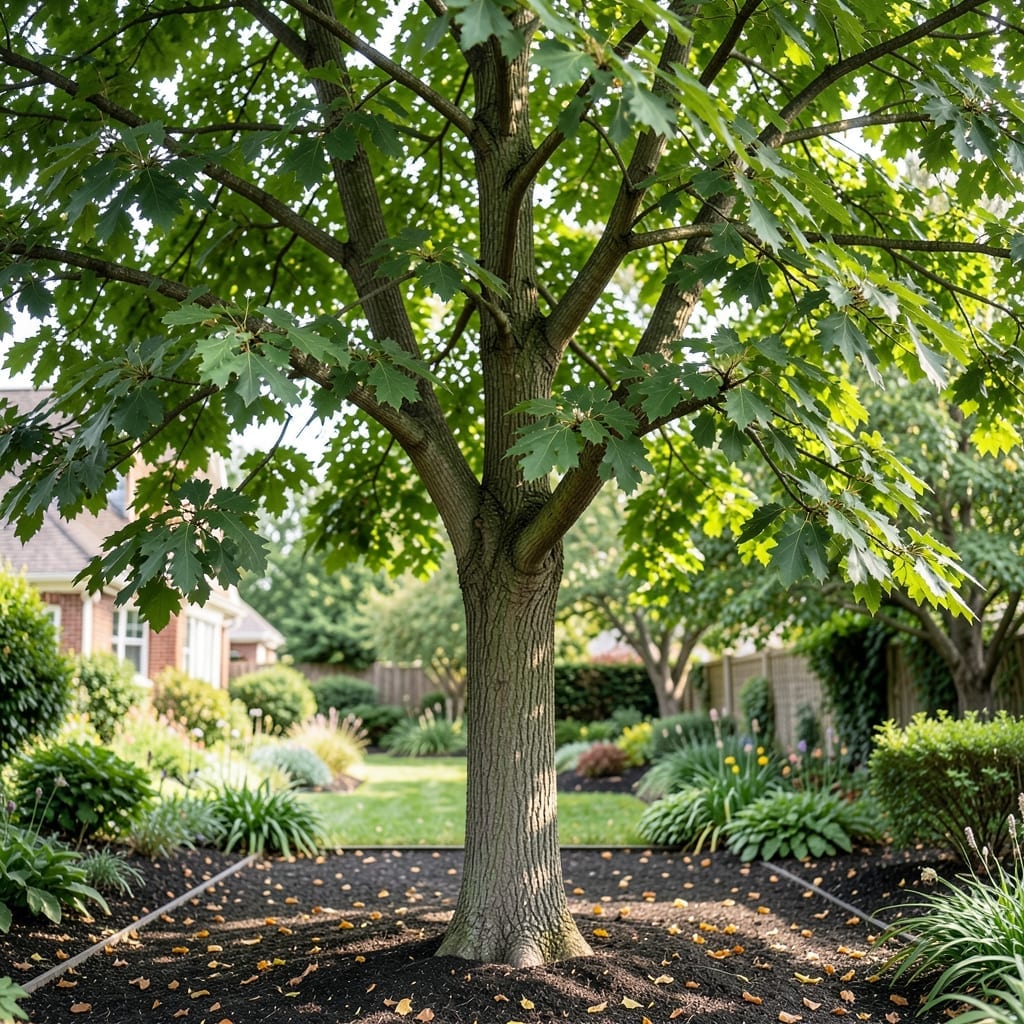
Elm tree leaves are nature’s fingerprint—unique, telling, and often overlooked. I learned to spot them by their asymmetrical bases and serrated edges, a dead giveaway even from a distance.
Healthy leaves mean a thriving tree, but yellowing or spotting signals trouble. By the time you notice curled edges or premature drop, it’s already time to investigate.
📚 In This Guide
Here’s my reliable method for examining leaf characteristics and spotting potential health issues.
Start by observing the overall shape of the leaves on your elm tree. Elm leaves are typically oval to elliptical with a pointed tip and asymmetrical base. The margins are serrated or doubly serrated, meaning they have small, sharp teeth along the edges.
I always compare leaves from different branches to confirm consistency. Healthy elms maintain uniform leaf shape throughout the canopy, while irregularities might signal stress or disease. Look closely at the serrations—they should be evenly spaced and sharp, not jagged or uneven.
Measure a few mature leaves to establish a baseline. Most elm species have leaves ranging from 2 to 6 inches long and 1 to 3 inches wide. The texture is another key indicator: healthy elm leaves have a slightly rough, sandpaper-like feel due to their serrated edges.
Run your fingers along the surface. The upper side should be smooth with visible veins, while the underside often appears paler with raised veins. If the texture feels unusually soft or the veins appear flattened, it might indicate nutrient deficiency or pest activity.
Healthy elm leaves are a vibrant medium to dark green on top with a lighter green or slightly yellowish underside. The color should be uniform across the leaf surface. Any yellowing, browning, or spotting could signal health issues ranging from fungal infections to nutrient deficiencies.
I pay special attention to the timing of color changes. Premature yellowing in summer often indicates water stress, while dark spots might suggest fungal diseases like elm leaf spot. The veins should remain green even if the leaf tissue between them changes color.
Look carefully for any holes, tears, or chewed edges on the leaves. Elm leaf beetles and caterpillars often leave distinct feeding patterns. Small, round holes typically indicate beetle activity, while irregular, ragged edges suggest caterpillar feeding.
Also check for powdery mildew or black spots, which are common fungal issues. Powdery mildew appears as a white, powdery coating on the leaf surface, while black spot disease creates circular black lesions. Both can spread quickly if not addressed, potentially defoliating the tree.
Elm leaves grow in an alternate arrangement along the stems, meaning they emerge one per node in a staggered pattern rather than pairs at the same point. Each leaf attaches to the stem with a short petiole, typically 1/4 to 1/2 inch long.
The base of the leaf is often uneven, with one side extending further down the petiole than the other. This asymmetry is a key identifying feature of elms. If you notice leaves dropping prematurely or the attachment points looking swollen or discolored, it could indicate vascular disease or pest infestation at the stem.
Took me years of field work to refine these observation techniques for accurate assessment.
The Shape Factor: In Step 1, focus on that asymmetrical base—it’s the most reliable identifier for elms. I’ve seen many beginners overlook this detail while focusing only on the serrated margins. The pointed tip combined with the uneven base creates a distinctive silhouette that sets elms apart from other trees with similar leaf shapes.
Size Consistency Check: When measuring in Step 2, don’t just check one leaf. I always examine at least five leaves from different branches to establish the size range. Remember, the 2 to 6 inch length and 1 to 3 inch width are averages—healthy trees will show some variation, but anything outside this range might indicate a different species or hybrid.
Color Pattern Insight: The medium to dark green top with lighter underside mentioned in Step 3 isn’t just aesthetic—it’s functional. This color gradient helps with photosynthesis efficiency. If you notice the underside is significantly more yellow than green, it might be an early sign of chlorosis, which often precedes more obvious health issues by weeks.
Attachment Detail: For Step 5, the alternate arrangement is crucial, but the petiole length is often missed. That 1/4 to 1/2 inch measurement is precise—shorter or longer petioles can indicate different elm varieties or even stress responses. The asymmetry at the base is particularly telling; one side always extends further down the petiole than the other.
Yellowing or browning leaves often indicate stress from drought, poor drainage, or fungal diseases like Dutch elm disease. Check soil moisture and inspect for dark streaks in the wood, which signal infection.
Elm trees are deciduous and usually drop leaves in fall (October–November), but premature shedding may indicate pests, disease, or water stress. Healthy elms retain leaves until late autumn.
Watch for elm leaf beetles, aphids, or Japanese beetles, which chew leaves or cause skeletonization. Treat with horticultural oil or insecticidal soap, and remove heavily infested foliage.
Look for wilting, yellowing leaves that turn brown and curl, often starting at the top. Dark streaks under the bark confirm the disease. Prune infected branches immediately to slow its spread.