
Beautiful Plants For Your Interior
Beautiful Plants For Your Interior
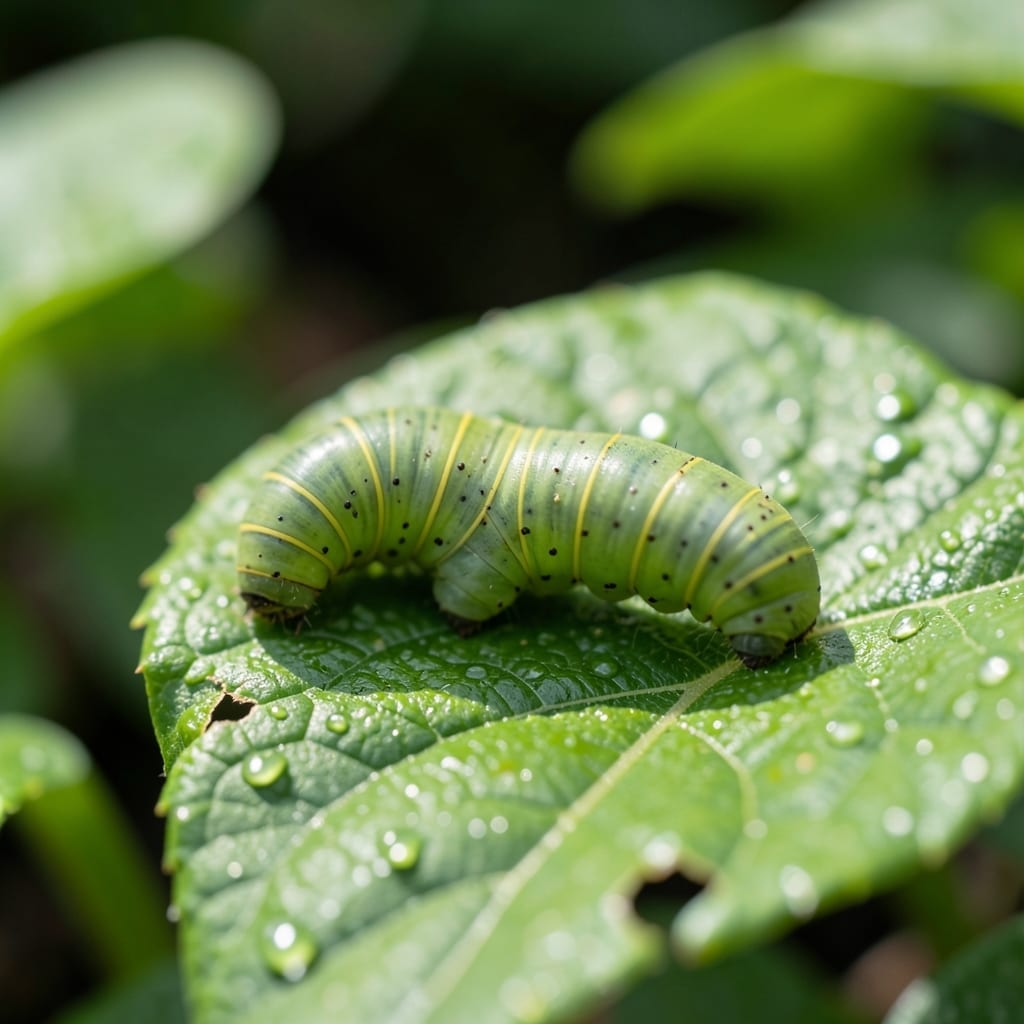
Watching leaves vanish overnight is frustrating. I’ve lost entire crops to these silent invaders before learning how to spot their telltale signs early.
These pests leave jagged holes, skeletonized leaves, or rolled foliage. Some are caterpillars, others sawfly larvae, but all share one trait: they’re easily controlled once you identify them.
The damage looks worse than it is. With the right approach, your plants recover quickly while you disrupt the pest life cycle. Most solutions take less than an hour to implement.
Prevention beats treatment every time. Healthy gardens with good airflow and diversity naturally resist these outbreaks before they start.
Understanding why leaf-eating worms appear in your garden starts with recognizing the conditions that attract them. These pests don’t just show up randomly—they’re drawn by specific environmental and biological factors. Below are the most common causes, explained in simple, actionable terms.
Dense, unkempt foliage provides the perfect hiding spot for worms like caterpillars and sawfly larvae. Fallen leaves, weeds, and thick mulch create a moist, sheltered environment where they can feed undisturbed. Action: Regularly prune plants, remove debris, and clear fallen leaves to eliminate their habitat.
Worms target plants that are lush and nutrient-dense, especially young, tender leaves. Vegetables like cabbage, lettuce, and tomatoes are prime targets, as are ornamental plants like roses. Action: Use row covers or companion planting (e.g., marigolds to repel pests) to protect susceptible species.
Beneficial insects like ladybugs, lacewings, and parasitic wasps keep worm populations in check. If your garden lacks these predators—often due to pesticide overuse—worms multiply unchecked. Action: Reduce chemical pesticides and introduce natural predators or organic treatments like Bacillus thuringiensis (Bt).
Excess moisture softens leaves, making them easier for worms to chew. High humidity also accelerates their life cycle. Action: Water plants at the base (not the leaves) and ensure proper drainage to discourage infestations.
Dealing with leaf-eating worms doesn’t have to be a losing battle. Below are practical, step-by-step solutions mapped to common causes, plus prevention tips to keep your garden thriving. 🌿
If you spot a few worms, the simplest fix is to handpick them off leaves and drop them into soapy water. Check the undersides of leaves, where they often hide. Prevention tip: Inspect plants weekly to catch pests early before they multiply. 🌱
For larger but manageable infestations, use neem oil or insecticidal soap. Mix as directed and spray evenly on both sides of leaves, focusing on affected areas. Reapply every 5–7 days or after rain. Prevention tip: Apply neem oil preventatively in early spring to deter egg-laying. 🌧️
Attract birds, ladybugs, and parasitic wasps—natural enemies of leaf-eating worms—by planting native flowers or setting up a birdbath. Avoid broad-spectrum pesticides, which can harm these helpful allies. Prevention tip: Maintain a diverse garden ecosystem to support predator populations year-round. 🐝
If worms are overwhelming your plants, use Bacillus thuringiensis (Bt), a natural bacteria that targets caterpillars without harming other insects. Apply in the evening for best results. Prevention tip: Rotate crops annually to disrupt pest life cycles. ⏳
Pro tip: Always test sprays on a small section of the plant first to avoid damage. ✨
Look for jagged holes in leaves or skeletonized foliage. Some worms roll leaves into tubes. Check undersides of leaves for tiny eggs or larvae.
Yes! Neem oil and Bt are highly effective against caterpillars. Insecticidal soap works on soft-bodied larvae. Always follow label instructions.
Rotate crops yearly and remove plant debris. Encourage predators with native plants. Use row covers for vulnerable seedlings.
Left unchecked, they can defoliate plants quickly. Act at first signs. Most damage is cosmetic, but severe cases stunt growth.