
Beautiful Plants For Your Interior
Beautiful Plants For Your Interior
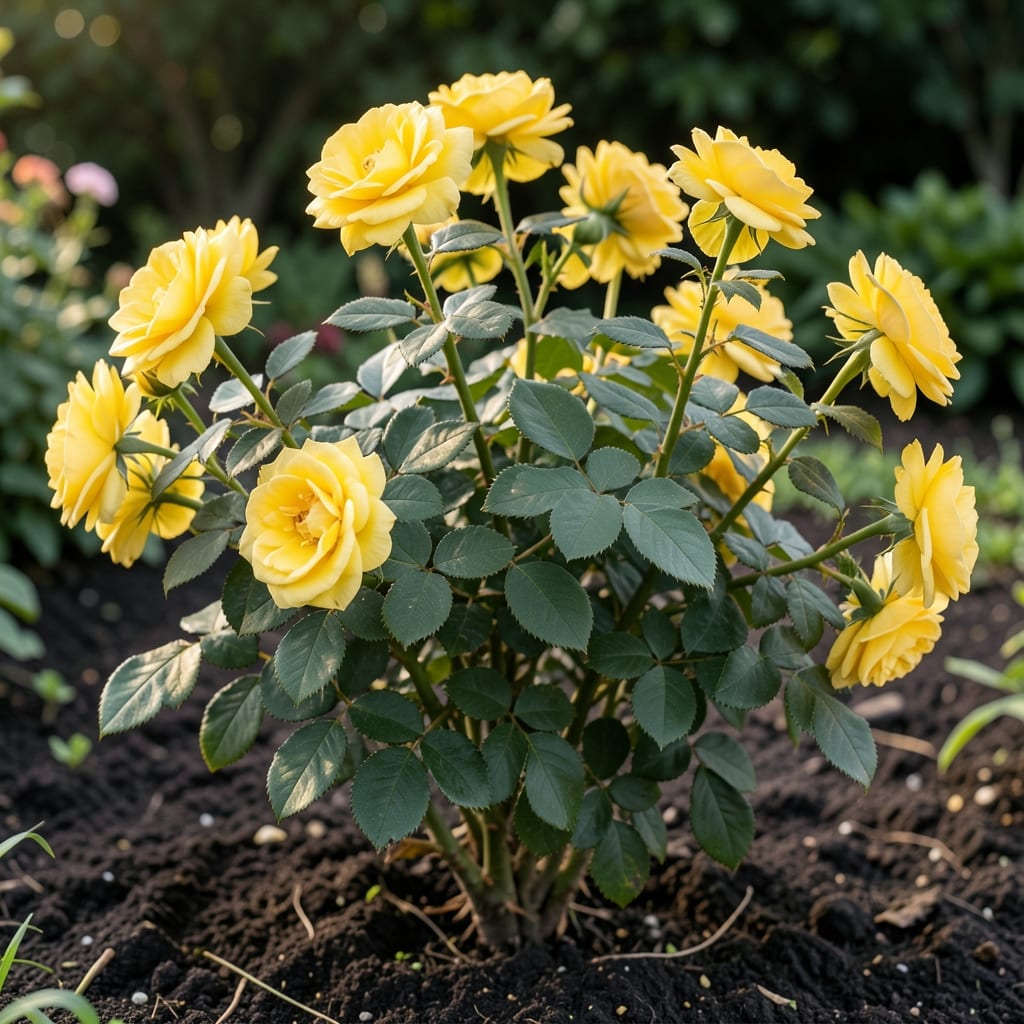
Big, buttery blooms stop people in their tracks. I’ve spent years perfecting the conditions that make large yellow roses thrive without the usual drama of black spot or weak stems.
The secret lies in well-draining soil, consistent watering, and a pruning routine that encourages robust growth. You’ll get vibrant, long-lasting flowers that brighten the garden from late spring through fall.
📚 In This Guide
Here’s the method I trust for producing those stunning, vibrant blooms every gardener envies.
Choose a location with full sun exposure—at least 6-8 hours of direct sunlight daily. Yellow roses thrive in well-draining soil with a pH between 6.0 and 6.5. Test your soil first; amendments may be needed to adjust acidity.
Loosen the soil to a depth of 18-24 inches and mix in compost or well-rotted manure to improve fertility and drainage. This creates the ideal foundation for strong root development. Remove any weeds or debris that could compete with your roses for nutrients.
Dig a hole that is twice as wide and just as deep as the root ball of your rose bush. If planting bare–root roses, soak the roots in lukewarm water for 2-3 hours before planting to rehydrate them.
Place the rose in the hole, ensuring the bud union (the swollen area where the stems meet the roots) sits 1-2 inches above soil level in warm climates or 2-3 inches below in colder regions. Backfill with soil, firming it gently around the roots to eliminate air pockets.
Water deeply after planting to settle the soil and encourage root establishment. You’ll see the plant begin to acclimate within 1-2 weeks if conditions are right.
Water your roses consistently, aiming for 1-2 inches per week, either through rainfall or supplemental irrigation. The soil should feel moist but not soggy at a depth of 1-2 inches. Morning watering is ideal to reduce evaporation and prevent fungal diseases.
Apply a balanced, slow-release fertilizer designed for roses every 4-6 weeks during the growing season. I’ve found that fertilizers with a higher phosphorus content (the middle number in the NPK ratio) encourage larger, more vibrant blooms. Stop fertilizing 6-8 weeks before the first frost to allow the plant to prepare for dormancy.
Prune your roses in early spring, just as new growth begins to emerge. Remove any dead, diseased, or crossing branches first. Then, shape the bush by cutting back one-third of the previous year’s growth on established plants. This stimulates vigorous new stems that produce larger flowers.
For repeat-blooming varieties, deadhead spent blooms by cutting the stem just above a 5-leaflet leaf. This encourages the plant to redirect energy into producing more flowers rather than seeds. Thin out crowded areas in the center of the bush to improve air circulation, which reduces the risk of disease.
Inspect your roses regularly for signs of common pests like aphids, thrips, or Japanese beetles. A strong blast of water can dislodge aphids, while handpicking or neem oil works for beetles. Watch for black spot or powdery mildew, especially in humid conditions.
Apply a fungicide preventatively if your area is prone to fungal issues, or at the first sign of infection. Always follow the product’s instructions for timing and dosage. Healthy, well-maintained plants are less susceptible to problems, so consistent care is your best defense.
These insights will help you grow stunning yellow roses with vibrant blooms every season.
Sunlight Essentials: In Step 1, ensure your roses get the full 6-8 hours of direct sunlight daily. This isn’t just about light—it’s about the heat and energy needed for those large, vibrant blooms. Without enough sun, you’ll end up with leggy plants and smaller flowers.
Soil Preparation: When loosening the soil to 18-24 inches deep in Step 1, don’t rush this process. Deep, well-draining soil allows roots to establish strongly, which is critical for supporting those large yellow blooms. Mixing in compost or well-rotted manure as directed will give your roses the nutrient boost they need.
Planting Depth Matters: In Step 2, pay close attention to the bud union placement. For warm climates, keep it 1-2 inches above soil level, while in colder regions, plant it 2-3 inches below. This protects the graft from temperature extremes and ensures healthy growth.
Hydration for Bare-Root Roses: If you’re planting bare-root roses in Step 2, soaking the roots in lukewarm water for 2-3 hours is non-negotiable. This rehydration step prevents transplant shock and gives your roses the best start for producing those enviable blooms.
Remove affected leaves, ensure good airflow, and apply fungicide if needed. Water at the base to keep foliage dry, and avoid overhead watering to prevent fungal issues.
Plant in early spring or fall for optimal root establishment. Avoid extreme heat or frost, and ensure well-draining soil for healthy growth.
Consider disease-resistant varieties like ‘Julia Child’ or ‘Sunny Knock Out.’ These require less maintenance and thrive in similar conditions.
Brown spots or edges often signal fungal infections (e.g., black spot) or underwatering. Check soil moisture and treat with neem oil or a fungicide if needed.
Fertilize every 4-6 weeks during growing season with a balanced rose fertilizer. Reduce frequency in late summer to avoid encouraging new, vulnerable growth.