
Beautiful Plants For Your Interior
Beautiful Plants For Your Interior
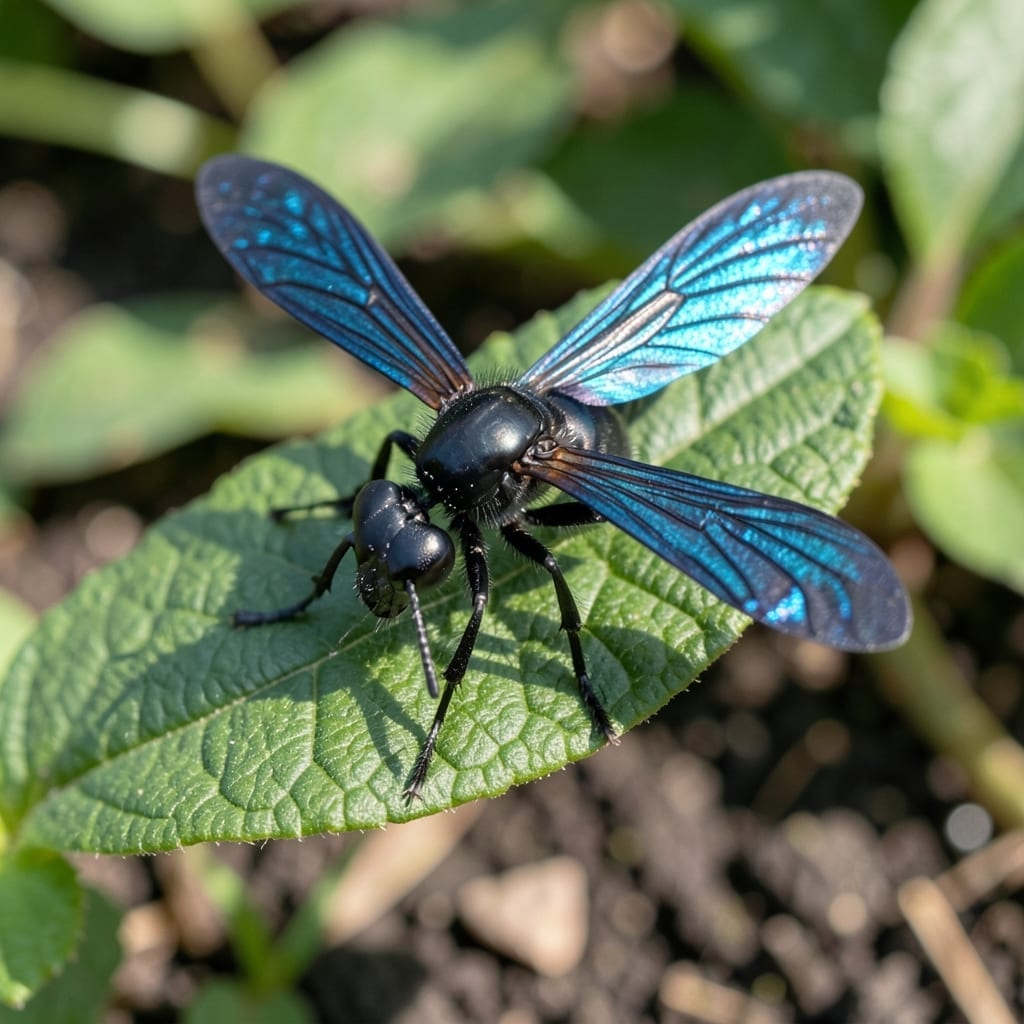
I spotted my first one hovering near the compost pile last summer. The large black wasp with iridescent blue wings looked like something from a sci-fi movie, but it’s a native pollinator with a surprising ecological role.
Here’s the thing—these wasps aren’t aggressive unless provoked. They’re actually beneficial, pollinating flowers and preying on garden pests like caterpillars and beetles.
You’ll want to observe from a distance though. Their sting packs a punch, and they’ll defend their nests fiercely. The good news is they rarely nest near human activity.
Learning to recognize them helps you appreciate their place in the ecosystem while keeping your garden visits stinger-free.
The striking appearance of a large black wasp with blue wings often sparks curiosity—and concern. This coloration isn’t random; it’s tied to specific biological and environmental factors. Below, we break down the science behind why these wasps look the way they do.
Many wasps with iridescent blue or metallic wings, like the blue-winged wasp (Scolia dubia), owe their shimmer to structural coloration. Unlike pigments, which absorb light, their wing scales contain microscopic ridges that refract and scatter light, producing a blue hue. This phenomenon is similar to how a prism splits light into a rainbow.
Bright or unusual colors in wasps often serve as aposematism—a warning to predators. The bold black body paired with blue wings signals that the insect may be venomous or unpalatable. Over generations, wasps with these traits survive longer, passing on the genes that code for such striking patterns.
In some species, diet during the larval stage can influence wing color intensity. For example, wasps that feed on specific host insects (like beetle grubs) may develop more vivid blue tones due to nutritional compounds that enhance structural coloration. Climate and humidity can also play a role, as these factors affect the development of the exoskeleton’s microscopic structures.
Understanding these causes helps demystify why these wasps stand out—and why they’re often best admired from a distance!
Encountering a large black wasp with iridescent blue wings can be startling, but knowing how to react can keep you safe. Below are practical solutions tailored to common scenarios, along with prevention tips to avoid future run-ins.
Stay calm and move slowly. Sudden movements can trigger a defensive response. Back away gradually without swatting—this wasp species is less aggressive but will sting if provoked. If indoors, open a window or door to give it an escape route.
Do not disturb the nest. Blue-winged wasps often build nests in soil, wood, or under eaves. If the nest is active, call a professional pest control service to relocate it safely. For prevention, seal cracks in walls, remove rotting wood, and keep outdoor trash bins tightly closed.
Wash the area with soap and water, then apply a cold compress to reduce swelling. Over-the-counter antihistamines can help with itching. Seek medical attention immediately if you experience difficulty breathing, dizziness, or swelling beyond the sting site—this could signal an allergic reaction.
They’re not naturally aggressive but will sting if threatened. The venom is painful but rarely dangerous unless you’re allergic. Keep a safe distance and avoid swatting.
The blue wings come from structural coloration, not pigment. Microscopic ridges refract light to create the shimmer, which can warn predators.
Seal trash bins, remove rotting wood, and plant mint or citronella. Avoid bright clothing and open food containers outdoors.